Los Angeles County Service Areas · Chimney & fireplace services · Estimate requests online
Chimney Cleaning in Los Angeles
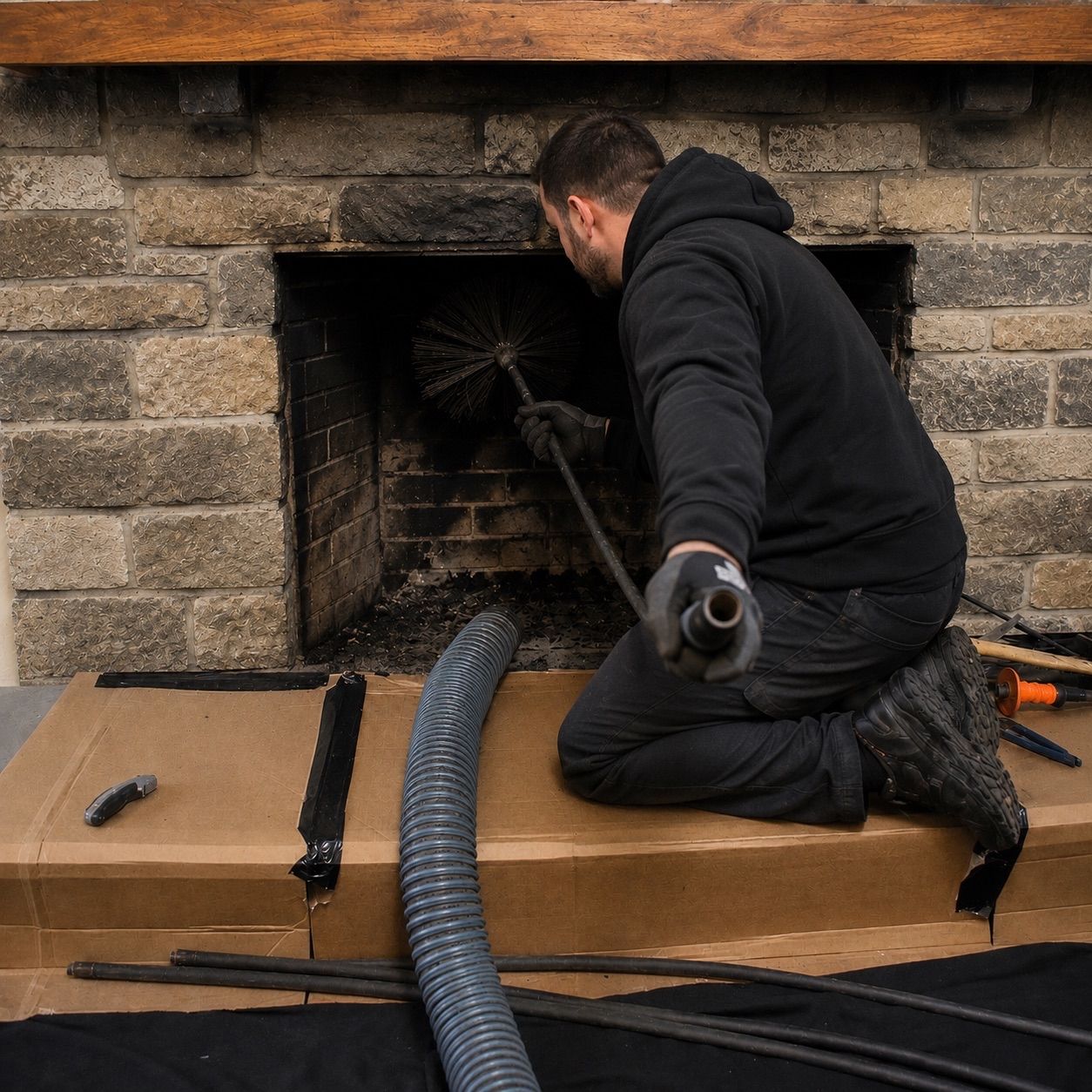
Creosote, soot and debris removed from the flue, the smoke shelf and the firebox. This page is about what builds up inside a chimney, why it matters, and how often it is actually worth taking out.
- Chimney & Fireplace ServiceCleaning, inspection & repair
- Los Angeles Service AreasCities & LA neighborhoods
- Free Estimates AvailableEstimates at no charge
- Easy to ReachCall or request online
What Comes Out of a Chimney
A chimney cleaning removes four different things, and they are not equally important.
Creosote is the one that matters most. It is the condensed residue of wood smoke — every fire deposits a thin film of it on the flue wall, and it is flammable. How much forms depends far more on how you burn than on how often.
Soot is fine carbon powder. It is less dangerous than creosote but it accumulates faster, and it is what produces the smell people notice in summer.
Ash and debris on the smoke shelf — the ledge behind the damper that nobody can see from the room. On a chimney that has gone a decade without attention, this is frequently where most of the volume is.
Whatever has got in from outside. Nesting material, leaves, and fragments of mortar or flue tile that have fallen from above. The last of those is worth noticing, because it is a symptom of something other than dirt.
The Three Stages of Creosote
The stage decides whether this is a routine cleaning or a different job altogether, which is why it is worth understanding before booking anything.
Loose, flaky soot
A light dusty deposit that brushes off without much effort. This is what an annual cleaning on a lightly used fireplace normally removes, and it is the stage everything should be kept at.
Routine cleaning removes it.
Hard, crunchy flakes
Shiny black flakes with a texture like cornflakes, formed when stage 1 deposits are heated and compressed by further burning. It needs more aggressive brushing and sometimes rotary tooling, but it still comes off mechanically.
Cleaning, with more work.
Hardened glaze
A tar-like glaze fused to the flue wall. It does not brush off at all, it is highly flammable, and it is the deposit associated with chimney fires that burn hot enough to damage a liner. It usually forms where fires have been burned slowly, with unseasoned wood, or in a flue that never gets properly hot.
A different job — see creosote removal.
Stage 3 is the exception that changes the job. Removing hardened creosote covers what is involved, and what creosote is and why it is dangerous goes into the chemistry.
Soot, Flue Cleaning and Debris
Flue cleaning and chimney cleaning are the same thing described from different ends. The flue is the passage inside the chimney that carries combustion products out; cleaning the chimney means cleaning the flue, plus the smoke shelf and firebox below it. If you have been searching for one term and finding the other, that is why.
Soot removal is part of the same visit. Soot is finer and less flammable than creosote, but it is also more mobile — it is what settles on the firebox surround and what you smell in August.
Debris is the category worth paying attention to. Leaves and twigs mean something has got in, which usually means the flue is open at the top. Fragments of clay tile mean the liner is shedding, which is a liner question rather than a cleaning one. A full obstruction is blockage removal.
How Often It Is Worth Doing
The NFPA 211 standard recommends annual inspection for any chimney in use, with cleaning as condition requires. That phrasing matters: the standard does not say clean every chimney every year regardless. It says look every year, and clean when looking says so.
What drives buildup is how you burn far more than how often:
- Unseasoned or green wood — produces markedly more deposit than dry hardwood
- Slow, smouldering fires — cooler smoke condenses sooner, so more sticks to the flue
- Softwoods like pine and eucalyptus — burn fast and leave more resin behind
- Damping the fire down early — restricting air is the single biggest contributor
- A cold exterior flue — smoke cools before it exits and condenses on the way
When not to book a cleaning: if you have a gas fireplace and nobody has burned wood in it, there is no creosote to remove and an annual deposit clean is not doing anything for you. What that flue needs is checking, not brushing — and that is a different and usually cheaper conversation.
Signs It Is Overdue
All of these are observable from the room.
A smoky smell when nothing is lit
Strongest in warm, humid weather, when air moving down the flue carries the smell of the deposits into the room. It is the single most common reason people book a cleaning.
Black flakes falling into the firebox
Deposits shedding off the flue wall. Harmless in themselves, and a clear signal of how much is up there.
Fires that are hard to start or will not draw
Deposits reduce the effective diameter of the flue. A restricted flue does not move enough air, and a fire that struggles is often the first practical symptom.
Visible buildup at the firebox opening
Shine a torch up past the damper. If you can see black deposit thick enough to have texture, it is well past due.
More than a year, or nobody knows
If you have recently bought the house and have no record of the chimney being cleaned, that is a reason on its own.
A loud roaring during a fire
Stop using the fireplace. A roaring or rumbling from the chimney can indicate a chimney fire in progress, and that is not something to schedule around.
Cleaning or a Sweep?
In everyday use the two words mean the same thing, and nobody will be confused if you use either. This site has a page for each because people search for both, and because each one goes further into a different half of the same visit.
This page — cleaning
What builds up inside the chimney, what stage it is at, why it forms, and how often it is worth removing.
Chimney sweep →
How the visit itself runs, what gets looked over while the work is done, and what the appointment involves at your end.
Longer answer: chimney sweep vs chimney cleaning.
Doing It Yourself
Consumer brush kits exist and they are not useless. On a straight, accessible flue with stage 1 deposits, a rod-and-brush kit will take the loose material off, and if you are comfortable on a roof there is no mystery to it.
What they do not do is the rest of it. They will not shift stage 2 flakes reliably and they will not touch stage 3 glaze at all. They do not clear the smoke shelf, which is often where the volume is. They produce a great deal of airborne ash in the room without a sealed opening and a vacuum. And — the part that matters most — they tell you nothing about the condition of the liner behind the deposits you just removed.
If your chimney has been cleaned regularly and you want to keep on top of it between visits, a kit is reasonable. If nobody has looked at the chimney in a decade, the cleaning is not the part you are missing.
Chimney Cleaning in Los Angeles
Light, intermittent use is what makes "clean it annually" a poor rule here. A fireplace lit a dozen times over a mild winter may genuinely not need deposit removal every year — and a fireplace burned hard, slowly, or on unseasoned wood can need it sooner than twelve months regardless of how few evenings it was lit. That is why NFPA 211 recommends annual inspection with cleaning as condition requires, rather than annual cleaning. In a market where most fireplaces are used lightly, the difference between those two sentences is most of the cost.
The other local factor is the burn restriction. The South Coast Air Quality Management District operates a wood-burning curtailment programme across the basin: on days when a mandatory no-burn advisory is issued, wood-burning devices must not be used. Under Rule 445 that includes EPA-certified wood and pellet stoves, not only open hearths; gas fireplaces are not covered, and homes with no natural gas service or at 3,000 feet and above are exempt. The advisory season runs November through February. It is worth checking the current advisory before lighting a wood fire in winter — and it is part of why so many LA fireplaces are gas.
If yours is gas, most of this page does not apply to you, and that is worth saying plainly rather than selling around. Do gas fireplaces need cleaning covers what a gas flue does need.
Not sure when it was last done?
Tell us roughly how often the fireplace gets used, whether it burns wood or gas, and whether you have noticed a smell. That is usually enough to say whether a cleaning is the right call.
Tell us what service you need and request an estimate online.
Wondering what this costs? What chimney cleaning costs in Los Angeles sets out the variables honestly, including the cases where a quoted price turns out not to cover what the chimney actually needs.
Related chimney & fireplace services
Part of Chimney & Fireplace Cleaning — Removing what builds up inside a chimney or fireplace — creosote, soot, debris and nesting material — and the blockages that stop a flue venting properly.
- booking a sweepChimney Sweep — The full sweep visit — deposit removal plus a look over the accessible system.
- what to do about stage 3 creosoteCreosote Removal — Glazed and stage 3 creosote that a standard brushing will not shift.
- clearing a blocked chimneyChimney Blockage Removal — Nesting material, fallen masonry, debris and obstructions cleared from the flue.
- having the chimney looked at properlyChimney Inspection — Masonry, crown, cap, flashing, firebox and flue condition, and what it means.
- having the fireplace itself cleanedFireplace Cleaning — The firebox, grate, damper area and glass on gas and wood fireplaces.
- chimney odor removalChimney Odor Removal — Smoky, musty or rotten smells from a fireplace — what causes each and what clears it.
Further reading: Chimney Inspection Cost in Los Angeles: What Drives the Price · Can You Burn Wood in Los Angeles? SCAQMD No-Burn Rules
This service, city by city
The same work, explained for local conditions.
- chimney cleaning in Arcadia
- chimney cleaning in Beverly Hills
- chimney cleaning in Burbank
- chimney cleaning in Calabasas
- chimney cleaning in Culver City
- chimney cleaning in Glendale
- chimney cleaning in La Cañada Flintridge
- chimney cleaning in Long Beach
- chimney cleaning in Malibu
- chimney cleaning in Pasadena
- chimney cleaning in San Marino
- chimney cleaning in Santa Clarita
- chimney cleaning in Santa Monica
- chimney cleaning in Torrance
Nearby Service Areas
Request an Estimate
Tell us what the chimney is doing.
Quick check
Shine a torch up past the damper. Loose dusty black is stage 1. Shiny flakes with texture are stage 2. A smooth, tarry, glossy coating is stage 3, and that is a different job.
Chimney Cleaning Questions
More chimney and fireplace questions are answered on the main FAQ page.
Tell us what your chimney is doing
Call, or send a short description and request an estimate. Estimates cost nothing.