Los Angeles County Service Areas · Chimney & fireplace services · Estimate requests online
Fireplace Cleaning in Los Angeles
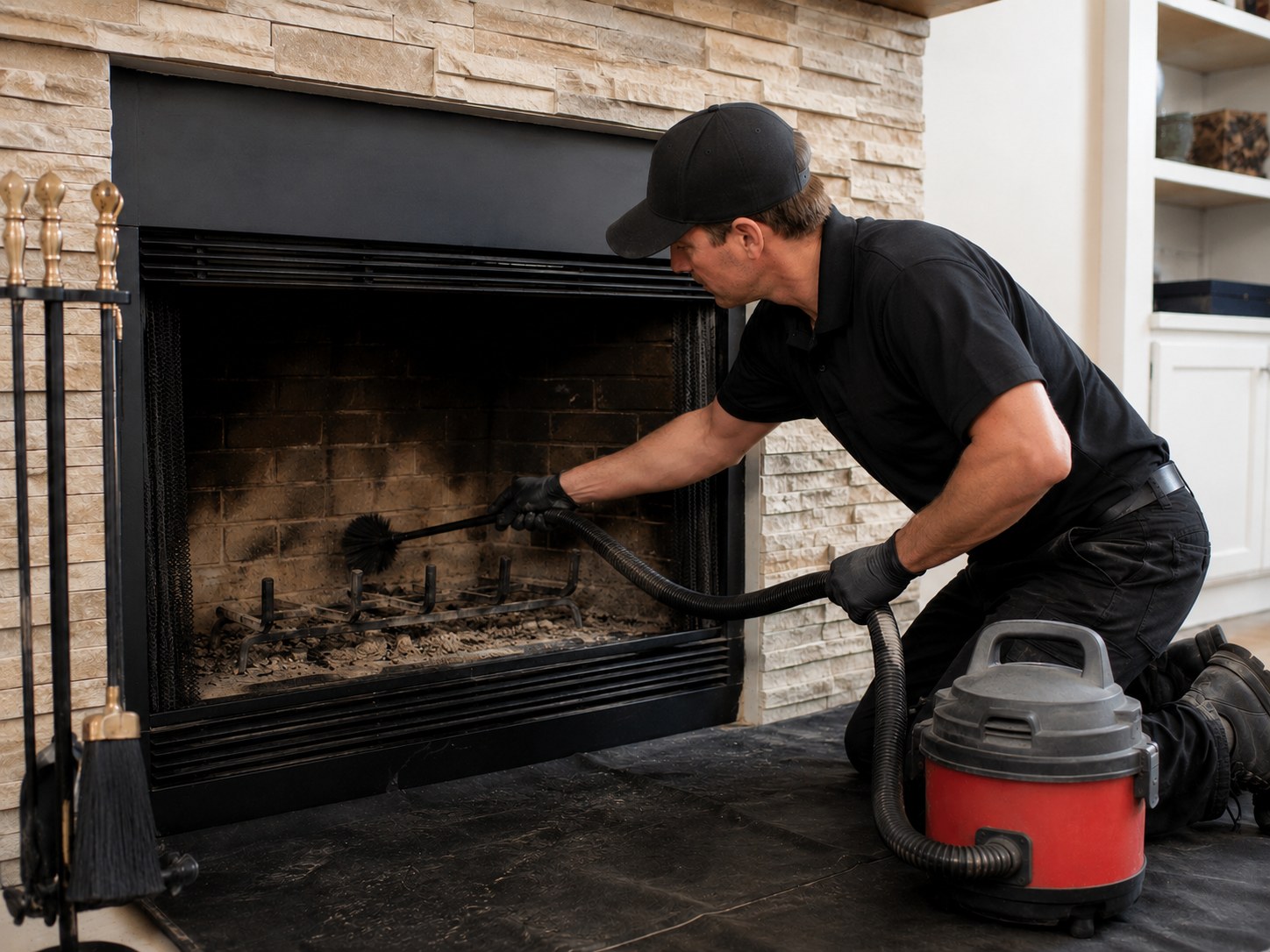
Fireplace cleaning covers the part you can see: the firebox, grate and glass on a wood fireplace, and the burner, log set and glass on a gas one. The flue above the damper is chimney cleaning, and the two are often, but not always, booked together.
- Chimney & Fireplace ServiceCleaning, inspection & repair
- Los Angeles Service AreasCities & LA neighborhoods
- Free Estimates AvailableEstimates at no charge
- Easy to ReachCall or request online
Fireplace Cleaning Is the Firebox; Chimney Cleaning Is the Flue
The damper is the dividing line. Below it is the fireplace: the firebox, the grate, the doors and, on a gas unit, the burner and logs. Above it is the chimney: the smoke shelf, the flue and the deposits that build up inside them.
This page — fireplace cleaning
Ash, soot on the firebox and surround, glass, grate, gas burner and log set. Mostly about how the fireplace looks and burns.
Chimney cleaning →
Creosote and soot in the flue, and debris on the smoke shelf. Mostly about fire safety.
On a wood fireplace that is used regularly, the flue matters more than the firebox, and cleaning one without the other is a half job. On a gas fireplace there is little in the flue to clean, so fireplace cleaning is usually the whole of it.
What a Wood-Burning Firebox Cleaning Covers
The fireplace should be completely cold before any of this starts.
Ash and debris
Cold ash, unburned ends and fallen flakes are cleared from the firebox floor and from under the grate. Ash packed around the grate starves the fire of air from below.
Firebox walls and lintel
Soot on the firebrick and on the steel lintel across the top of the opening is brushed and cleaned down. Firebrick is porous, so the aim is removing loose soot, not restoring the brick to new.
Grate, andirons and screen
Brushed off and checked. A grate that has sagged or burned through lets logs roll against the back wall.
Glass doors
Cleaned inside and out with a cleaner made for fireplace glass, once the doors are cold.
Damper plate
Opened and closed to confirm it moves and seats. The damper is the boundary: what is above it belongs to the chimney.
Surround and hearth
Soot marks on brick, stone or tile around the opening. Some stone stains permanently, which is worth knowing before anyone scrubs it.
Cleaning also makes damage visible. Cracked firebrick, open joints and gaps at the back wall are firebox repair questions, and they are easier to see once the soot is off.
Gas Fireplace Cleaning: Burner, Logs and Glass
Gas does not produce creosote, so gas fireplace cleaning is about dust, carbon and the parts that shape the flame.
Burner and ports
Dust and debris in the burner ports distort the flame. The burner is cleaned with the gas off and the unit cold.
Log set and embers
Ceramic logs collect carbon, and the glowing ember material breaks down. Logs are lifted out and put back in the exact position the manufacturer specifies — a log moved a small distance can push the flame into it and start sooting.
Glass
On a sealed gas unit the glass is part of the combustion chamber. It comes off, is cleaned, and has to go back with its gasket seated properly.
Pilot assembly
Dust and spider webs around the pilot are a common reason for a weak or lazy pilot flame. Cleaning around it is routine; adjusting it is repair.
Vent termination
The outside cap on a direct-vent unit, where nests and debris block the exhaust. A quick look from outside is part of the job.
Cleaning stops at the gas controls. A pilot that will not stay lit, an igniter that clicks without lighting, or a valve fault is gas fireplace repair. If yours is a unit set into an old fireplace opening, it is an insert, and insert cleaning covers the venting behind it.
Fireplace Glass Cleaning, and What the Glass Is Telling You
A white or grey haze on gas glass is normal. It is mineral residue from combustion that builds over a season and comes off with the right cleaner.
A light brown film on wood-fireplace doors is also normal after a number of fires, especially with the doors closed.
Black soot that returns quickly is not a cleaning problem. On a wood fireplace it usually means wet wood or too little air; on a gas fireplace it means the fuel is not burning completely, and the unit should be checked before it is used again. Why fireplace glass turns black goes through the causes. Glass that is cracked, crazed or etched and will not come clean is a glass replacement question.
Signs a Fireplace Needs Cleaning
All of these can be seen or smelled from the room.
Ash up to the grate
The fire burns lazily and smokes because air cannot reach it from below.
Soot on the surround or the mantel
Black marks above the opening on a wood fireplace. On a gas fireplace, any soot there is a combustion question, not just a cleaning one.
Glass you cannot see through
A white haze on gas glass or a brown film on wood-stove-style doors after a season of use.
A dusty burning smell every time the gas fire starts
Once at the start of the season is normal. Every time means dust is sitting on the burner or in the unit.
A stale ash smell in the room
Old ash holds odor and releases it in warm weather. If clearing the ash does not fix it, the cause is probably higher up.
Flames that look different
Uneven, lazy or yellow-tipped flames on a gas unit that used to burn evenly. Cleaning may help; if it does not, it is a repair question.
If the smell is the main complaint and cleaning the firebox did not fix it, chimney odor removal covers the causes further up.
A Clean-Burning Gas Fireplace Needs an Inspection More Than a Clean
When not to call us for a cleaning: if your fireplace is gas, the glass is clear, it lights first time and the flames look the way they always have, a cleaning will not change much. What that fireplace needs is its annual check of the venting, the connections and the controls.
The NFPA 211 standard recommends annual inspection for fireplaces and vents, with cleaning as condition requires, and on a well-behaved gas unit the condition rarely requires much. Do gas fireplaces need cleaning explains what a gas fireplace does need, and fireplace inspection covers the check itself.
What Drives the Cost of Fireplace Cleaning
No price is published here. These are the things that make one fireplace cleaning a different job from another.
Wood or gas
A wood firebox is mostly ash and soot. A gas unit means taking out the logs and glass and putting them back correctly.
How long since it was last cleaned
A season of ash is quick. Years of soot on the surround and glass fused with residue take longer.
Whether the glass has to come off
On sealed gas units the glass frame is removed and the gasket checked on the way back.
The surround
Porous stone and old brick need gentler cleaning than tile or painted surfaces.
Whether the chimney is done at the same time
A firebox clean on its own and a firebox clean combined with a flue cleaning are quoted differently.
Tell us what you are seeing and ask for an estimate. For the chimney side of the cost, see what chimney cleaning costs in Los Angeles.
Fireplace Cleaning in Los Angeles
Whether your fireplace burns wood or gas decides most of what cleaning means, and in this region the difference is sharper than usual: on mandatory no-burn days a wood fireplace may not be lit at all, while gas fireplaces are not covered. The detail is on the chimney cleaning page.
If you are not sure which you have, look inside. Ceramic logs sitting on a metal burner tray with a gas key or switch nearby is gas. A brick firebox with a grate and ash is wood. A gas log set sitting in a brick firebox that still has soot on the walls is a converted wood fireplace, and it may need both kinds of cleaning once before it only needs the gas kind.
For burning wood more cleanly between cleanings, the EPA Burn Wise program has plain guidance on dry wood and fire-building.
Want the fireplace cleaned?
Tell us whether it is wood or gas, what the glass looks like, and whether you want the chimney looked at in the same visit.
Related chimney & fireplace services
Part of Chimney & Fireplace Cleaning — Removing what builds up inside a chimney or fireplace — creosote, soot, debris and nesting material — and the blockages that stop a flue venting properly.
- what an annual chimney cleaning coversChimney Cleaning — Creosote, soot and debris removed from the flue, smoke shelf and firebox.
- fireplace insert cleaningFireplace Insert Cleaning — Gas and wood inserts, including the liner run behind them.
- a safety check on the appliance itselfFireplace Inspection — The appliance rather than the stack — firebox, damper, burner and venting.
- what fireplace repair coversFireplace Repair — The hub page: firebox, refractory, damper, draft and appliance faults.
- fireplace glass replacementFireplace Glass Replacement — Cracked, clouded or broken glass on gas units and fireplace doors.
Further reading: Why Your Fireplace Glass Gets Black and How to Prevent It · Gas Fireplace Not Turning On? Common Reasons and What to Check First
Request an Estimate
Tell us whether the fireplace is wood or gas.
Quick check
Gas unit with clear glass and even flames: an inspection matters more than a clean. Wood firebox with ash to the grate or soot on the surround: a cleaning is due, and the flue probably is too.
Fireplace Cleaning Questions
More chimney and fireplace questions are answered on the main FAQ page.
Tell us what your chimney is doing
Call, or send a short description and request an estimate. Estimates cost nothing.