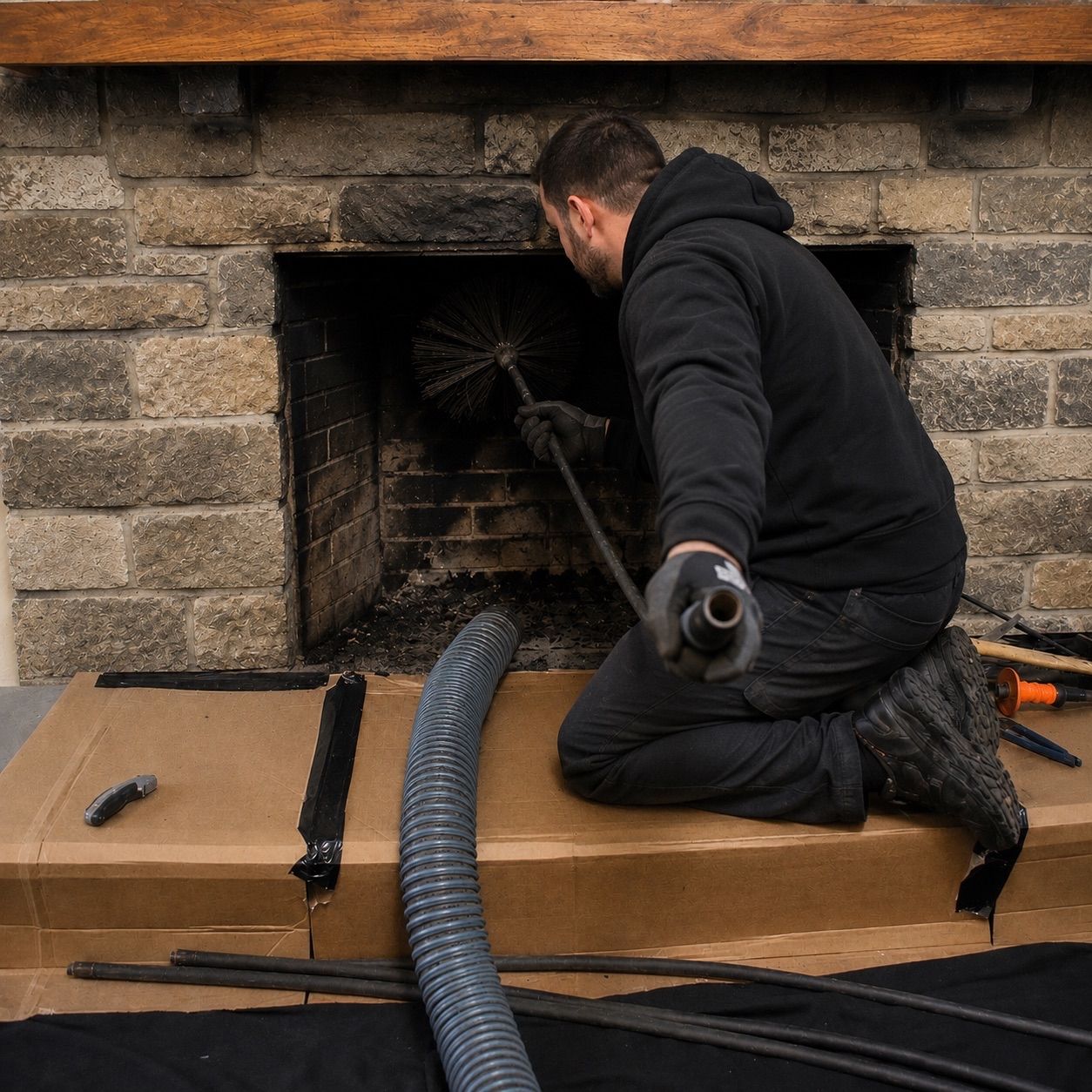
The 1/8-inch line sweeps work to
CSIA's Level 1 inspection procedure says to sweep, or recommend sweeping, any chimney with 1/8 inch or more of buildup. It is a measured threshold rather than a count of fires, which is why two houses on the same street that burned the same number of fires can get different answers.
Wet or unseasoned wood, small smoldering fires and a damper closed down early all push a flue past that line faster. A hot fire of dry wood leaves less behind.
Leaf litter, nests and other things that did not come from the fire
A flue with a missing or torn screen collects material from outside: leaves, twigs, seed pods and nest building. Where dry vegetation surrounds the house, this is the more worrying find, because it is loose, dry and sits directly above the firebox.
It comes out during the cleaning, but its presence says the screen has failed. Removing a nest and leaving the torn mesh in place means the job will be repeated. If birds may be nesting now, say so before the visit, because federal protection for migratory birds can limit when an active nest is removed.
If you know roughly how many fires the chimney saw last winter, and whether anything has been heard moving inside it, include that. A short description, and a photo if you can take one safely, is a good start to an estimate request.
Where the ash goes on a brush-side property
Fireplace ash can hold live embers long after the fire looks dead. On a lot with brush close to the house, the safer habit is a metal container with a tight lid, set on bare ground or concrete away from the structure and the planting, until the ash is cold right through.
During a cleaning, ash and deposits are contained at the firebox and bagged. Clearing ash between cleanings is the homeowner's job, and in dry, windy weather it is the part of fireplace use most likely to cause trouble outdoors.
No-burn days and which fireplaces they cover
From November through the end of February, South Coast AQMD can declare no-burn days. On those days no wood-burning device may be used, and that includes EPA-certified and pellet stoves. Gas fireplaces are outside the restriction.
The status for a Calabasas address can be looked up on the district's no-burn map by address or ZIP code, through its Air Alerts e-mail, or by calling 866-966-3293.
Why two cleanings in the same city are priced differently
The deposit stage matters most; a first-stage flue and a glazed third-stage flue are different jobs. After that come the flue type, whether debris or a nest has to come out, how many flues the chimney holds, and roof access on a sloping lot.
A cleaning that turns up a damaged screen or a cracked flue raises a repair question, and that is quoted on its own.