Firewood, damper settings and the deposits they leave
The biggest single influence on creosote is the wood. Logs that have not dried long enough spend energy boiling off water, which keeps the fire and the flue cool. A damper closed down to make a fire last overnight does the same, and a long smouldering fire is one of the quickest ways to build the hard, glazed form of creosote that a brush cannot remove.
Dry deposit that wipes off comes out with a standard cleaning. A flaky, crusted layer takes more work. Glazed deposit needs a treatment to soften it first, and that is the separate creosote removal job.
No-burn alerts at the foot of the San Gabriels
South Coast AQMD's no-burn alerts run from November through the end of February and apply to all wood-burning devices on a mandatory day, including EPA-certified and pellet units. Gas fireplaces are outside the programme.
The district exempts mountain communities above 3,000 feet. That exemption is about elevation, not about being close to the mountains, so a foothill address is not exempt on that basis alone. The district's map lets you check a specific address or ZIP code; homes that rely on wood as their only heat and homes without natural gas service have their own exemptions.
Tell us how often the fireplace was used last winter and whether the screen at the top looks dark from the ground. Call or send the details, and ask for an estimate for the work.
What a cleaning covers, from the smoke shelf to the arrester screen
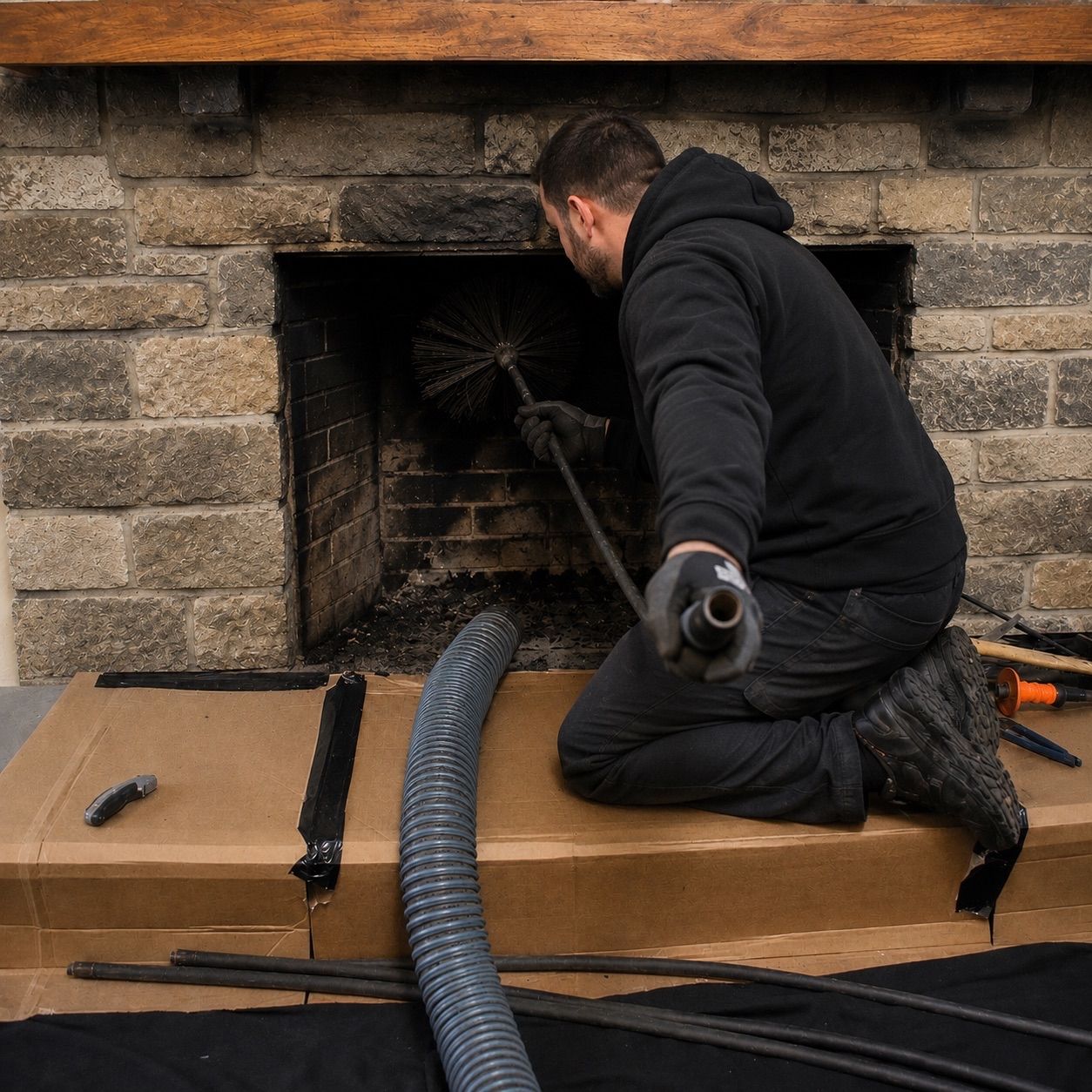
The fireplace opening is sealed with a vacuum running behind it, the flue is brushed full length, and the smoke shelf behind the damper is cleared by hand. At the outlet, the arrester screen is cleaned or, if it is badly corroded, flagged for replacement.
Ash from the firebox should be treated as live even when it looks cold. Put it in a metal container with a tight lid and keep that container outdoors on a non-combustible surface, well away from the house, the deck and any vegetation.
What makes one La Cañada Flintridge cleaning larger than another
The deposit is the main factor: which form, and how far up. After that: the state of the arrester screen and whether the cap has to be cut free; the height of the chimney, which on a sloping lot can be much greater on the downhill side; leaves or needles that have dropped into the flue from overhanging trees; and any nesting material that has to be cleared before brushing.