The eighth-of-an-inch line that triggers a cleaning
CSIA's standard of practice for masonry chimneys is plain about the threshold: sweep, or recommend sweeping, any chimney with 1/8 inch or more of buildup. That is roughly the thickness of two stacked coins, and it is measured on the flue wall, not guessed from the firebox.
A quick check from below is to scrape the smoke shelf or the flue just above the damper with a fireplace tool. If the scratch shows a layer you could fill with the edge of a coin, the flue is due. If it comes back matte black and thin, it may not be.
Glendale burning habits that fill a flue faster
Where a Glendale fireplace is lit on cold evenings rather than all day, it sees short fires started in a cold flue, and those deposit more than a hot fire that runs for hours. Closing the damper partway to hold heat in the room slows the smoke down and makes the problem worse.
Where a house in one of Glendale's older neighborhoods has an original masonry fireplace, the flue may be larger than the fire needs. A wide flue stays cooler, so the smoke condenses sooner. Wood that has not dried for a season adds water vapor to the mix and lowers the flue temperature further.
Between November and the end of February, the South Coast AQMD can call no-burn days. On those days no wood-burning device may be used at all, including cleaner-burning wood stoves and pellet units; gas fireplaces fall outside the curtailment.
Tell us how often the fireplace was lit last winter and whether you have seen shiny black deposits above the damper. Send the details of the issue and request an estimate for the specific work.
Keeping soot out of the living room during a cleaning
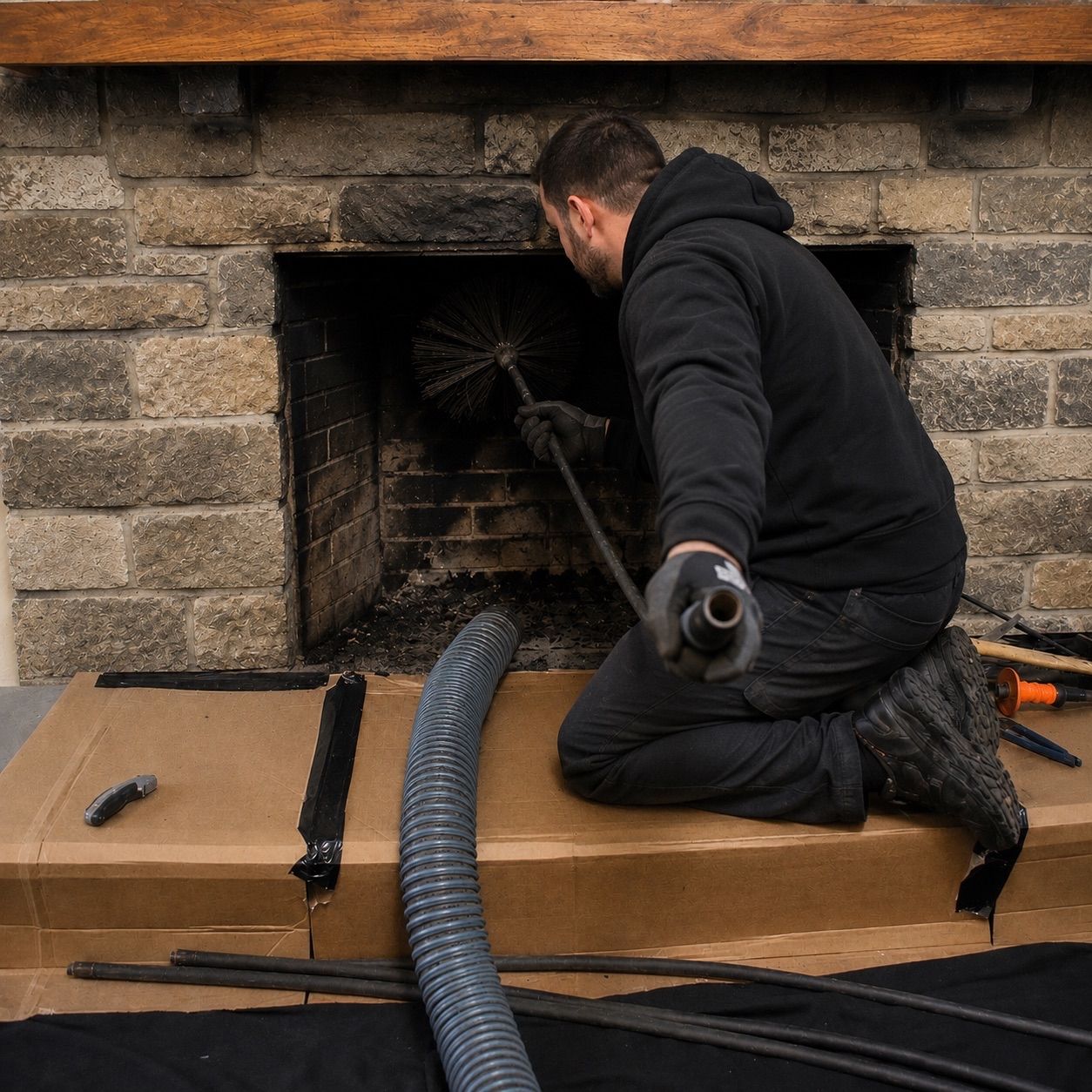
The fireplace opening is sealed with plastic or a board before any brushing starts, and a HEPA vacuum runs behind that seal so dust is pulled away from the room rather than pushed into it. Drop cloths go from the hearth to the door the equipment comes through.
If the hearth has original glazed tile or a painted surround, say so when you get in touch. Those surfaces are covered and the vacuum hose kept off them, because soot rubbed into unglazed grout is hard to lift afterwards.
What changes the price of a Glendale chimney cleaning
The deposit stage matters most: a stage-one flue is a straightforward brush-down, while glaze adds treatment and a return visit. After that, the variables are physical.
- 1Number of flues, including a second fireplace or a wood stove on a separate flue.
- 2Whether the flue can be brushed from the firebox or needs roof access on a steep or tall roof.
- 3How much has collected on the smoke shelf, and whether nests or fallen debris have to come out first.
- 4Whether the cleaning uncovers damage that needs a repair instead.