Why a Long Beach flue smells worse on damp days
Creosote is porous and takes on moisture from humid air. That is why a fireplace unlit for months can give off a sharp, smoky smell when the marine air rolls in, and why the smell seems constant in a house close to the water. It comes from deposits already in the flue, and cleaning them out is the direct fix.
Air moving down the chimney carries the smell into the room. A damper that no longer closes tightly, or a house that draws air down the flue when the kitchen or bathroom fans run, makes it stronger. If the smell outlasts the cleaning, other causes are covered under chimney odor removal.
Rust flakes on the smoke shelf, and what they mean
On a chimney exposed to salt air, the smoke shelf behind the damper often holds rust flakes mixed in with the creosote. They come from the cap, its mesh or the damper plate, and they go out with the rest of the debris. They are also a warning that the metal they came from is thinning.
In a house further inland, the debris on the shelf is more often leaves, twigs and old nesting material. Whichever it is, what comes off the shelf is worth reporting when the job is done, because it points to the next thing needing attention.
Describe what you find on the firebox floor or smell in the room, and how often the fireplace was lit last winter. Send the details of the issue and request an estimate for the specific work.
How the flue is cleaned without dust in the room
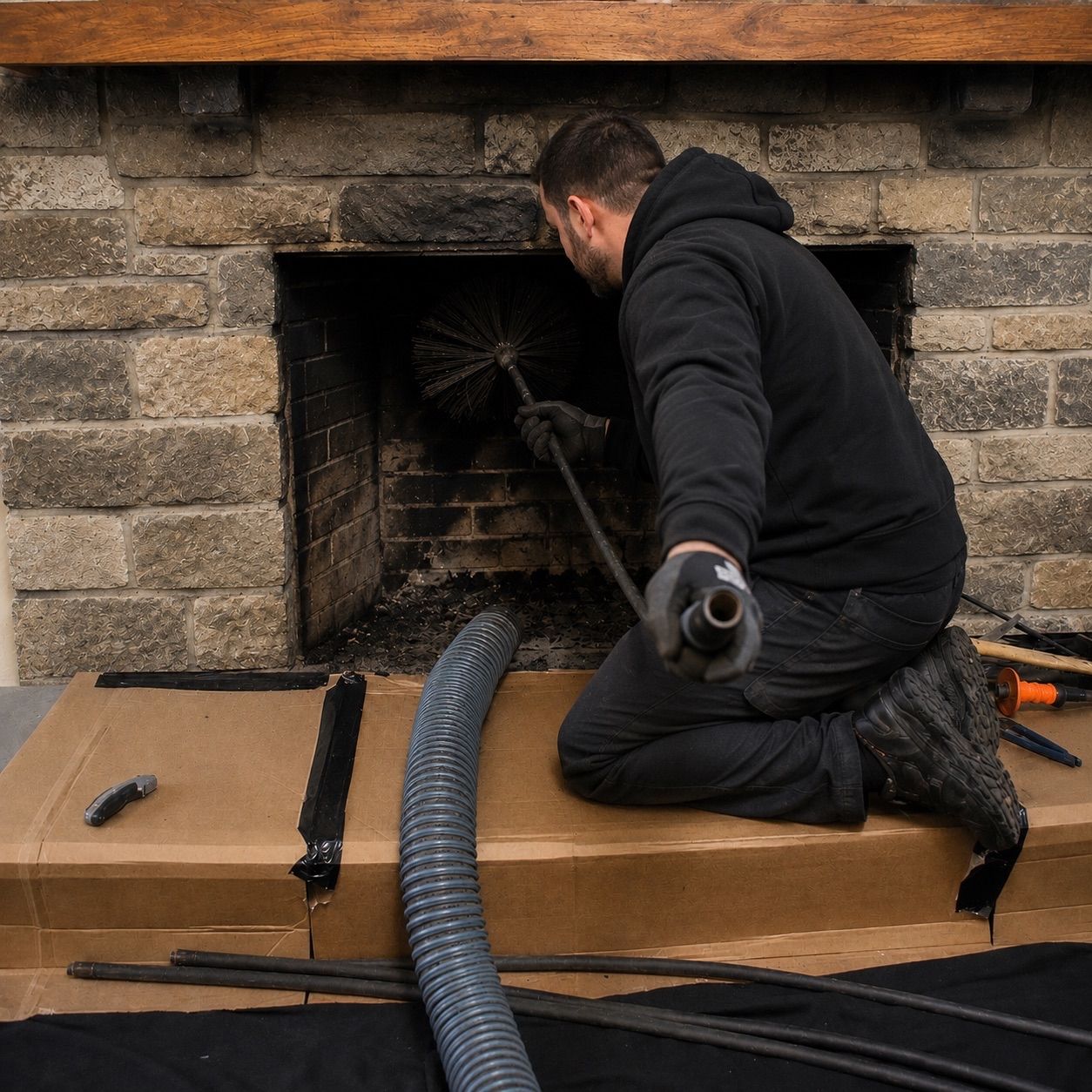
The firebox opening is sealed and a vacuum runs behind the seal for the whole job. Brushes sized to the flue are run through its full length; a clay tile flue and a metal flue take different brushes, and a factory-built chimney is cleaned as its manufacturer directs.
The smoke chamber above the damper is brushed too. Its sloping walls are rough on many masonry chimneys and hold deposits the straight flue does not. The damper is then cleaned enough to open and close fully, and the ash comes out of the firebox.
Chimney cleaning cost factors in Long Beach
No figure appears here because chimneys differ too much. What moves the estimate:
- 1The stage of creosote, and whether any has glazed.
- 2The flue type: clay tile, unlined brick or factory-built metal.
- 3Roof access, which in a condo or apartment building may need the building manager.
- 4How much debris, rust scale or nesting material is on the smoke shelf.
- 5Whether the cleaning exposes damage that needs a separate repair.