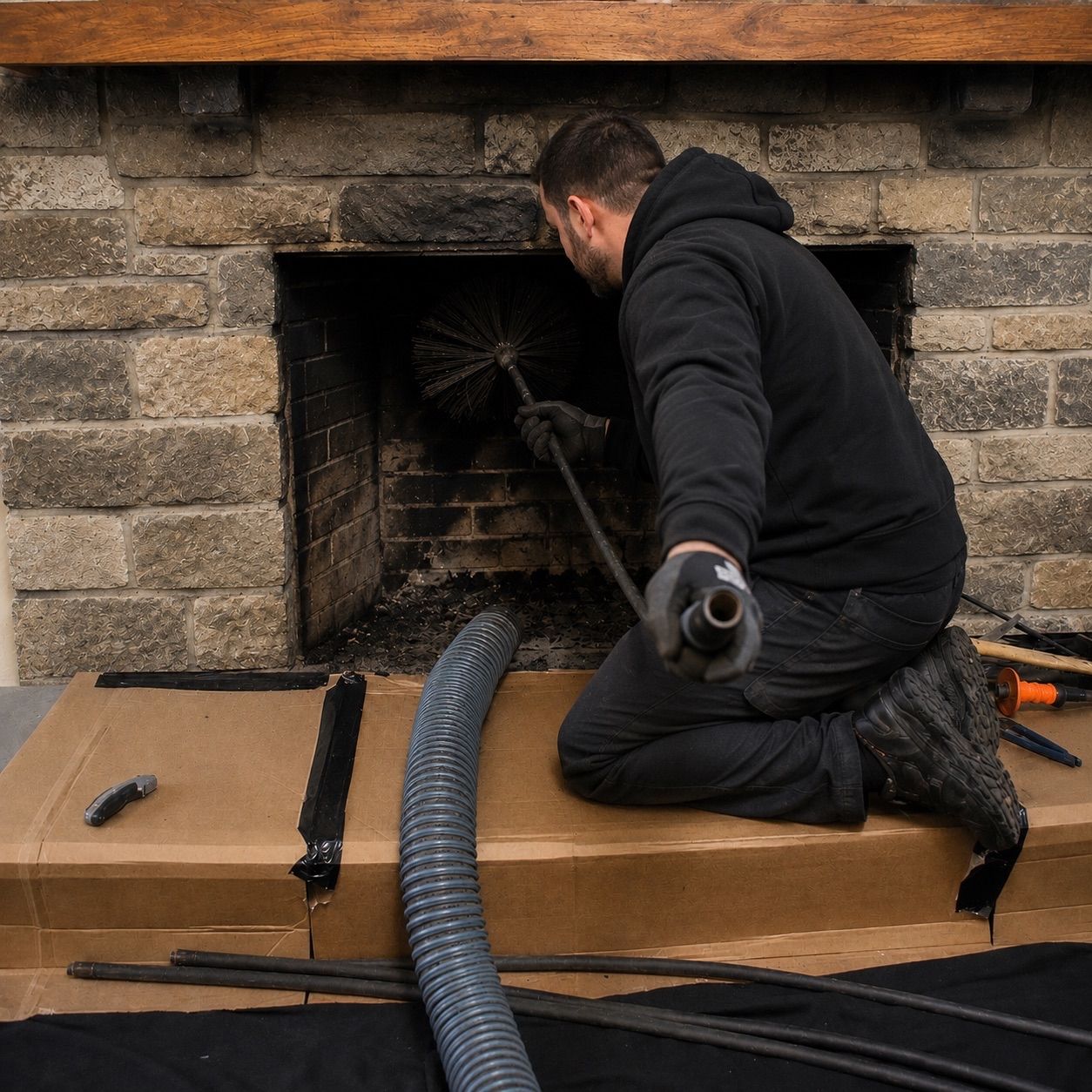
What comes out of a flue that is rarely lit
A flue that sees few fires collects little creosote and plenty of everything else: leaves, twigs, fallen mortar and nesting material. On a lot with large trees near the house, leaf litter through an open flue top can build up surprisingly fast.
CSIA makes the point directly: annual inspection applies even to a chimney that is seldom used, because animals may nest in the flue and deterioration goes unnoticed. The first fire of the year in a blocked flue sends smoke into the room.
Creosote in the fireplace that gets used
The main fireplace's flue carries the familiar deposit. Dry soot comes from hot, well-aired fires; flaky, then tarry, then glazed creosote comes from smoke that cooled before it left the flue. NFPA 211 recommends inspecting annually and cleaning as the condition requires, so the amount found decides whether it is cleaned.
A fireplace used for long evening fires with the glass doors partly closed tends to run cooler and build creosote faster than one burned hot and short.
Cost variables when a house has several flues
The number of flues that actually need cleaning is the biggest variable, followed by roof height on a two-storey house, the roof covering, and whether a single cap over several flues has to be removed. A flue that turns out to be blocked with nesting material or debris adds time.
If a cap needs replacing, any permit question is for the City of San Marino.