Los Angeles County Service Areas · Chimney & fireplace services · Estimate requests online
Fireplace Installation Services in Los Angeles
Fireplace installation in the Los Angeles basin is mostly gas, inserts and electric, because air-quality rules limit which wood-burning devices can go in. Knowing what is allowed at your address comes before choosing a unit.
- Chimney & Fireplace ServiceCleaning, inspection & repair
- Los Angeles Service AreasCities & LA neighborhoods
- Free Estimates AvailableEstimates at no charge
- Easy to ReachCall or request online
There Are Four Realistic Ways to Add a Fireplace
A fireplace installation involves three systems at once: the appliance, the way its exhaust leaves the house, and the fuel that reaches it. The fuel you choose settles most of the rest, including whether a permit is likely and what the local air district allows.
Tell us what you are planning and we will tell you what we can cover and what would need arranging separately.
Gas fireplace or gas insert
A sealed gas appliance, either built into a wall with its own vent or set into an existing firebox. Of the fuel-burning options, it is the one Rule 445 restricts least.
Gas fireplace installationInsert in an existing fireplace
A closed appliance (gas, EPA-certified wood, or pellet) set into a masonry firebox, with a new liner run up the chimney.
Fireplace insert installationElectric fireplace
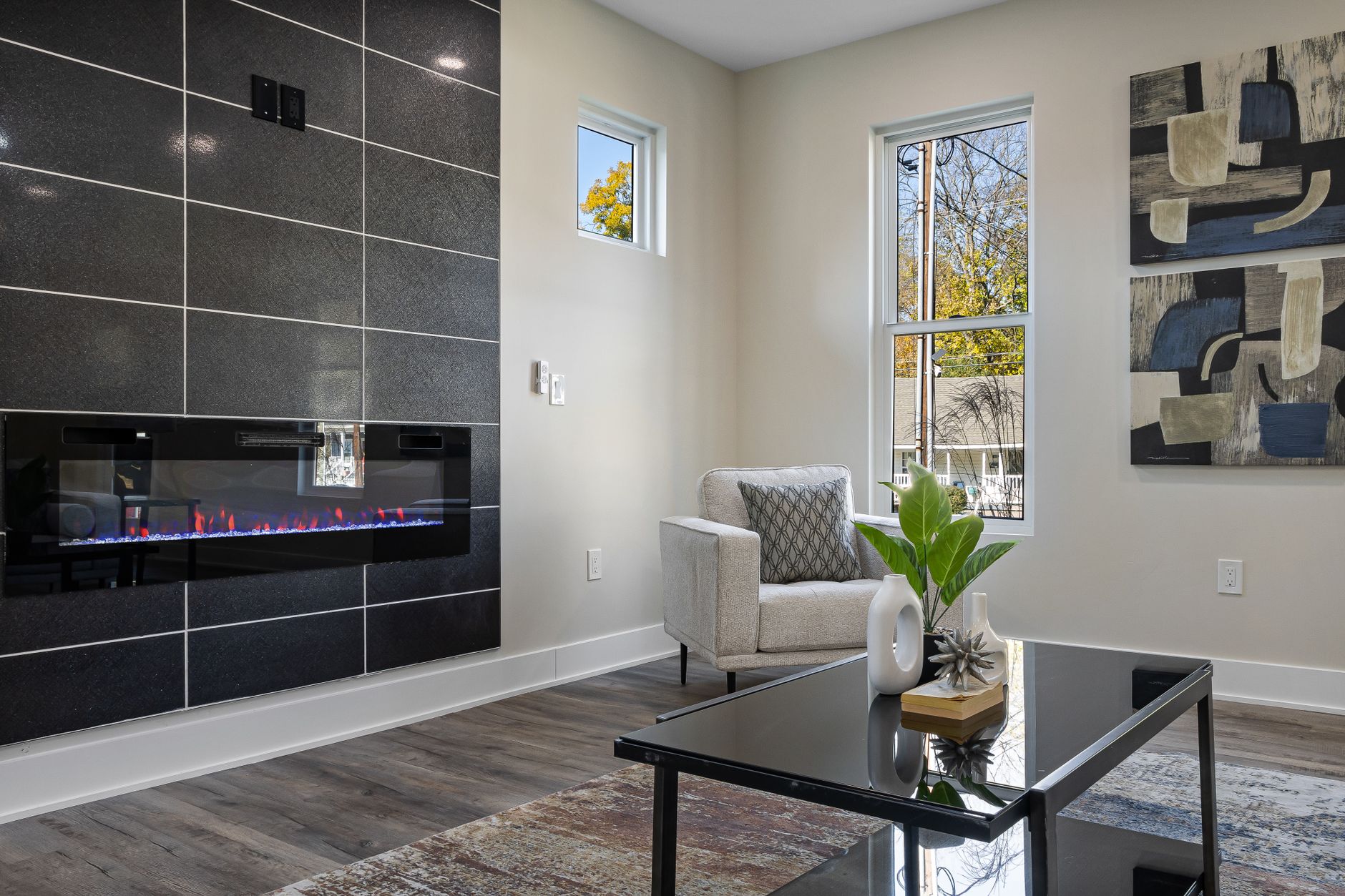
No flue, no gas line. A plug-in unit or a hardwired built-in. The simplest installation and the least heat.
Electric, belowWood-burning appliance
In the basin this now means an EPA-certified stove or insert, a pellet heater, or a masonry heater, not a new open hearth.
Wood-burning, belowWhat Los Angeles Air-Quality Rules Allow
A new open, wood-burning masonry fireplace is generally not an option in the Los Angeles basin. The rule that decides this is South Coast AQMD Rule 445 (amended September 5, 2025), and it sets two separate limits on what can be permanently installed.
Newer homes: no wood-burning device at all. No wood-burning device may be permanently installed in a New Development, which the rule defines by construction having begun on or after March 9, 2009. There are two exemptions: a property with no natural gas infrastructure within 150 feet of its property line, and a property at 3,000 feet or more above sea level.
Older homes: only four device types. Any wood-burning or gas-fueled device that is permanently installed has to be one of the following.
An EPA-certified wood-burning heater
a stove or insert tested to the federal emission standard, with a closed door and controlled air supply
A pellet-fueled heater
a stove or insert that burns compressed wood pellets fed from a hopper
A masonry heater
a heavy masonry mass with a long internal smoke path that stores the heat of a short, hot fire and releases it slowly; not the same thing as a masonry fireplace
A dedicated gaseous-fueled fireplace
a fireplace set up to burn gas only, so that it cannot burn wood
An open, traditional wood-burning fireplace is not on that list, which is why installing one is generally not possible here. The device-type requirement does not apply to designated historic sites or to contributing structures in a Historic Preservation Overlay Zone (HPOZ). If your house is in one, confirm its status with the city before planning around the exemption.
Being an allowed type does not make a device exempt from burn restrictions. An EPA-certified stove or a pellet heater still may not be burned on a no-burn day; only gas appliances fall outside that curtailment. How no-burn days work, and which households are exempt, is covered on the chimney cleaning page.
Rule 445 applies within the South Coast air district. Parts of northern Los Angeles County fall under a different air district, so check which one covers your address. The full rule is a short PDF and worth reading before you buy an appliance.
Wood-Burning Fireplace Installation: What Can Actually Go In
In an older home in the basin, wood-burning fireplace installation now means a closed, EPA-certified appliance or a masonry heater, not a new open hearth. In practice that is one of three things.
An EPA-certified wood stove on a non-combustible hearth, connected to a listed chimney system or to a lined masonry chimney. An EPA-certified wood insert set into an existing masonry firebox, which is the usual route when the house already has a fireplace nobody wants to lose; see fireplace insert installation. A masonry heater, which is a substantial build with its own foundation and is rarely a retrofit.
A wood appliance connected to an existing chimney needs that chimney in sound condition and a liner sized to the appliance, run its full height. Chimney liner installation explains why the original flue is usually the wrong size. EPA Burn Wise lists certified wood heaters and explains how they differ from an open fire.
The limits above govern what is newly installed. If the house already has an open masonry fireplace and the aim is to bring it back into use rather than replace it, fireplace restoration is the relevant page.
Not sure what your house allows?
Tell us roughly when the house was built, whether it has natural gas, and whether there is an existing fireplace. That is usually enough to narrow the options before anyone visits.
Gas Is the Least Restricted Choice
A dedicated gas fireplace is one of the four allowed device types, and gas appliances are outside the no-burn restriction. For a fireplace that burns a real fuel, that makes gas the least restricted route in the basin.
A direct-vent gas fireplace draws combustion air from outside and exhausts through a sealed pipe, so it can go on a wall with no chimney behind it. An existing wood fireplace can be converted with a gas insert or, where the firebox allows, a gas log set. Gas fireplace installation covers direct-vent units, conversions and gas logs.
Electric Fireplaces Are the Simplest Installation
An electric fireplace needs no flue, no gas line and, for a plug-in unit on an existing outlet, usually no permit. A hardwired built-in or a new circuit is electrical work, and the building department may want to see it.
The trade-off is heat. Most units work as a small supplementary heater with a flame effect, which suits a bedroom or a condo where a combustion appliance is not allowed. Check the unit's wattage against the circuit before buying; a heater on a circuit that is already loaded will trip the breaker. The electric vs gas fireplace comparison covers heat output and running cost.
A Prefab Fireplace Is Installed as One Listed System
A factory-built (prefab) fireplace is a metal firebox and chimney tested together as a system and listed that way. Its safety depends on every part being the listed part: the firebox, the chimney sections, the firestops, the roof flashing and the termination cap.
That has two practical consequences. The whole system goes in exactly as the installation manual specifies, including clearances to framing. And parts from another manufacturer are not interchangeable, even when they appear to fit. A wood-burning prefab unit is still a wood-burning device under Rule 445, so the device-type rule above applies to it.
What Scoping an Installation Settles
Six questions decide whether a fireplace can go where you want it. Each one is answered from the house, not from the showroom.
Fuel
Whether the house has natural gas, where the nearest supply is, and whether the circuit can carry an electric unit. Fuel decides almost everything that follows.
The venting path
Up an existing chimney (which will need a liner sized to the appliance), through an exterior wall with a direct-vent pipe, or up through the roof in a new chase. A route that looks simple on a floor plan can be blocked by a beam or a window.
Clearances to combustibles
Every listed appliance comes with an installation manual that sets how far the unit, its vent and the mantel must sit from wood framing and trim. Those figures come from the listing, not from habit, and they differ between models.
Structural support
A heavy insert or stove needs a hearth and floor that can carry it; a masonry heater needs a proper foundation. A wall opening for a built-in may cut a stud that was doing something.
Gas supply sizing
A new gas appliance adds load to the gas line. Whether the existing line and meter can carry it is a question for a licensed plumbing or gas contractor, and it is better asked before the appliance is chosen.
Permit
Whether the local building department wants one for this particular job, and what it will inspect. That is its call, and it varies between the cities in Los Angeles County.
Where the plan uses an existing chimney, its condition comes first. A chimney inspection establishes whether the flue, crown and firebox can take a new appliance.
Permits Are Set by Your Building Department
Installations involving a flue, gas piping, structural changes or new wiring usually need a permit, but the local building department decides, and the answer differs between cities in Los Angeles County. Where a permit is issued, the work is signed off by the department's inspector rather than by the installer.
Gas piping is normally pressure-tested before an appliance is connected, and a new flue should be confirmed clear and properly seated before the first fire. Unpermitted work can surface later, at a sale or an insurance claim. Before work starts, ask whoever is doing it who will apply for the permit and book the inspections.
What Drives the Cost
No price is published here. The gap between a plug-in electric unit and a new vented gas fireplace in a rebuilt wall is too wide for a single figure to mean anything. These are the variables that move it.
Appliance type and size
A plug-in electric unit, a direct-vent gas fireplace and a masonry heater are different purchases before any installation is counted.
Venting
Using an existing chimney usually means a new liner run its full height. A new vent through a wall or roof means framing, flashing and finish work.
Gas line or electrical work
Distance from the existing supply, whether the line needs upsizing, and whether a dedicated circuit is needed.
Condition of what is already there
An insert going into a chimney with cracked flue tiles or a damaged firebox needs that repaired first. That is only known once the chimney has been looked at.
Finish
Surround, hearth, mantel and any wall that has to be opened and rebuilt. On a built-in, finish work can be a large share of the total.
Permit and inspection
Fees and inspection visits set by the jurisdiction, where a permit is required.
Describe the problem and request an estimate.
When a New Fireplace Is the Wrong Project
If the house already has a fireplace that has simply stopped working, repair is usually cheaper than replacement. Fireplace repair covers firebox, damper and draft faults.
When not to call us: if all you want is a plug-in electric fireplace in front of an existing outlet, you do not need an installer. Read the manual, check the circuit, and set it up yourself. The same goes for anyone set on a new open wood-burning fireplace in a basin home whose construction began on or after March 9, 2009: unless one of the Rule 445 exemptions applies, no installer can make that allowable, and it is better to know before paying for plans.
Related chimney & fireplace services
Part of Fireplace & Insert Installation — New fireplaces, gas conversions and inserts — what Los Angeles air-quality rules allow, what the flue has to do, and how an installation is scoped.
- converting an open hearth to gasGas Fireplace Installation — Gas inserts, gas logs and direct-vent units, and the liner work they need.
- fireplace insert installationFireplace Insert Installation — Gas, wood and pellet inserts set into an existing masonry fireplace, and the liner they need.
- relining a chimneyChimney Liner Installation — Relining an unlined or failed flue, or lining it for a new insert — sizing, materials and scope.
- restoring a disused hearthFireplace Restoration — Older and disused fireplaces returned to a usable, presentable state.
- fireplace repairFireplace Repair — The hub page: firebox, refractory, damper, draft and appliance faults.
- having the chimney looked at properlyChimney Inspection — Masonry, crown, cap, flashing, firebox and flue condition, and what it means.
Further reading: The 3-2-10 Chimney Height Rule Explained · Can You Burn Wood in Los Angeles? SCAQMD No-Burn Rules
Request an Estimate
Tell us the fuel you want, and whether there is an existing chimney.
Quick check
Find the year construction started on your house. If it was on or after March 9, 2009, a permanently installed wood-burning device is off the table unless an exemption applies, and gas or electric is where to start.
Fireplace Installation Questions
There are more answers on the Los Angeles homeowner FAQ.
Planning a new fireplace?
Call, or send a short description and request an estimate. Estimates cost nothing.