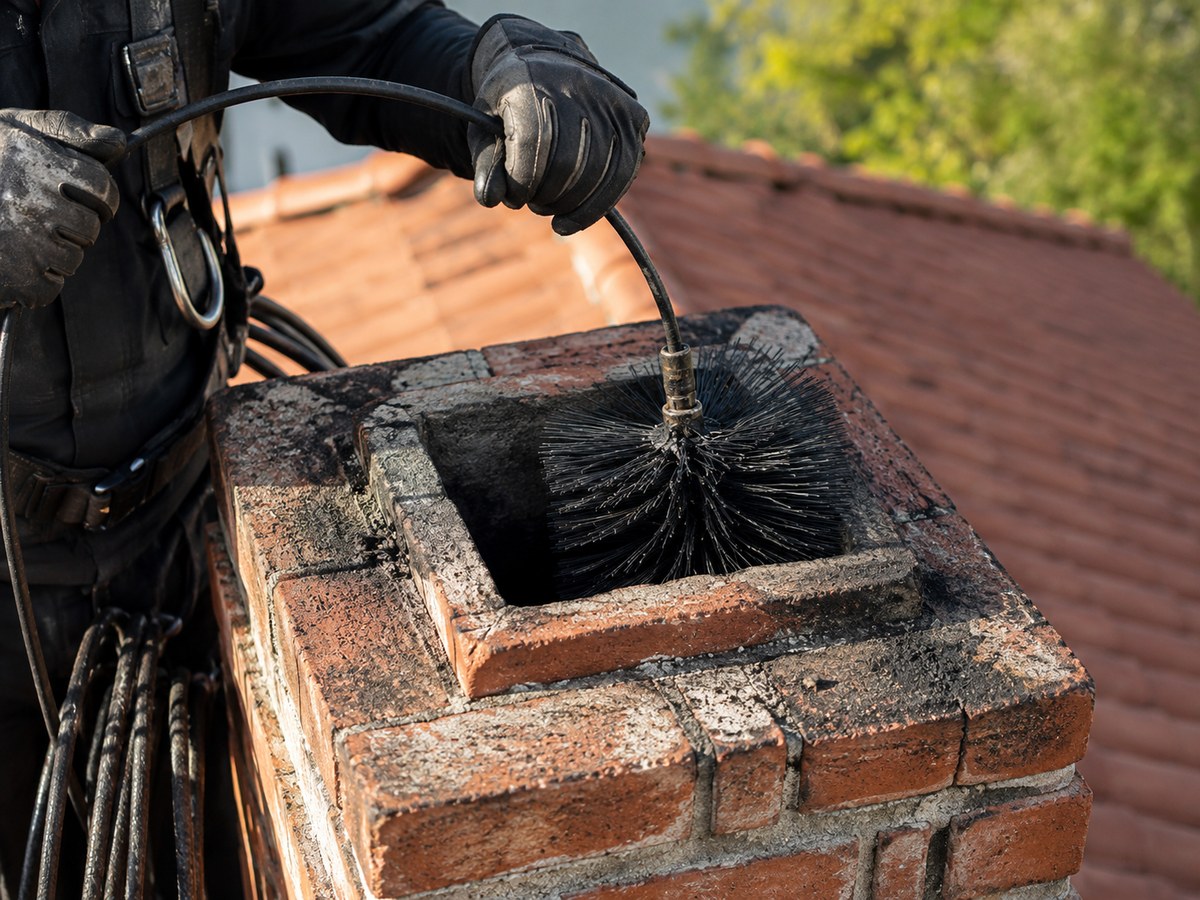
Chimney Liner Repair in Los Angeles
The flue liner is the one part of a chimney you cannot see from the ground, the roof or the firebox — and the part whose condition decides what the chimney needs.
This page covers what the liner does, the signs that may point to deterioration, and what the trade means by repair, relining and replacement.
Los Angeles Area Pages
Los Angeles County
Free Estimate
Estimates at no charge
Estimate Requests
Submitted online
What a Chimney Liner Does
A chimney carries heat and combustion products away from an appliance. The liner is the surface inside it that keeps both within the flue rather than in contact with the masonry and framing around it. It also gives the flue a smooth passage of the right size, which is part of how a chimney draws.
The practical consequence runs through this whole page: the liner is the part of the chimney you cannot see. Masonry can look sound with a damaged flue behind it, and a weathered chimney can have an intact one. The two are assessed separately.
Signs That May Point to Liner Deterioration
Each is a reason to have the flue looked at. None establishes what state the liner is in — several have causes unrelated to the liner.
Tile fragments in the firebox
Pieces of clay arriving at the hearth have come from somewhere up the flue.
Visible cracking in the flue
Cracks in the liner surface where it can be seen from the accessible openings.
Open joints between sections
Clay liners are laid in sections; the joints between them can open as the chimney moves.
Missing or broken material
Gaps where liner material has gone entirely, rather than merely cracked.
Odour that strengthens in damp weather
A smell from the chimney that tracks with humidity rather than with use.
Staining inside the firebox
Discolouration or damp marks on the firebox walls and around the damper.
Smoke or draft behaving differently
A fire that draws poorly, or smoke spilling into the room, may warrant evaluation — among several other possible causes.
Anything after a chimney fire or felt shaking
Events that load the flue are worth following up, whether or not anything looks different from below.
Common Chimney Liner Materials
Three broad categories are used in the trade. Background on what exists, not a recommendation — what suits a given chimney depends on the flue, the appliance and the condition of what is already there.
Clay tile
The traditional lining in masonry chimneys, laid in sections up the flue and common in older Los Angeles housing. Durable under heat but rigid: it cracks under thermal shock and movement, and the joints between sections can open.
Metal liners
Metal systems sized to the flue and run inside the existing masonry. Different alloys suit different fuels and appliances. Used both in new work and where an existing liner is being replaced rather than repaired.
Cast-in-place and resurfacing systems
Materials applied to the inside of an existing flue to form a new continuous surface rather than a separate liner being inserted. Several proprietary systems exist, each with their own conditions of use.
Cracked, Deteriorated or Failed?
These describe three different states of the same component, and they are the distinction that decides which conversation you are having.
Cracked
Cracking in liner material otherwise in place and doing its job. Extent, location and whether it runs through the material separate this from the next state.
Deteriorated
Degradation over an area rather than at a point — surface breaking up, joints opening, pieces coming away. Still there, no longer intact.
Failed
Sections missing, displaced, or gone entirely, so the flue no longer has a continuous lined surface. This is the state where the question stops being about repairing what is there.
Repair, Reline or Replace?
These three words get used loosely, including by people quoting for the work. What they generally mean in the chimney trade:
In the trade, repair generally means addressing damage in a liner that is otherwise sound and in place — localised cracking or a limited area of damage, with the rest of the liner intact enough to keep doing its job.
Relining generally means giving the flue a new lining surface without rebuilding the chimney around it. Several approaches exist: a separate liner run inside the existing flue, or a material applied to the inside of it to form a new continuous surface.
Replacement generally refers to removing existing liner material and putting new material in its place. Where a masonry chimney is being rebuilt for other reasons, liner work is often part of the same project.
Read this before assuming anything. This section explains common liner terminology and is not a list of specific liner methods currently confirmed as offered by Chimney Axis. Named proprietary systems exist in the trade and you will encounter them while researching; none is being put forward here as something we apply. Tell us what you are dealing with and we will tell you what we can cover.
Why Liner Condition Is Evaluated First
Repair, relining and replacement address three different states of the same component and differ substantially in scope — and the difference is not visible from the hearth.
That makes the liner unusual. A cracked crown can be seen from the roof, a failed joint from the ground; the flue surface from neither. Symptoms at the hearth say something is worth looking at, not what it is. Committing to an approach before the condition is established risks it in both directions — paying for the larger option when the smaller would have held, or the smaller when it will not.
Moisture and Liner Deterioration
Water is one of the more common contributors to liner deterioration, and it usually arrives from above rather than through the liner itself. A cracked crown, a missing cap or failed flashing puts water into a flue that was not designed to stay wet.
Clay is porous and joints absorb; metal components corrode. Moisture rarely acts alone — it accelerates deterioration that heat cycling and age had already started, which is why a liner under a long-standing water path tends to be worse than its age suggests.
The practical point is that fixing the liner without finding the water path leaves the mechanism running. Chimney leak repair covers establishing where water is getting in, and crown repair covers the surface at the top of the stack that most often lets it through.
Chimney Liners in Los Angeles
Older masonry chimneys are clay-lined. A great deal of the Los Angeles housing stock predates metal lining systems, so the liner in question is usually clay tile laid in sections — rigid, durable under heat, and vulnerable to movement at the joints between sections.
Heat cycling and age do the work. A flue heats and cools every time a fire is lit, and a lining that has done that for decades has been through a great many cycles. Concentrated wet periods after long dry stretches compound it.
Seismic movement, stated carefully. Movement in a chimney can affect a rigid lining, and in Southern California seismic activity is one factor that may warrant closer evaluation. It does not follow that shaking damages a liner, or that a chimney which has been through an earthquake needs relining — most do not. What is fair to say is that a chimney tidied up at the exterior after a quake has had nothing established about the flue inside it.
Why Chimney Axis
Clear service information
Every service has its own page saying what it covers, so you can see what you are asking for before contacting anyone.
Los Angeles County area pages
A local page for each city listed on this site, with the conditions affecting chimneys in that part of the county.
Related chimney services
Inspection, leak, masonry and rebuild work alongside liner questions, so the question does not stop at one job type.
A free estimate request
One form, and estimates cost nothing. Describe what you have noticed and we come back to you.
Before you assume a method
If you have been told your chimney needs a specific named liner system, or you are researching one, ask us what we can cover before assuming it is on offer here — this page explains the terminology and does not claim any particular method. If what you actually need is a specific inspection product for a transaction, ask about that too. And if the chimney is simply dirty and nothing else has changed, what you want is chimney cleaning, not liner work. We would rather say so than sell you the wrong job.
Related Chimney Services
Chimney Inspection
Chimney Leak Repair
Chimney Repair
Chimney Rebuilding
Smoke Chamber Repair
Chimney Cleaning
Background reading: what a chimney liner actually does.
Nearby Los Angeles Area Pages
Local area pages for nearby cities, or Browse all Los Angeles County area pages.
Describe what you have seen
Tell us what service you need and request an estimate online.
What helps us most
Whether anything has arrived in the firebox, whether there is an odour and whether it tracks with damp weather, how the fire draws, and when the chimney was last used. If you have been given a diagnosis by someone else, tell us what they said.
Related pages
Prefer to write?
info@chimneycleaningla.comChimney Liner Questions
Tell us what the chimney is doing
Describe what you have noticed and request an estimate. Nothing is committed to before the flue has been looked at.