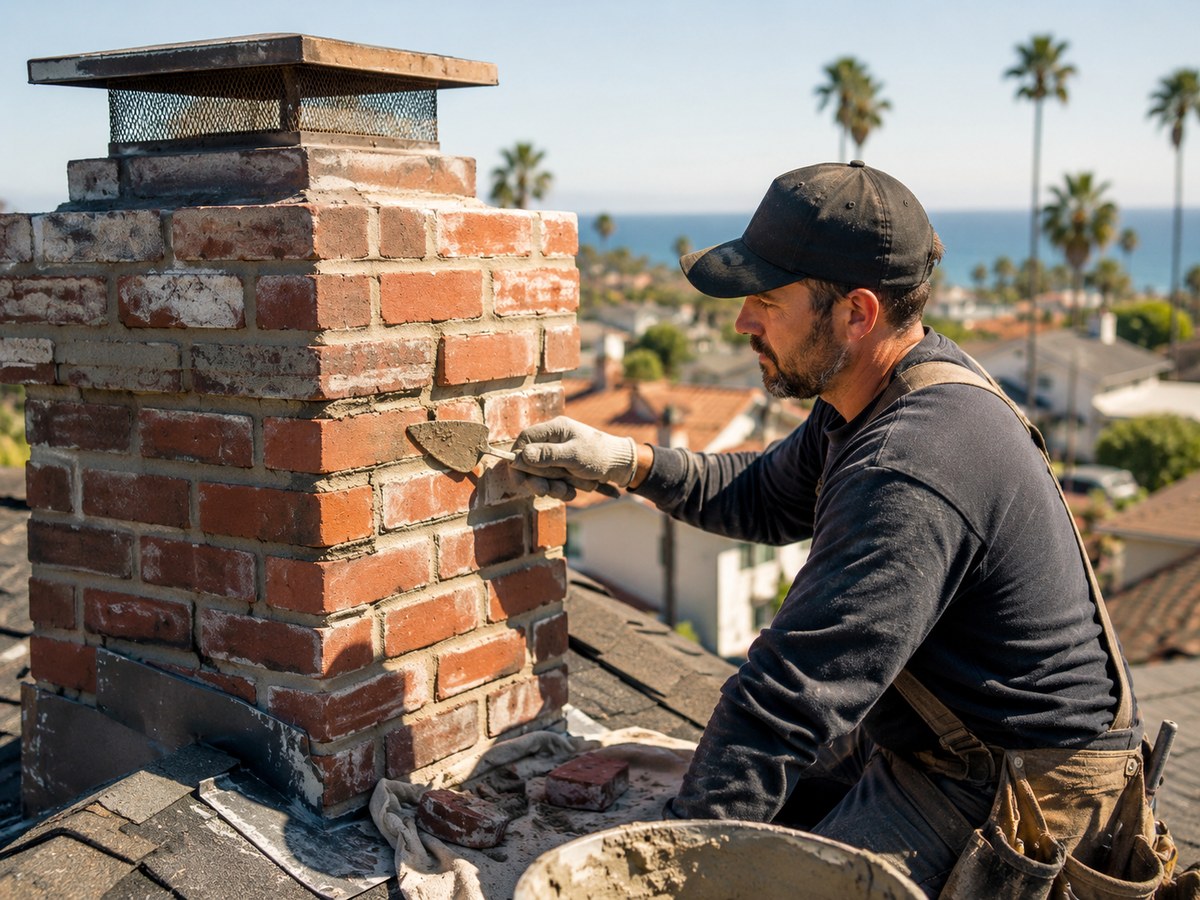
Cutting out old mortar without damaging the brick edges
Mortar can be removed with hand tools or with a grinder. A grinder is faster, and in unskilled hands it cuts into the edges of the brick, which widens every joint and changes the look of the wall permanently.
The National Park Service's preservation brief on repointing covers this in detail and is a widely cited reference on the subject. The joint is cleared back to sound mortar, loose material is brushed and rinsed out, and the joint is dampened so the old masonry does not pull water out of the new mortar too fast.
Matching sand, colour and joint profile
The sand drives the colour and texture of a joint more than any pigment does, so the existing mortar is examined on a freshly broken face rather than its soiled surface. The new mix is chosen to match that.
Profile matters as much. A joint can be finished flush, concave, raked back, struck or weathered, and each throws a different shadow. A chimney repointed with the right colour and the wrong profile still looks patched from the street.
- 1Flush: level with the brick face, common on older work.
- 2Concave: a shallow curve pressed in with a rounded tool.
- 3Raked: set back from the face, which casts a strong shadow line.
- 4Struck or weathered: angled to one edge of the joint.
Tell us which faces of the chimney show loose mortar, and whether any bricks have moved or lost their faces. Call or send the details, and ask for an estimate for the work.
Test panels and working with Pasadena preservation staff
A small sample of the proposed mortar, placed somewhere inconspicuous and left to cure, shows the real result. Mortar dries noticeably lighter than it looks wet, so judging the colour on the day it goes in is unreliable.
On a designated property, a cured sample is also the most useful thing to show the City of Pasadena's historic preservation staff, far more than a written mix description.
Inland heat and curing new mortar
Mortar needs to keep some moisture while it cures. In the dry heat of an inland summer, a joint on a sun-facing chimney can lose its water before it has bonded, and it cracks or powders as a result.
Shading the work, misting it, and scheduling the sunny faces for cooler parts of the day or the cooler months all help. Repointing in the heat of the day on a south or west face is where most early failures start.
Where repointing stops, and what it costs
Tuckpointing fixes joints. Crumbling or spalled bricks need replacement, loose top courses need taking down and relaying, and joints inside the flue are liner work. The price depends on how much of the chimney needs it, its height and access, joint width and profile, hand or mechanical removal, and the number of matching samples.