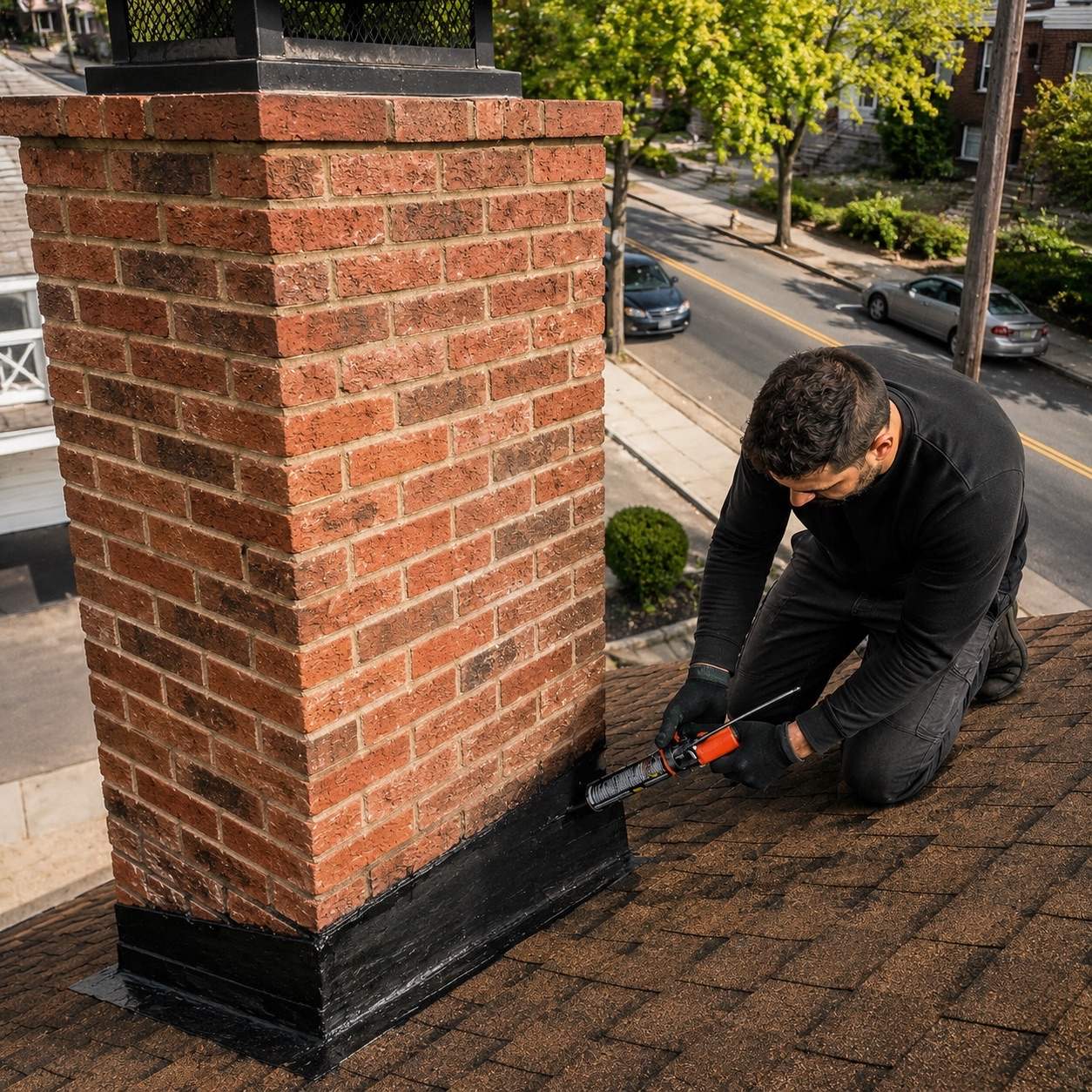
Why Pasadena chimney leaks show up with the first storms
A long dry season is hard on the materials that keep water out. Sealant around flashing dries and shrinks in inland summer heat, and a crown that expands by day and contracts at night opens its cracks a little further each year. None of that shows until the first real rain finds the gap.
The result is a stain discovered well after the storm that caused it, on a ceiling that has since dried. Dating a stain by eye is unreliable, which is one more reason to trace the leak rather than guess at it.
How the entry point is traced
The standard method is a controlled water test: one part of the chimney is wetted at a time, starting low at the flashing and working up to the crown, while someone watches inside for the water to appear. Starting low matters, because water run over the crown will also run down over the flashing and muddy the answer.
A moisture meter on the chimney breast and a look at the attic framing around the stack add to the picture. So does the counter-flashing, the upper metal piece let into a mortar joint; if that joint has opened, water gets behind the flashing even when the metal is sound.
Tell us where the water shows inside, what kind of roof the house has, and whether it appears in every storm or only some. Describe the problem and request an estimate.
Tile roofs, shake roofs and chimneys on an outside wall
Where a Pasadena house has a clay tile roof, the flashing around the chimney is dressed under and over shaped tiles, and a single slipped or cracked tile next to the stack can be the whole leak. Tiles have to be lifted and reset to reach the flashing, which adds care and time to the repair.
Where the chimney runs up an exterior side wall, as it does on many single-storey houses, the vulnerable joint is where the stack passes the eave and meets the wall. Water there tends to show on the side wall indoors rather than on the ceiling.
Matching the repair to the entry point
A crown with hairline cracks can be sealed; one that is broken up or has no overhang is rebuilt. The California Residential Code calls for a masonry chimney cap with a drip edge and a caulked bond break around the flue liners, and a crown built without them tends to leak again.
Flashing is reset or replaced with counter-flashing cut into a sound joint. Brick that is soaking up water gets its failing joints repointed first, then a vapour-permeable repellent if needed. A repellent over failed mortar only hides the problem for a season.
New metal flashing and a reshaped crown are both visible from the street. On a designated Pasadena property, the City's historic preservation staff can say whether the change needs review.
What moves the price of a leak repair
How many entry points the test finds is the first variable; one failed flashing corner is a different job from a crown, a cap and two faces of brick. Roof covering is the second, since tile has to be lifted and reset. Height above the roof, and whether the crown can be sealed or needs rebuilding, follow.
Interior ceiling and plaster repair is a separate trade and is not part of a chimney leak estimate.