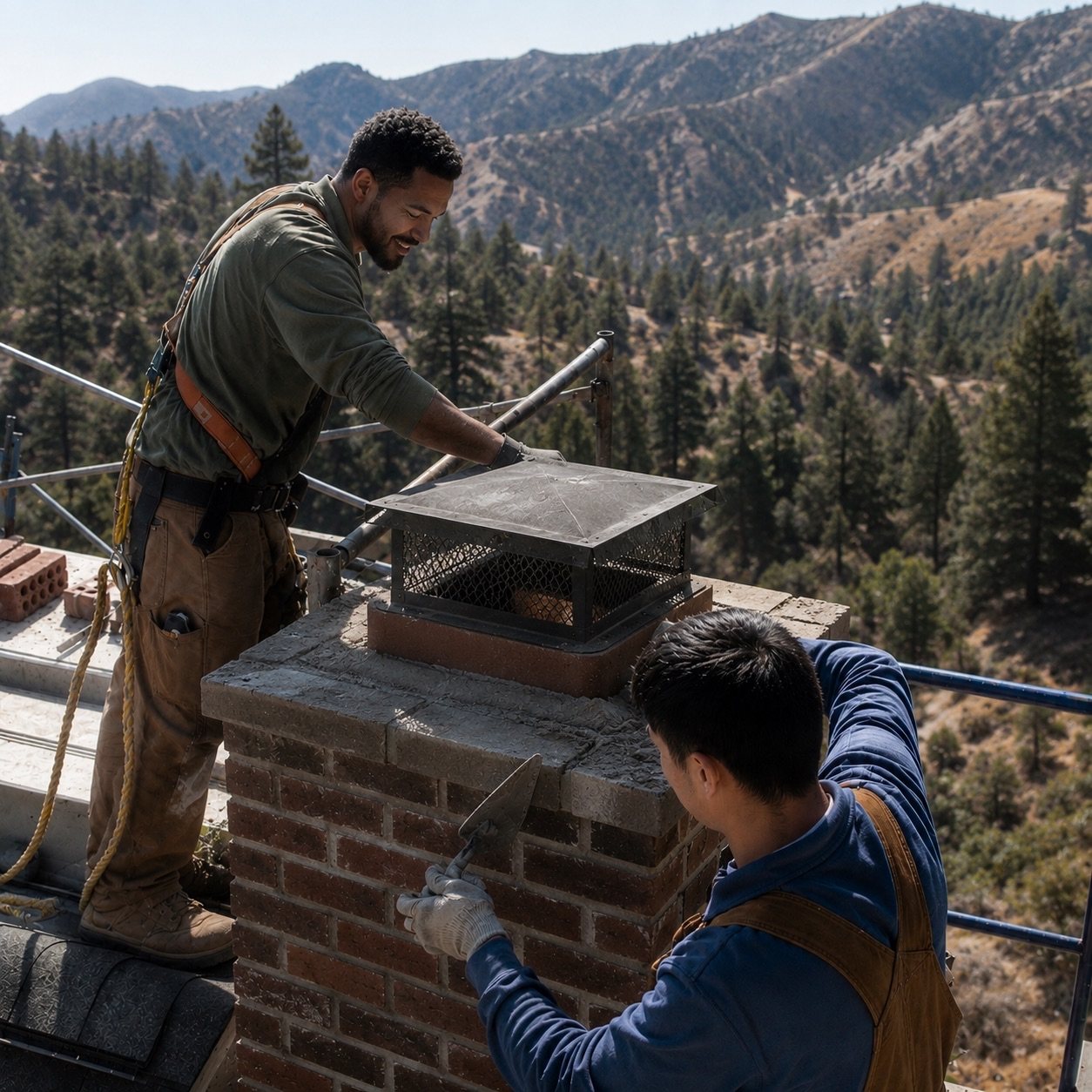
Why the top of the stack fails first
The part of a chimney above the roof takes the full weather on every face, heats and cools faster than the rest, and takes the most strain when the ground moves or the wind pushes. The crown on top of it is the first thing water reaches.
That is why so much chimney repair happens there, and why taking down and relaying the top courses is common where the lower stack is sound. It is a different job from repointing, because the bricks come off and go back on new mortar.
Repair, rebuild the top, brace, or take it down
Where the brick is sound and only joints or the crown have failed, repair is enough. Where the top courses are loose, they are rebuilt from the roof line or from the first sound course. Where the lower stack is cracked through or pulling away from the house, the conversation moves to a fuller rebuild.
Bracing is its own question. Earthquake Country Alliance notes that inadequately braced chimneys are a common problem, and the California Department of Insurance lists bracing the chimney among retrofit measures. An owner who no longer uses the fireplace may consider removing the stack above the roof and capping it instead.
Any of these can raise a permit question, which the City of Pasadena decides. On a designated landmark or in a landmark district, removing or shortening a visible chimney is exactly the kind of exterior change that can come under historic preservation review, so it is worth asking before planning around it.
Tell us what you can see from the ground, whether any material has come off, and whether the fireplace is still in use. Call or send the details, and ask for an estimate for the work.
Crown and cap: small parts with large consequences
The California Residential Code requires a masonry chimney to have a concrete, metal or stone cap with a drip edge and a caulked bond break around any flue liners. Many older crowns are a thin wash of mortar with no overhang, and they crack because they were never built to shed water or move with the flue.
A crown with fine cracks can be sealed. One that is broken up, or lets water straight onto the top courses, is replaced, and doing that before the top courses fail is far cheaper than doing it after.
Getting rebuilt brick to match a visible Pasadena chimney
When the top of a stack is taken down, the original bricks can often be cleaned and relaid, which is the surest way to make the rebuilt section match. Units that break in the process are replaced with salvaged brick of similar size, colour and texture.
Where the chimney includes clinker brick, the irregular, over-fired units some older houses were built with, finding matches takes more searching, and each one is set by eye rather than by line.
Variables in a Pasadena chimney repair estimate
The number of courses that need work, height above the roof, roof covering and pitch, and whether scaffolding is needed come first. Then come brick matching, whether the crown is sealed or rebuilt, any flue work found along the way, bracing hardware, and time spent on permit or review steps where they apply.