If a house sits in a Los Angeles HPOZ or is a designated landmark, exterior chimney work can need historic review on top of anything the building department requires, and the method matters as much as the result. The mortar has to suit the old brick, and changes to how the chimney looks may need sign-off. Which work triggers review depends on the district and on the work, so confirm with the planning department before anything is scheduled.
HPOZ stands for Historic Preservation Overlay Zone, the City of Los Angeles's name for its local historic districts.
Where the City's historic districts are
Los Angeles City Planning lists 35 HPOZs. They include Hancock Park, Windsor Square, Highland Park-Garvanza in the Arroyo Seco, Angelino Heights, Whitley Heights in the hills north of Franklin Avenue, and Van Nuys, which City Planning describes as the first Valley HPOZ. City Planning says that designating a neighborhood as an HPOZ means new projects there must complement its historic character.
Districts are not the only designation. City Planning reports that the City has designated over 1,200 historic places as Historic-Cultural Monuments, and a property can also be listed on the National Register of Historic Places or the California Register of Historical Resources.
Older housing alone does not make a district. Plenty of neighborhoods with early twentieth-century houses have no HPOZ, so check the list rather than assuming either way.
Outside the City limits the rules belong to each city
Incorporated cities in the county run their own programs. Pasadena, for example, has a historic preservation program within its Planning Division, with its own designations and review. Other cities with older housing stock may have landmark or district rules of their own, or none.
The practical rule is the same everywhere: ask the planning department of the city the house is in. For unincorporated areas, LA County is the authority to ask.
What historic review can reach on a chimney
A chimney is one of the most visible parts of a historic roofline, so work that changes its appearance is the work most likely to be looked at. The list below is a guide to what tends to change appearance. Whether any item needs review in your district is for the planning department to say.
- Rebuilding the stack above the roof, especially if its height, shape or corbelling changes
- Replacing original brick with a different brick, or reusing salvaged brick in a new pattern
- Rendering, parging or painting over exposed brick
- Removing a chimney, or cutting it down below the roofline
- Adding a visible cap, spark arrestor or chimney pot, or changing an existing one
- Repointing in a mortar color, texture or joint profile that differs from the original
Why the mortar decides whether the repair helps
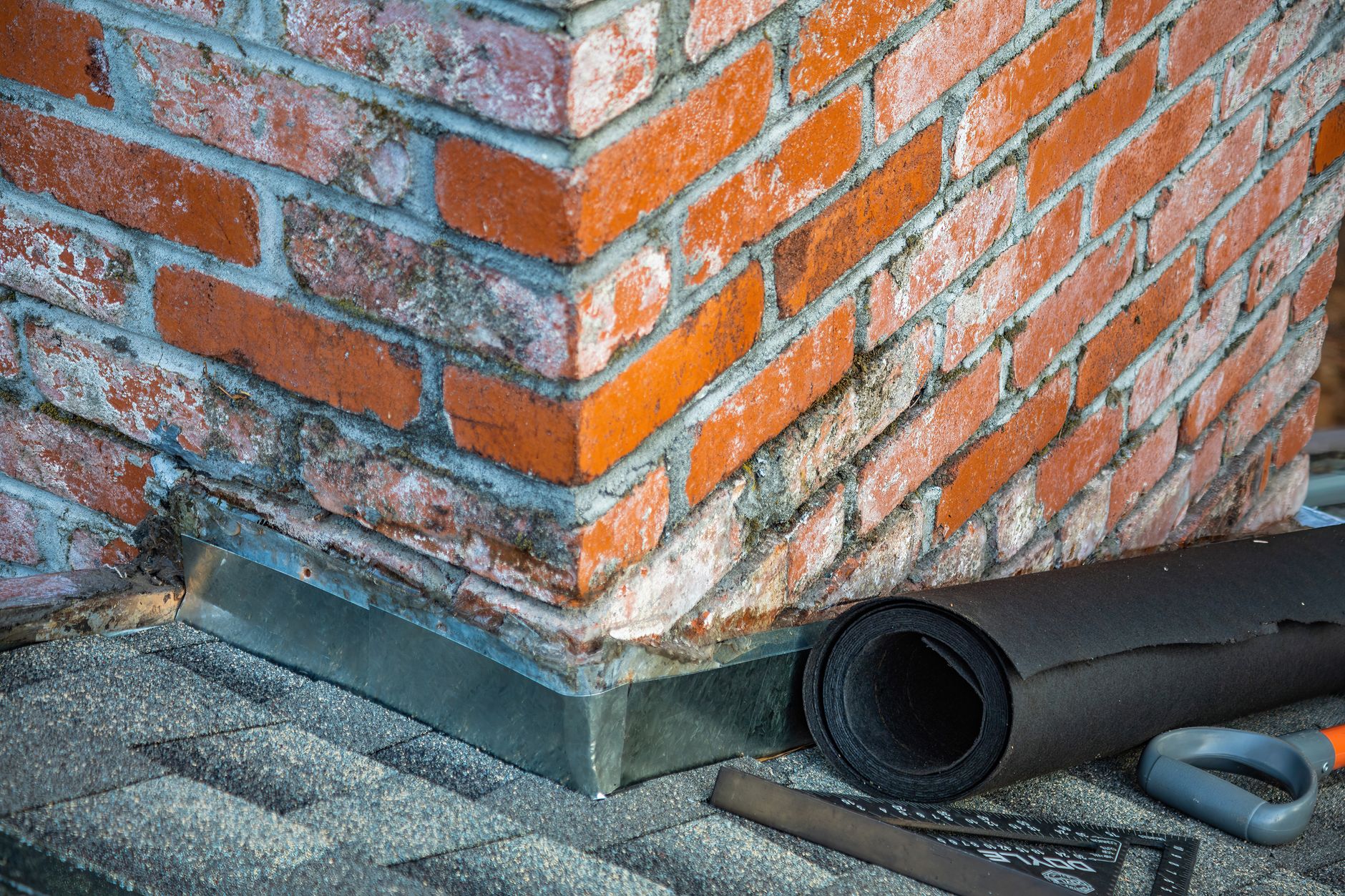
Mortar is meant to be softer and more permeable than the brick around it. When something has to give, from movement or from water working its way out, it should be the joint, which can be repointed, not the brick face, which cannot be put back. That is why joints fail first on a sound chimney, and why a failing joint is usually normal wear rather than a sign of collapse.
Where a chimney dates from the early twentieth century, the brick is often softer than modern brick and the original mortar may be lime-rich. Repointing it with a hard, cement-heavy modern mix reverses the relationship. Moisture and stress then go through the brick, and the faces crack and spall. The National Park Service's Preservation Brief 2 sets out how to match new mortar to the original, which is a widely used reference for this kind of work.
Matching covers more than strength. Color, sand texture, joint width and tooled profile all show from the street, and a repointed chimney that looks patched is the kind of result review exists to prevent.
Tell us what you have noticed and request an estimate. Estimates are free.
Removing old mortar without damaging the brick
Repointing starts by cutting out the failed mortar to a consistent depth. How it is cut matters on old brick. A grinder run carelessly along a joint widens it and rounds off the brick edges, and that damage is permanent; the joint will always look wider than its neighbours.
Cutting too shallow leaves a thin skim of new mortar that falls out after a few seasons. Cutting too deep, or with too much force, loosens bricks on a chimney that may already be weak. On a historic chimney, ask how the joints will be cut and how the new mortar will be matched before agreeing to the work.
Repoint, repair or rebuild on a historic chimney
Repointing is the right repair when the bricks are sound and the joints have failed. Masonry repair is the step up, when individual bricks have spalled or cracked and need cutting out and replacing with a close match, often salvaged. A rebuild is for a stack that has moved, leans, or has lost so much mortar that it is no longer holding together.
A rebuild in a historic district is the scope most likely to need review, because it can change how the chimney looks. Where a rebuild is unavoidable, reusing the original brick and matching the original height, corbelling and pots keeps the appearance while the structure is renewed.
Seismic safety is part of this decision. The Earthquake Country Alliance notes that inadequately braced chimneys are a common problem and advises consulting a professional about whether a chimney is safe. A historic appearance and a sounder structure are not mutually exclusive, but the design has to be settled with the planning department before work starts.
Rule 445 and the historic fireplace
South Coast AQMD Rule 445 limits which kinds of wood-burning device can be permanently installed or sold for installation. Historic sites and contributing structures in an HPOZ are among the exemptions the rule lists for that limit. For an owner restoring an original fireplace in a historic house, that exemption is relevant.
It is not an exemption from no-burn days. The curtailment section of Rule 445 applies to wood-burning devices on no-burn days, and the HPOZ exemption is not listed against it. Confirm with South Coast AQMD how any exemption applies to a specific house.
An order of steps that avoids redoing work
The expensive mistake is finishing a repair and then learning it needed approval, or that the mortar was wrong. This sequence avoids most of that.
- Confirm whether the house is in an HPOZ, is a designated monument, or is covered by a city's own preservation program.
- Photograph the chimney as it is now, from the street and from each side you can safely see.
- Have the chimney's condition assessed so the scope is known: repointing, brick replacement, or rebuild.
- Ask the planning department whether that scope needs review, and ask the building department (LADBS in the City of Los Angeles) about permits.
- Agree the mortar mix, joint profile and any brick matching with whoever does the work, before work starts.
When historic-grade work is more than the chimney needs
A hairline crack in one sheltered joint on a chimney you still use is worth watching, not repointing. Repointing early gains nothing.
If the house is outside any district and is not designated, there may be no review at all. The mortar still has to suit the brick, because the physics does not depend on a designation, but the approval step and some of the cost that comes with it fall away.
And if the fireplace will never be used again, a full rebuild of the flue may not be the right spend. The part that still matters is the exterior, because it keeps water out of the house and bricks off the roof.
Choosing the repair
Once the scope is known and the planning question is answered, each level of work has its own page.
Sound brick with failed joints calls for chimney tuckpointing. Spalled or cracked bricks that need cutting out are covered on the masonry repair page. A stack that has moved or lost its structure needs a chimney rebuild.
Sources & Further Reading
Service areas
Los Angeles and cities across the county, with the local conditions that affect chimneys there.
View all service areas →