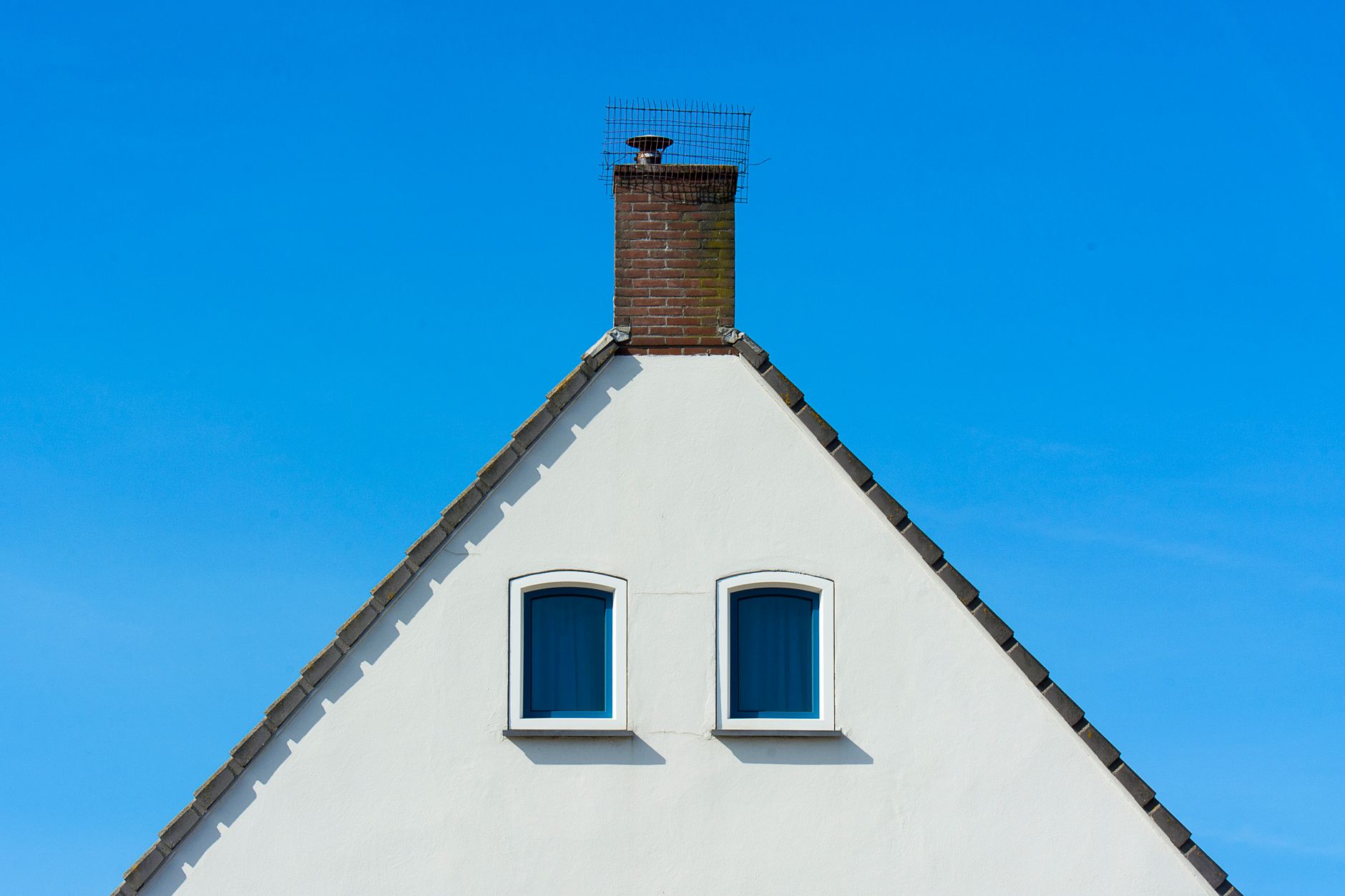
The 3-2-10 rule is shorthand for the chimney termination requirement in the California Residential Code, section R1003.9. A chimney has to rise at least 3 feet above the highest point where it passes through the roof, and at least 2 feet higher than any part of a building within 10 feet of it.
Both conditions apply together. Whichever one demands the taller chimney is the one that governs.
The exact wording
R1003.9 reads: "Chimneys shall extend not less than 2 feet (610 mm) higher than any portion of a building within 10 feet (3048 mm), but shall be not less than 3 feet (914 mm) above the highest point where the chimney passes through the roof."
That wording appears in the 2022 California Residential Code and again in the 2025 edition, which UpCodes lists as effective from January 1, 2026. It sits in the code's provisions for masonry chimneys. Factory-built systems are handled elsewhere in the same chapter, covered further down.
How the 3, the 2 and the 10 fit together
The 3 is measured from the highest point where the chimney passes through the roof. On a pitched roof that is the uphill side of the chimney, not the downhill side, which is where people most often measure from by mistake.
The 10 defines a zone around the chimney. Anything that is part of a building inside that zone counts: the ridge, a dormer, a parapet, the wall of a taller wing. The 2 then says the top of the chimney has to clear the highest of those by at least 2 feet.
On a low-slope roof with nothing tall nearby, the 3-foot condition usually decides. On a steep roof where the chimney comes out near the ridge, or on a single-storey section next to a two-storey wall, the 2-foot condition usually asks for more.
What chimney height does in practice
The code section does not explain itself, but the effects of a short chimney are easy to recognise. Wind moving over a roof, a ridge or a nearby wall creates turbulence and pressure changes close to the surface. A flue that ends inside that zone can have air pushed back down it, which shows up as smoke spilling into the room on windy days, a fire that is hard to get going, or a smoky smell when the fireplace is not in use.
Height also moves the outlet, and any sparks leaving it, further from the roofing. That is a practical point in a region with autumn and winter Santa Ana wind events.
Where the rule catches existing houses
A chimney that met the rule when it was built can stop meeting it without anyone touching it. The common ways this happens:
- A second storey or a taller addition goes up within 10 feet of an existing chimney
- The roof is reframed or raised during a remodel
- A damaged top section, after an earthquake for example, is taken down and rebuilt shorter than it was
- A new fireplace is added and its chimney is sized to the old roofline rather than the finished one
Tell us what you have noticed and request an estimate. Estimates are free.
Factory-built chimneys follow their listing
R1005.1 says factory-built chimneys "shall be listed and labeled and shall be installed and terminated in accordance with the manufacturer's installation instructions." The termination height for a metal chimney on a prefabricated fireplace is therefore whatever its instructions say, which may not match the masonry rule.
R1004.1 applies the same logic to factory-built fireplaces: listed and labeled, installed according to the conditions of the listing, and tested to UL 127. UL 127 covers the whole factory-made assembly, including the fire chamber, chimney and roof assembly. If you do not know which system you have, the label on the unit and the installation manual are the first things to find. Gas vents also follow the appliance's own instructions rather than R1003.9.
Caps and spark arrestors are separate requirements
The subsections that follow R1003.9 add two more requirements at the top of the chimney. R1003.9.1 requires masonry chimneys to have a concrete, metal or stone cap, a drip edge, and a caulked bond break around any flue liners in accordance with ASTM C1283. R1003.9.2, in California's text, requires every chimney attached to an appliance or fireplace that burns solid fuel to have an approved spark arrester.
Meeting the height rule does not satisfy either of these, and fitting a cap does not fix a chimney that is too short.
Who decides for your house
The local building department interprets and enforces the code for your address, and it decides whether a given project needs a permit. In the City of Los Angeles that is LADBS. In unincorporated parts of the county it is LA County Public Works. In an incorporated city such as Pasadena, Glendale or Santa Monica, it is that city's own department.
Questions about how the 10 feet applies on an unusual roof, or whether an existing chimney has to be brought up to current code during other work, go to them.
Signs a chimney may be too short, and when height is not the problem
A chimney top that sits below a nearby ridge or a taller wall is the visible clue. Smoke that comes into the room mainly on windy days, and mainly with the wind from one direction, is the functional one.
Do not pay to extend a chimney on the strength of a smoky fire alone. Smoke spillage also comes from a damper that is not fully open, a cold flue, a partly blocked flue or a house under negative pressure from exhaust fans, and the article on smoke coming into the house works through those. Adding height to masonry adds weight to the part of the chimney that is already the least supported, so it should follow a measurement and an inspection, not precede them.
Measuring means getting on the roof. If you cannot see the answer from the ground, leave that to someone equipped to work at height.
Checking, extending or building a chimney
If the height looks wrong, or a project will change the roof around the chimney, the pages below cover what comes next.
Establishing whether height is really the issue starts with a chimney inspection. Adding courses or correcting the top of a sound stack is chimney repair. A stack that has to come down and go back up is a chimney rebuild. For a new unit, termination is planned as part of fireplace installation.
Sources & Further Reading
Service areas
Los Angeles and cities across the county, with the local conditions that affect chimneys there.
View all service areas →