Wind-driven rain on exposed hillside roofs
Where a Glendale house sits on a ridge or a slope facing open canyon, storms tend to arrive sideways rather than straight down. Rain driven against the face of a chimney finds its way behind counter-flashing that would stay dry on a sheltered street.
On a steep roof, the uphill side of the chimney also catches a sheet of runoff. A cricket, the small peaked diverter behind a wide chimney, sends that water around the stack. When it is missing or packed with leaves and needles from nearby trees, water stands against the flashing seam through the whole storm.
When a new roof brings an old chimney leak back
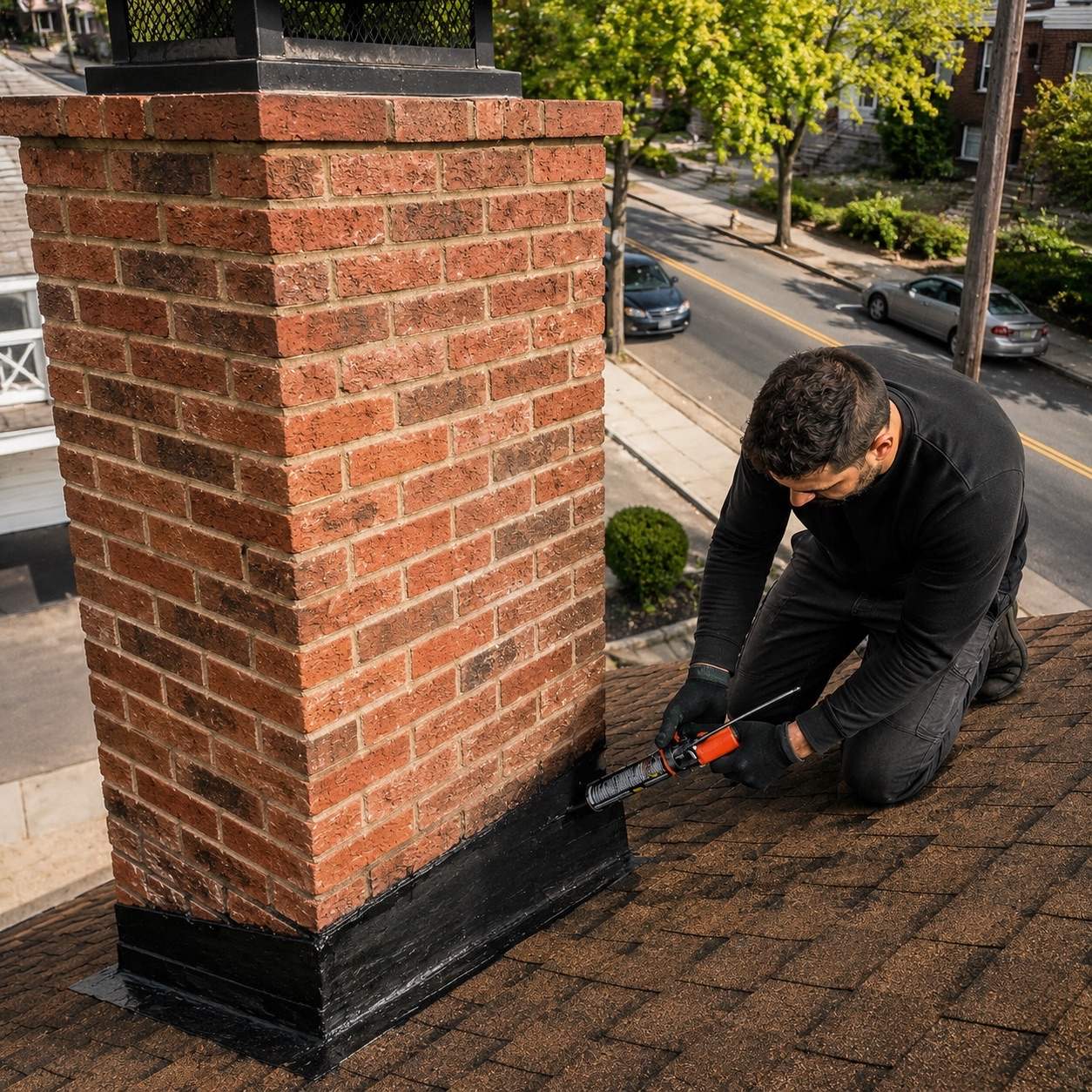
A common pattern is a leak that appears within a season of reroofing. The roofer replaced the shingles but reused the old step flashing, or bent new flashing against the brick and sealed it with caulk instead of cutting counter-flashing into a mortar joint.
Caulk alone is a short-lived fix. It shrinks and pulls away under inland summer heat, and the leak returns. Counter-flashing let into the brick sheds water without depending on a sealant bead.
Tell us where the stain shows, whether it follows every storm or only the windy ones, and when the roof was last replaced. Tell us what you are seeing and ask for an estimate.
How the source is confirmed before anything is sealed
Water testing is done one section at a time, starting low and working up: the flashing first, then the brick faces, then the crown. Someone watches from the attic or the room below, so the leak is tied to the section being wetted.
Testing in that order matters. Soaking the crown first would run water down over the flashing too, and the test would prove nothing. Once the source is known, the repair is aimed at that part alone.
Cost variables, and what insurers usually call maintenance
The California Department of Insurance lists sudden and accidental water damage among typically covered perils, and water damage caused by seepage or leaks, along with wear and tear, among typical exclusions. A chimney that has leaked a little every winter is likely to be read as the second kind. Check your own policy wording.
The estimate depends on which part is failing, how much of it, roof pitch and height, whether counter-flashing has to be cut into the brick, and whether water has already damaged the crown or the interior finishes.