Chimney Flashing Repair in Los Angeles
Leaking chimney flashing resealed, re-seated or replaced, before water reaches the wall framing behind it.
Los Angeles Area Pages
Los Angeles County
Free Estimate
Estimates at no charge
Estimate Requests
Submitted online
About Chimney Flashing Repair
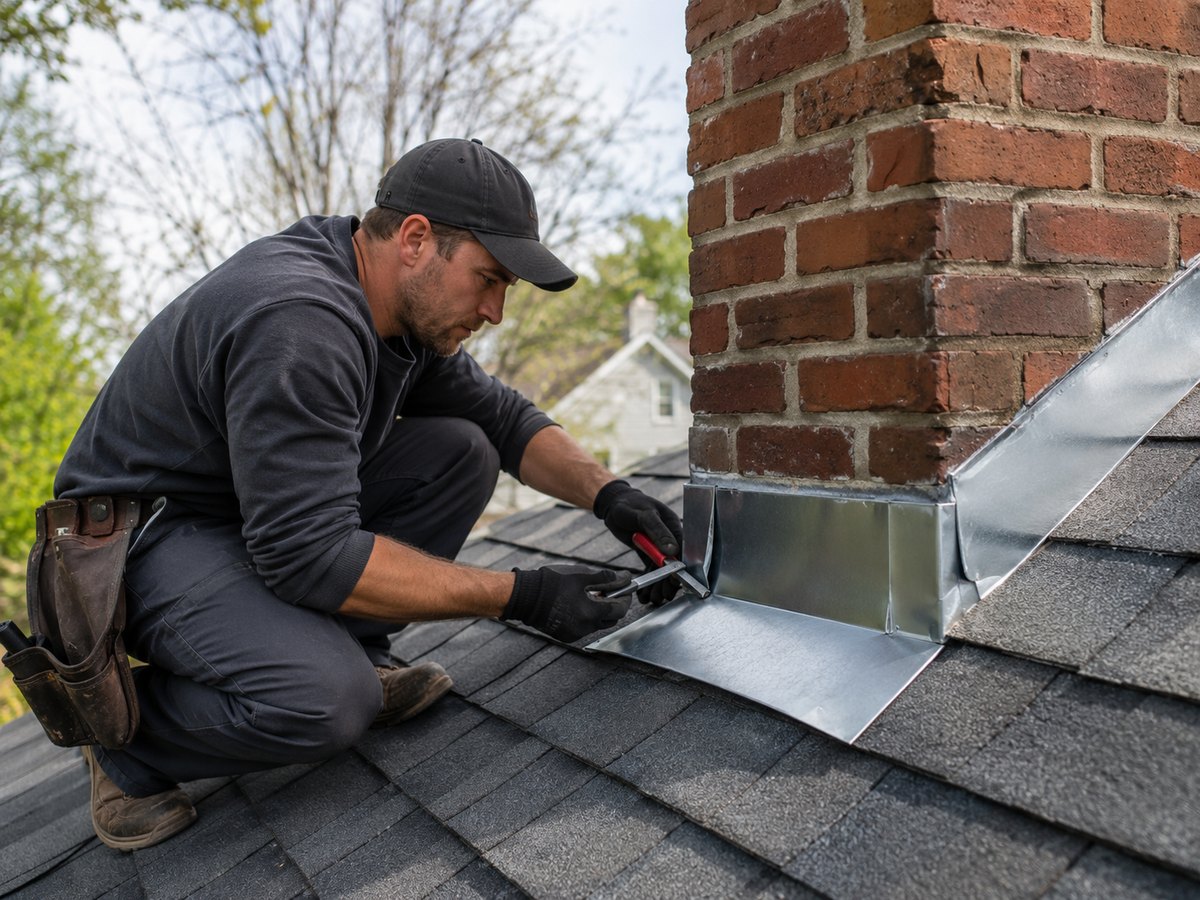
Chimney flashing is the metal seal between the chimney and the surrounding roof. It's the most common source of water staining near chimneys — not because it's poorly designed, but because the chimney and the roof move independently through temperature changes, and the flexible sealant that bridges them eventually cracks and separates.
The tricky part about flashing failures is that water enters at the roofline but travels inside the wall cavity before appearing as a stain on the ceiling or wall. The stain rarely appears directly above the entry point. A homeowner who sees a water stain two feet from the chimney and patches the ceiling hasn't fixed anything — the water is still getting in at the roof.
Los Angeles' winter rain season — particularly the concentrated storm bursts that arrive off the Pacific and run up against the foothills — concentrates significant water exposure on chimney-to-roof intersections. Flashing that has been functioning adequately for years can develop a slow leak after one heavy storm season.
The Three Types of Chimney Flashing
Step Flashing
Individual L-shaped metal pieces installed in a staircase pattern along each side of the chimney, woven between the roof shingles. Each piece overlaps the one below it to direct water down and away.
Counter Flashing
Metal pieces embedded into the chimney mortar joints that overlap the top edge of the step flashing. This creates the watertight seal at the chimney face. When the mortar joint deteriorates, the counter flashing lifts and allows water behind it.
Saddle Flashing (Cricket)
A peaked ridge structure behind a wide chimney that diverts water around the chimney rather than letting it pool against the back. Required by most building codes for chimneys wider than 30 inches. Often missing on older Los Angeles homes.
Signs Your Chimney Flashing Needs Repair
Water stains on ceiling or wall near the chimney
The most common presenting symptom. Water enters at the roofline but travels inside the wall cavity before becoming visible — the stain is rarely directly over the entry point.
Rust or visible gaps in the flashing metal
Oxidized flashing metal has reached the end of its service life. Gaps between the flashing and the chimney masonry are a direct entry point.
Cracked, dried, or missing sealant at flashing joints
The flexible sealant that bridges the metal to the masonry shrinks and cracks over years of thermal cycling. The temperature swing between the Los Angeles coast and the inland valleys accelerates this.
Loose or lifted counter flashing
Counter flashing embedded in mortar joints lifts when the surrounding mortar deteriorates. A lifted edge creates a gap behind the metal on every rainfall.
Water in the firebox that isn't from the crown or cap
After confirming the cap and crown are intact, back-of-chimney flashing failure is the next thing to check — particularly the saddle flashing behind the chimney.
Musty smell near the chimney interior wall
Sustained moisture in the wall cavity from a slow flashing leak promotes mold growth before visible water staining appears.
Why Flashing Is Awkward to Repair Well
- Counter flashing re-embedding requires cutting and re-pointing masonry mortar joints — not just surface sealant
- Incorrect flashing slope or lapping can redirect water rather than stop it
- Saddle flashing installation behind wide chimneys requires framing and roofing coordination
- Roof access at chimney height requires fall protection equipment that most homeowners don't have
- Identifying the actual entry point requires experience — surface caulk over the wrong location does nothing
- The failing zone is often a small part of an otherwise sound flashing run, so what gets replaced is worth establishing before anything is removed
Our Flashing Repair Process
Look at the flashing
The flashing run is assessed from the roof — step flashing condition, how the counter flashing is seated, the sealant joints, and how water drains behind the chimney.
Narrow down the entry point
Where it is not obvious which part of the run is failing, that gets established before anything is removed. Replacing intact material fixes nothing and hides what was actually leaking.
Remove deteriorated sealant
All cracked or failed sealant is removed completely before new material is applied — sealant over sealant doesn't hold.
Re-seat or replace flashing metal
Lifted counter flashing is re-embedded into fresh mortar. Corroded or damaged metal is replaced. Step flashing that has lifted from the shingles is reseated and secured.
Apply elastomeric sealant
Flexible elastomeric flashing compound is applied to the metal-to-masonry joints. It is used because it moves with thermal expansion rather than cracking away from it, which rigid compounds tend to do at this junction.
Check the work over
The finished joint is looked over before leaving, and anything noticed on the surrounding masonry or roof line while up there is raised with you.
Where the Chimney System Ends
Water appearing near a chimney can come from the chimney flashing, from another part of the chimney — the crown, the cap, or the masonry itself — or from roofing outside the chimney system altogether. The roof covering, a valley, a vent or the decking can all fail close to a chimney and produce the same stain on the same ceiling.
If the evidence points to roofing outside the chimney system, a roofer is the appropriate specialist. We work on chimneys and the flashing detail that seals them to the roof; we are not going to tell you what the rest of your roof is doing, and we would rather say so than sell you flashing work that changes nothing.
Where you know water is getting in but not from where, chimney leak repair works through the possible paths in turn rather than assuming the flashing. And where the masonry around the flashing has deteriorated — open joints, spalled brick, a stack that has moved — the counter flashing has nothing sound to be re-seated into, which makes it a masonry repair question before it is a flashing one.
Related Guides
Nearby Los Angeles Area Pages
Get a Flashing Repair Quote
Tell us what service you need and request an estimate online.
Related Services
When to call someone else
If you're not sure whether the leak is coming from the flashing, the crown, or the cap, start with a chimney inspection. Diagnosing the correct entry point before any repair prevents replacing components that aren't failing.
Have a question?
info@chimneycleaningla.comChimney Flashing Repair FAQ
Ready to schedule your chimney flashing repair?
Chimney cleaning, inspection and repair. Tell us what you need and request an estimate.