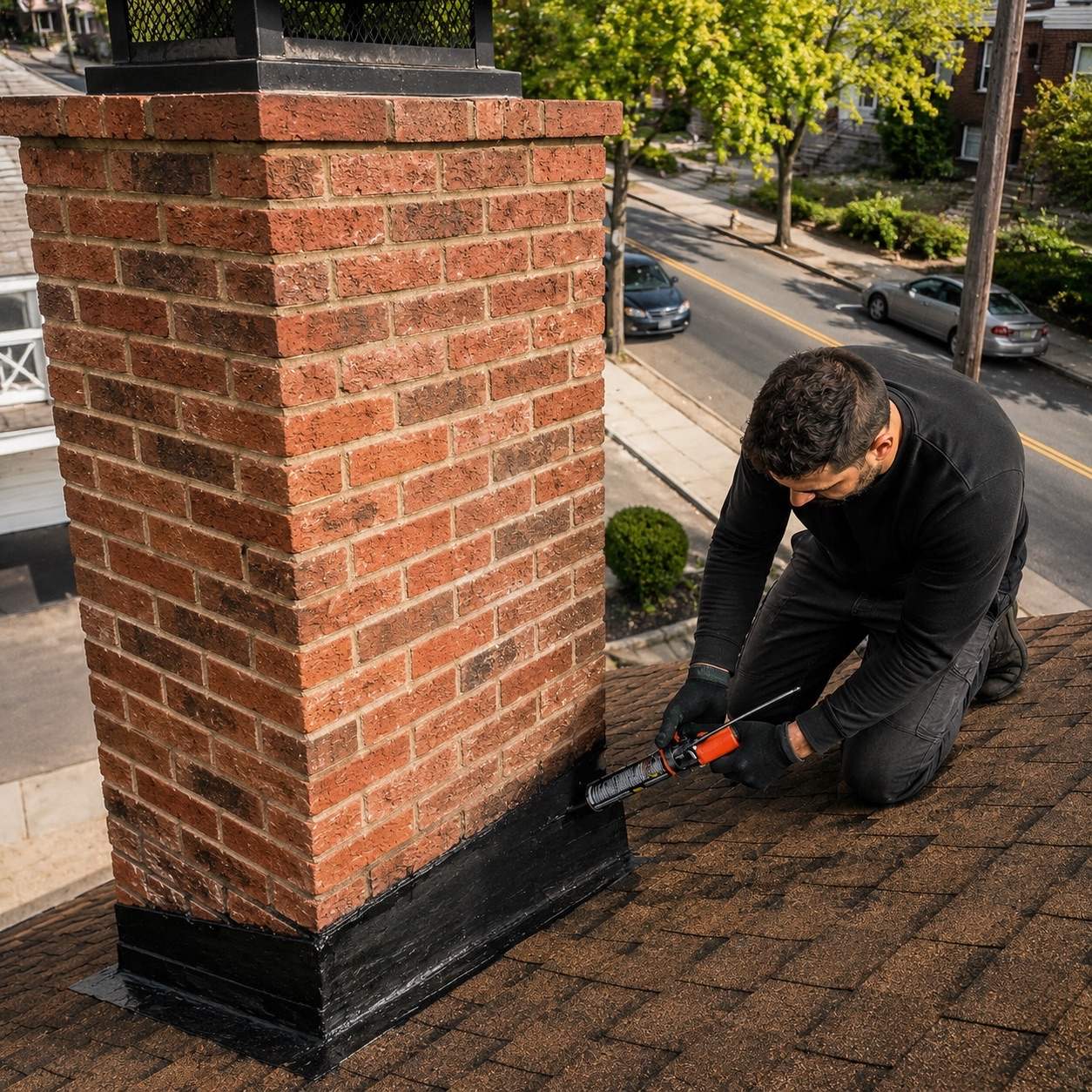
Five places water gets in, and how each one shows inside
The pattern of the stain is a clue, though never proof on its own:
- 1Crown: a cracked or flat cement cap lets water into the brick core. It tends to show as damp in the firebox or smoke chamber, sometimes with rusting on the damper.
- 2Flashing: the metal seal where the chimney passes through the roof. Failure shows as a stain on the ceiling or wall right beside the chimney breast.
- 3Open flue: without a cap, rain falls straight down the flue. Water pooling on the smoke shelf or firebox floor is the usual sign.
- 4Brick and mortar: porous brick and eroded joints soak up wind-driven rain. Efflorescence, the white powdery deposit left when water moves through masonry and evaporates at the surface, often appears on the brick in the attic.
- 5The roof itself: a failed shingle or underlayment just upslope of the chimney can send water down the chimney's side, which looks exactly like a flashing leak.
How the source is traced before anything gets sealed
The reliable method is a controlled water test: wetting one part of the chimney at a time, starting low and working up, while someone watches from the attic or the room below. Starting low matters, because water sprayed on the crown first would run down over the flashing and confuse the result.
Looking at the attic side of the chimney helps too. Staining that starts at the roof deck points to flashing or roofing. Damp brick with no staining on the wood around it points to water coming through the masonry.
Send us a photo of the stain and, if you can, one of the chimney where it meets the roof. Describe the problem and request an estimate.
What a homeowners policy tends to say about slow chimney leaks
The California Department of Insurance lists sudden and accidental water damage among the perils a homeowners policy typically covers, and lists water damage caused by seepage or leaks, along with wear and tear, among the typical exclusions. A chimney that has leaked a little every winter for years usually falls on the wrong side of that line.
Policies differ, so the wording of your own policy is what counts. It is worth reading before a claim is made, and before interior damage is repaired without the source being fixed.
What decides the scope of a Burbank leak repair
Which entry point it is comes first; resealing a flashing joint and rebuilding a crown are very different jobs. After that: how many sources there are, since leaks often have two; roof pitch and covering, because tile and slate take more care to lift than shingle; whether the flashing needs a counter-flashing cut into the mortar joints; and whether interior plaster or framing has been damaged in the meantime.