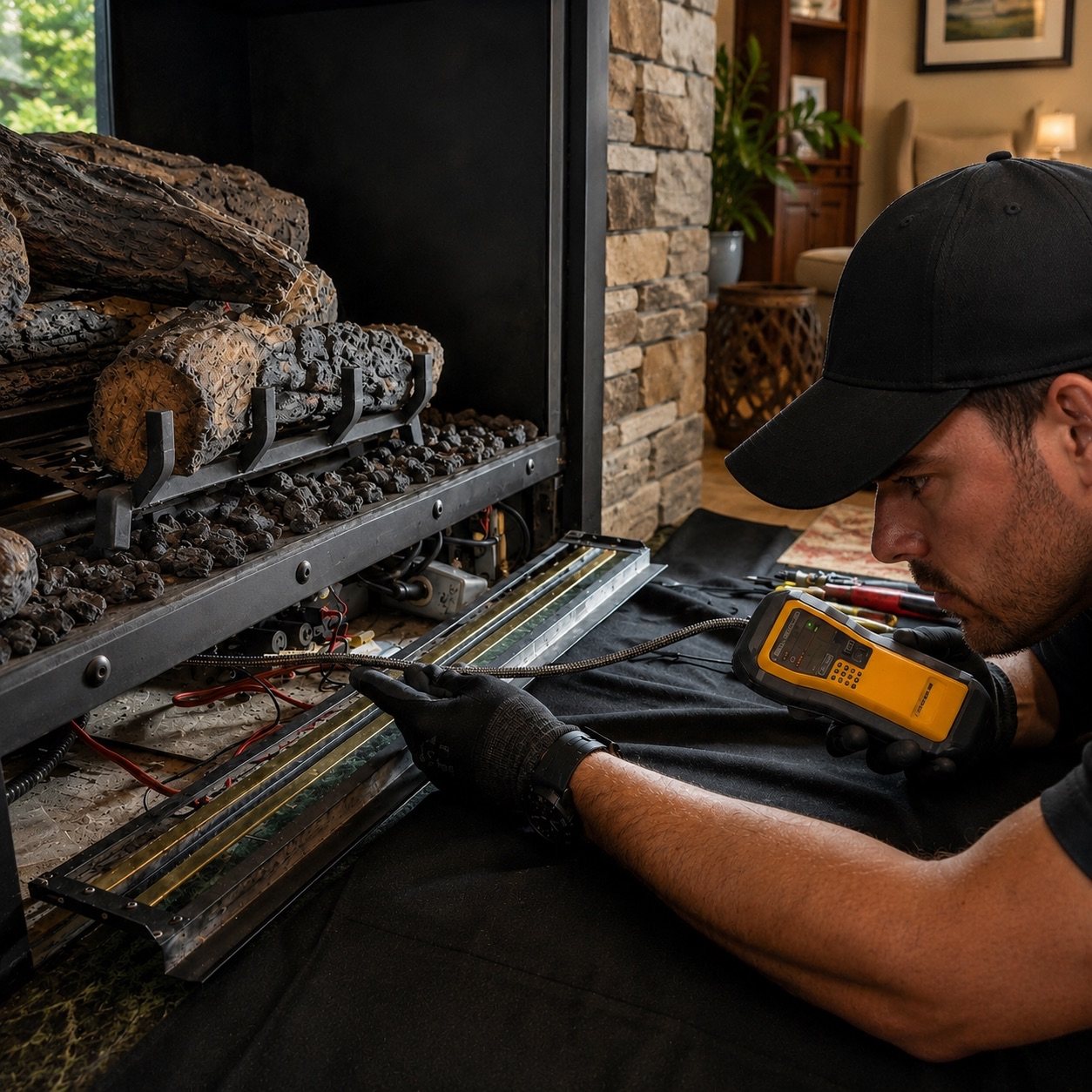
Thermocouple, thermopile and valve: how the pilot circuit works
The pilot flame heats two sensors. The thermocouple produces a tiny electrical current that holds the gas valve open; if the pilot goes out, the current stops and the valve shuts, which is a safety feature, not a fault. On millivolt systems, a thermopile generates enough current to operate the valve from a wall switch or remote.
That shared design means different faults look alike, which is why a repair usually starts with testing each part's output rather than replacing the most likely one.
- 1Pilot lights but goes out when the knob is released: often the thermocouple, or a pilot flame too weak to heat it.
- 2Pilot stays lit but the burner will not come on: often the thermopile, the switch wiring, or the valve.
- 3Nothing sparks when the igniter is pressed: the igniter, its wire, or on electronic systems the batteries or module.
- 4Remote does nothing: receiver batteries first, then the receiver itself.
Why a gas fireplace switched off through a Burbank summer may not restart
Plenty of owners turn the pilot off in the hot months to save gas. That is reasonable, but a pilot assembly left cold for months collects dust, and spiders like the small tubes and openings around it. A partly blocked pilot burns with a weak, lazy flame that does not heat the thermocouple enough.
Before booking anything, check the obvious: that the gas key or valve to the fireplace is open, that the remote and receiver have fresh batteries, and that the relighting steps in the owner's manual have been followed exactly. If the pilot still will not hold, that is the point to stop and have it diagnosed.
Tell us the make and model from the label plate, and what happens when you try to light the pilot. Describe the problem and request an estimate.
Glass, gaskets and venting: the parts that are not the burner
A direct-vent fireplace is sealed behind its glass, drawing combustion air from outside and venting through the same wall or roof terminal. The glass gasket keeps that system closed. A cracked glass panel or a gasket that has hardened should be dealt with before the unit is used.
The vent terminal can also be blocked. CSIA notes that chimneys serving gas appliances can stop working because of bird nests or other debris. Black soot on the glass usually means the flame is burning dirty, from misplaced logs, a disturbed air setting or a partly blocked vent, and it is a reason to have the unit looked at, not just cleaned.
What determines a gas fireplace repair estimate
Diagnosis time comes first, since several faults share symptoms. Then the part: a thermocouple and a gas valve are very different in cost and availability. The make and age of the unit matter, because parts for older or discontinued models can be hard to find. Access to the valve, often behind a lower grille, and any venting problem add to the work.