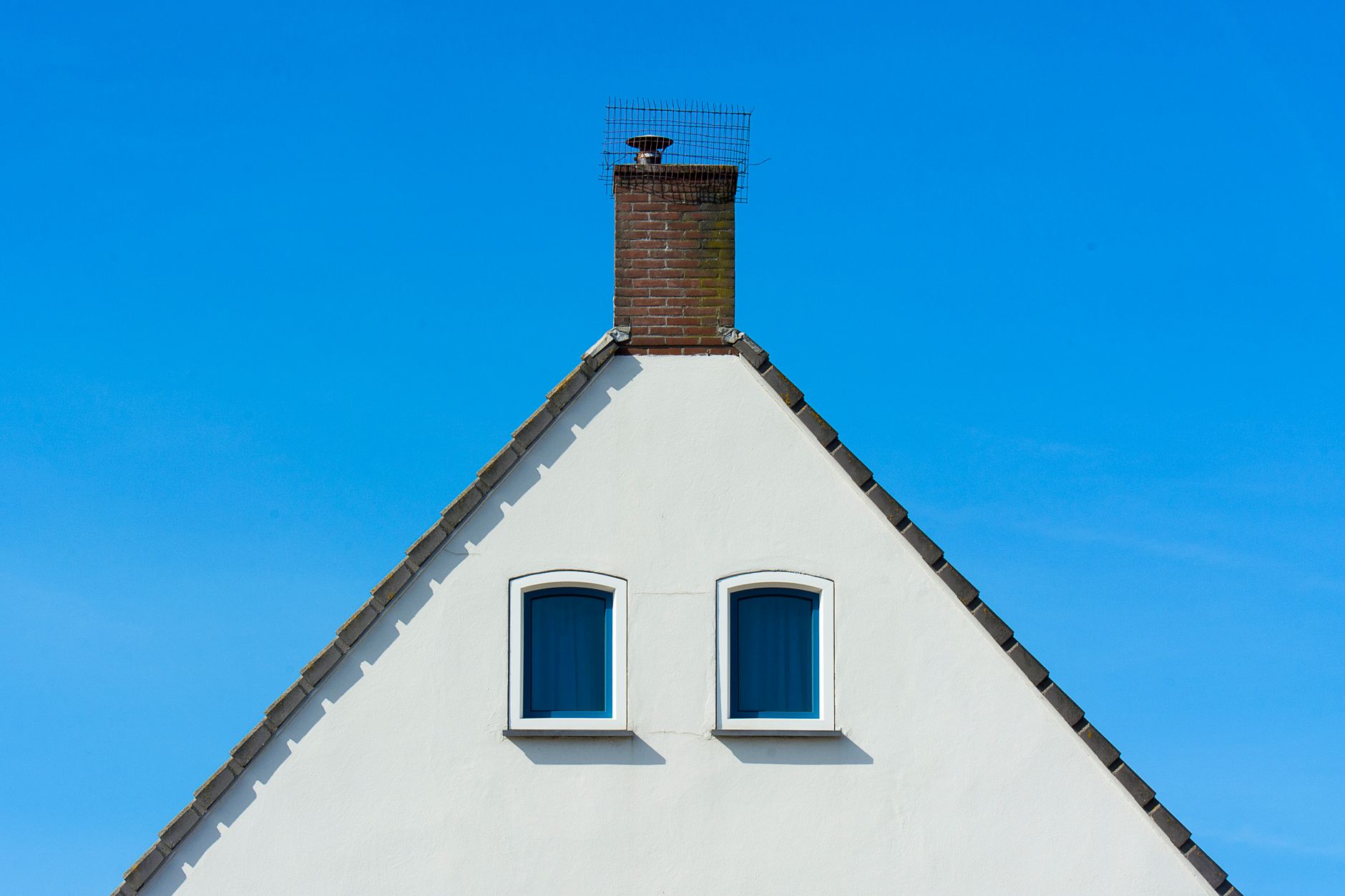
The order a sweep works in, from firebox to cap
The fireplace opening is sealed off first, with a vacuum drawing air from behind the seal so dust has nowhere to go but into the filter. Brushes are then run through the flue, from below, from the roof, or both, depending on the chimney.
The smoke shelf, the ledge behind the damper, is cleared by hand, because it catches everything that falls. The damper is worked through its full travel, the firebox is looked over, and the cap and screen are checked for blockage and damage. CSIA's procedure says any chimney with an eighth of an inch or more of buildup should be swept, which is a useful measure of whether a light-use chimney needs it.
Low-pitched Valley roofs and steeper lots toward the Verdugos
On a single-storey house with a shallow roof on the flat side of Burbank, the flue can often be brushed from above with little setting up. That is the easy case.
Where a house sits on the slope toward the Verdugo Mountains, the chimney is often taller on the downhill side and the roof harder to reach. Those sweeps are more likely to be done from the firebox upward, with the roof visited only to check the cap.
Tell us when the fireplace was last used and whether anything has fallen into the firebox since. Estimates cost nothing — describe the job and we will come back to you.
When a sweep turns into a different conversation
A sweep shows what is there, and sometimes what is there is not a sweeping problem. Shiny, tar-like deposit that brushes will not touch means creosote removal. Fragments of clay tile on the smoke shelf point to liner damage. A damper rusted in place, or a nest that is still in use, is a job of its own.
When birds are nesting, timing matters, because active nests of many species are protected. In that case the sweep waits.
What moves the price of a Burbank sweep
The chimney sets it: roof height and pitch, whether the flue is clay tile or metal, how much deposit there is, whether the cap comes off with a screwdriver or has to be cut, and whether there is debris or nesting material to remove before brushing can start.