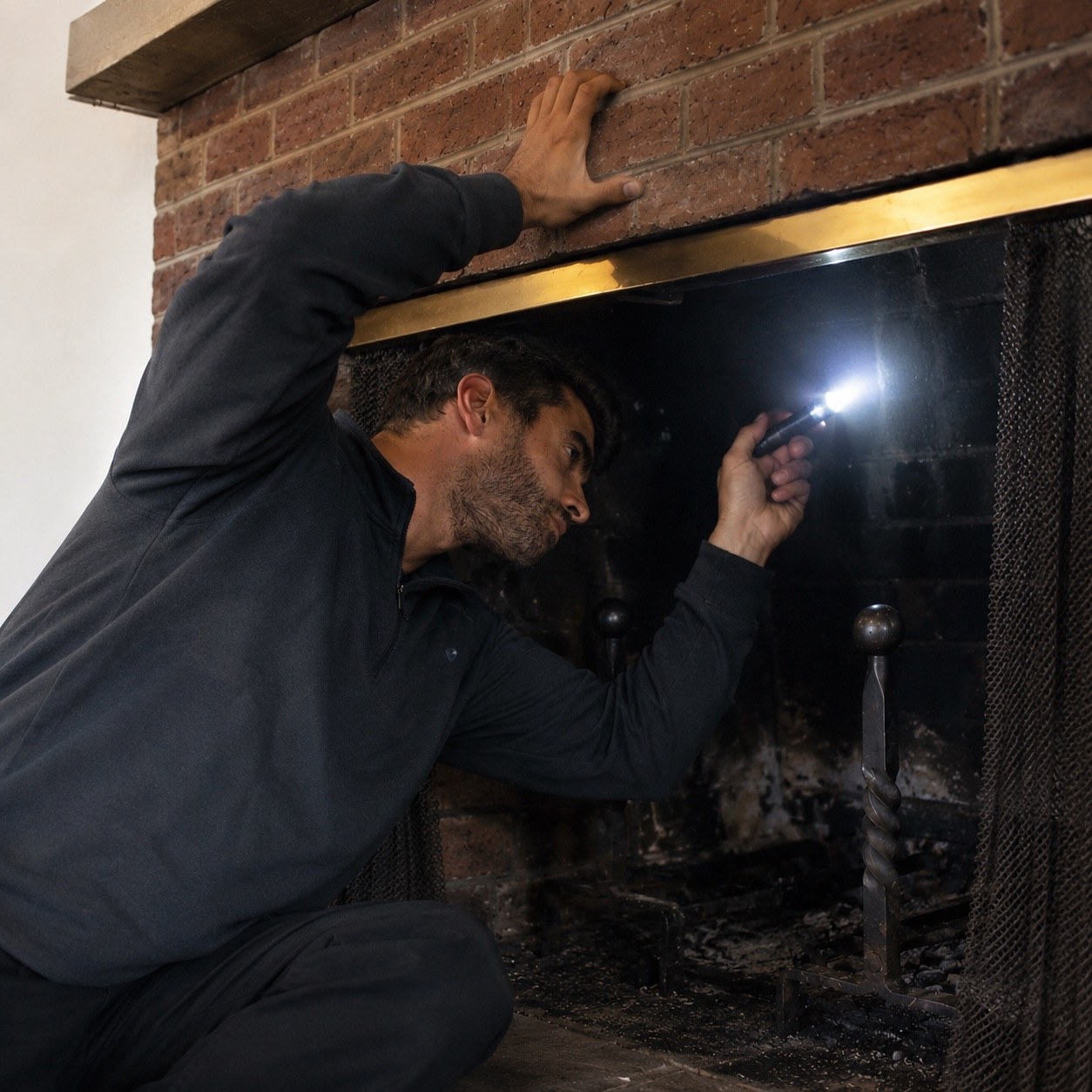
Checking a chimney before a Burbank house changes hands
A general home inspection usually looks at the chimney from the ground and the firebox, and stops there. It rarely sees the inside of the flue, which is where a cracked tile or an offset joint lives. For a buyer, that gap is the reason a separate chimney inspection exists.
Where a Burbank house dates from before the Second World War or just after it, the flue is likely to be clay tile laid in mortar, and those joints are the part most worth seeing. Booking the inspection early in the contingency period leaves time to get a repair estimate if the inspection finds something.
Chimneys that stood through the Northridge earthquake and every quake since
The M6.7 Northridge earthquake struck at 4:30 a.m. on January 17, 1994, with its epicentre in the San Fernando Valley. Any Burbank chimney older than that has been through it, and through the smaller events since. Damage from shaking is not always visible from the street: a flue tile can shift while the brick outside looks fine.
The Earthquake Country Alliance's advice is short: do not use a fireplace with a damaged chimney. If the chimney has never been looked at since a significant quake, or cracks have appeared at the roofline, a Level 2 inspection is the proportionate response.
Let us know whether this is for a purchase, after a chimney fire, or a routine yearly check. Send the details of the issue and request an estimate for the specific work.
What an inspector looks at, from the hearth to the crown
NFPA 211, as quoted by CSIA, asks that chimneys, fireplaces and vents be checked for soundness, freedom from deposits and correct clearances. In practice that breaks down into these areas:
- 1Firebox: firebrick or refractory panels, joints, the back wall and the hearth extension in front.
- 2Damper and smoke chamber: whether the damper opens and seals, and whether the chamber walls are smooth or stepped.
- 3Flue: deposit, cracked or missing tiles, open joints, and any offset where tiles have moved.
- 4Above the roof: brickwork, the crown, the cap and screen, and the flashing where the chimney meets the roof.
- 5Clearances: whether wood framing, trim or a mantel sits too close to the heat.
Why two Burbank inspections can be priced differently
The level is the main variable, because Level 2 reaches the attic and roof and often involves a camera. After that, it depends on how many flues the chimney carries, how steep and high the roof is, whether the cap can be removed for a view down the flue, and whether heavy deposit has to be swept before anything can be seen.