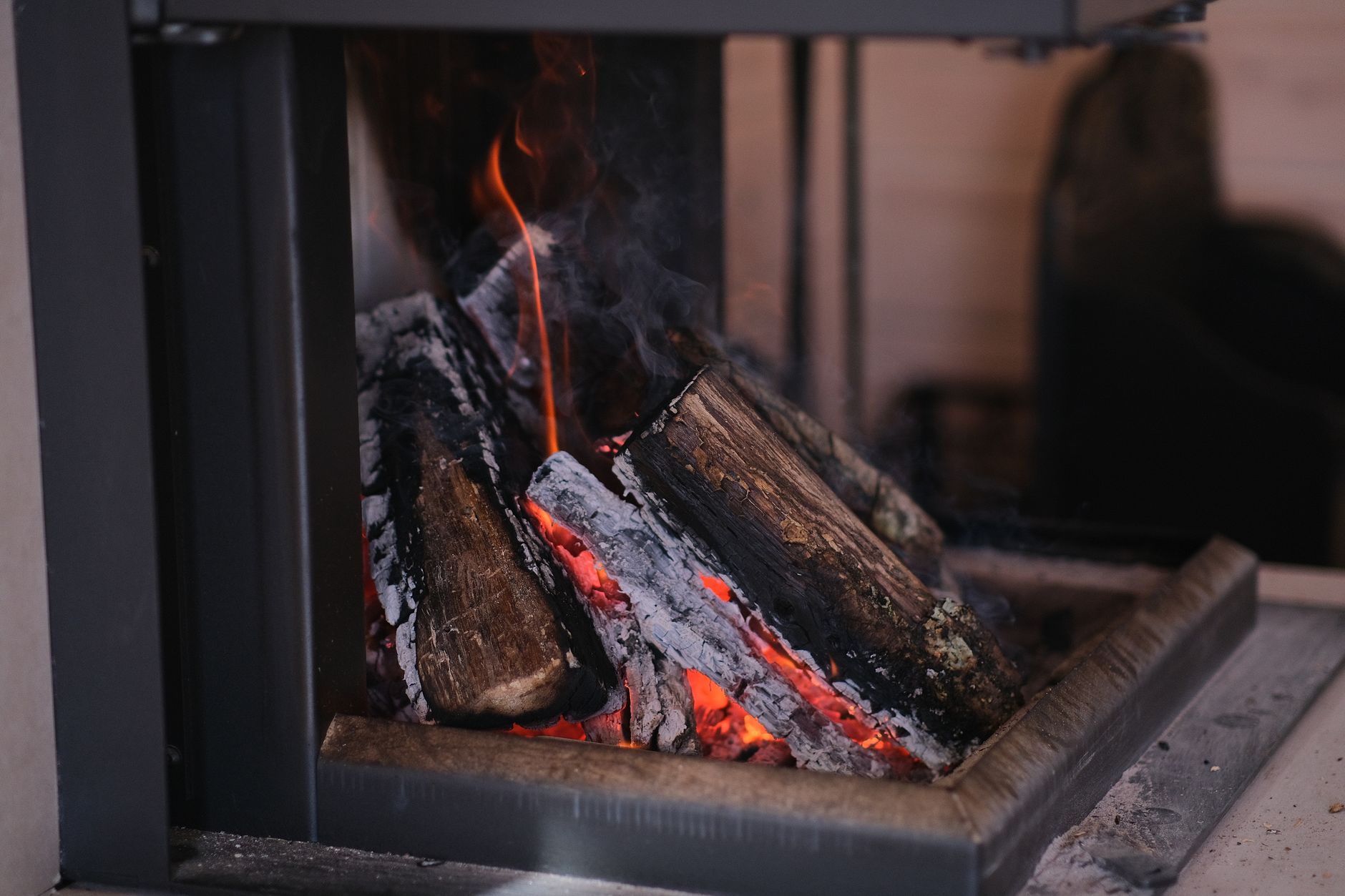
Firebox damage and what repairs it
In a masonry firebox, the usual fault is open or eroded joints between the firebricks. These are repointed with refractory mortar, which is made for the heat; ordinary mortar crumbles within a season. Cracked or loose firebricks are cut out and replaced, and a firebox with many failed bricks may be relined.
In a factory-built unit, the refractory panels crack with heat over time. Fine surface crazing is normal wear. A crack that has opened wide enough to show the metal behind it means the panel is replaced, with a part made for that model, and not patched with a generic compound.
Dampers and glass doors
A damper that will not open fully makes the fire smoke; one that will not close lets warm air out of the house all year. On a cast-iron throat damper the handle, the pivot and the plate edge are the usual failures, and near the coast rust is the common cause. Where the frame is too far gone, a top-mounted damper fitted at the chimney top is an alternative.
Glass doors that no longer close square, or that have cracked glass, are repaired with parts rated for the heat. Standard window glass is never a substitute.
A photo of the firebox and any label behind the grille lets us see which fireplace we are talking about. Tell us what you are seeing and ask for an estimate.
When a gas log set in a wood fireplace stops working
Many older fireplaces have had a gas log set added. When one will not light, the causes are usually a failed thermocouple, a blocked pilot, a gas valve key turned only part way, or burner ports clogged with debris.
Any smell of gas ends the troubleshooting: leave the house and phone the gas utility from the street. For a log set that simply will not stay lit, check the damper next: a log set is normally run with the damper held open, and one that has been closed or has swung shut starves the flame. A carbon monoxide alarm should be on every level of the home.
Fireplace repair cost factors in Torrance
The main variables are the type of fireplace, how much of the firebox is involved, and parts. Refractory panels and gas valves for factory-built and gas units are specific to the maker and model, and a discontinued model can limit the options.
A repair that turns up damage behind the firebox, or a unit whose listing no longer matches how it is installed, can change the scope toward replacement.