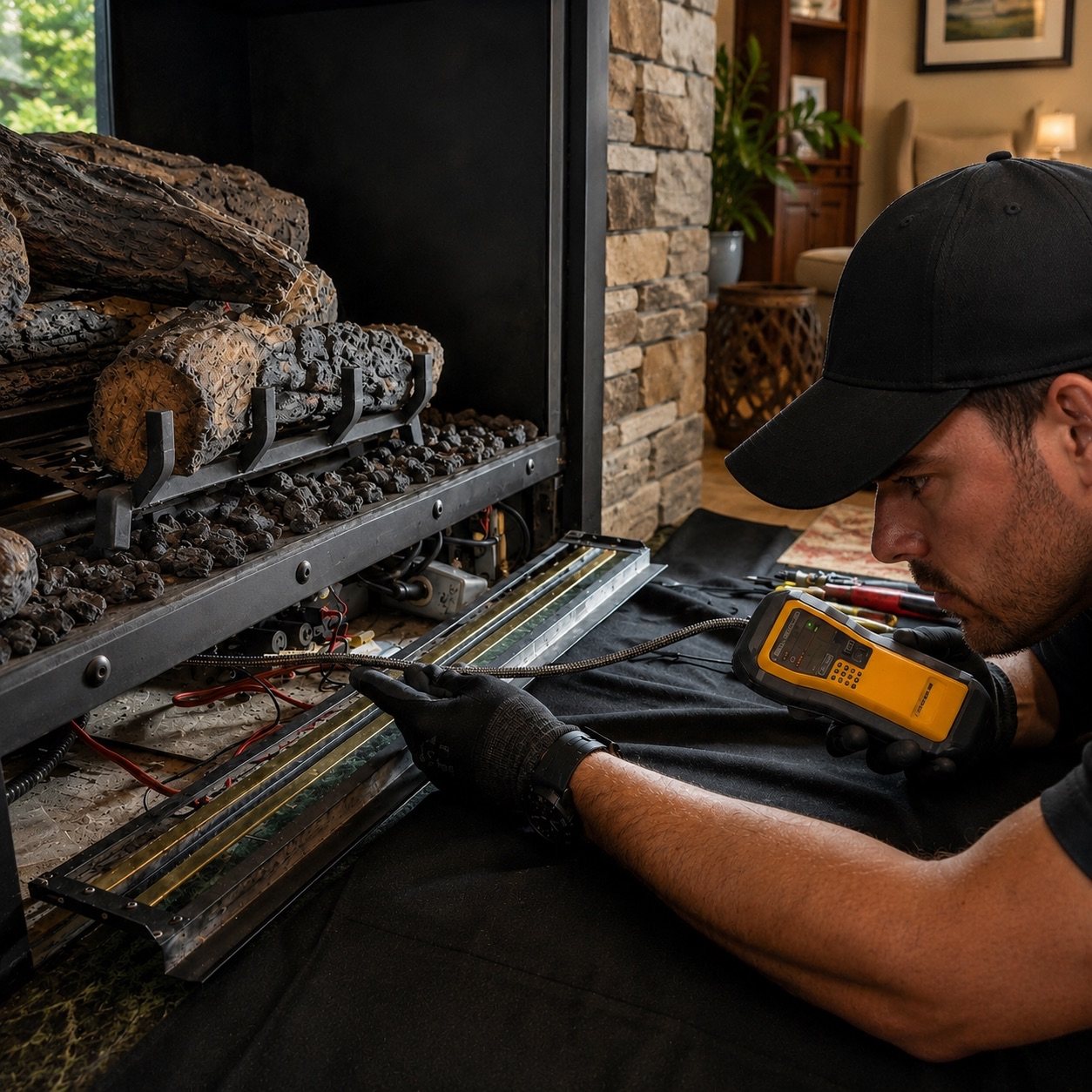
Gas Fireplace Repair in Los Angeles
Gas fireplace ignition, pilot, burner and control problems diagnosed and repaired in Los Angeles.
Los Angeles Area Pages
Los Angeles County
Free Estimate
Estimates at no charge
Estimate Requests
Submitted online
About Our Gas Fireplace Repair Service
Gas fireplaces are lower-maintenance than wood-burning systems — but lower-maintenance isn't no maintenance. When a gas fireplace stops igniting, burns with an abnormal flame, or produces an unusual odor, it's either a failed component or a safety concern. The important distinction is knowing which.
Most gas fireplace problems trace back to a small number of components: the thermocouple or thermopile (the sensor that controls the gas valve), the igniter or ignition module, the gas valve itself, or the control system. These are serviceable parts that wear out over time on any gas appliance. Diagnosis takes a technician familiar with the fuel system — not just chimney cleaning.
Gas fireplaces are common across Los Angeles homes, with the highest concentration in post-1980 factory-built systems across the Los Angeles basin and the San Fernando Valley. We service all major brands and carry common replacement parts.
Signs Your Gas Fireplace Needs Repair
Pilot light won't stay lit
The most common gas fireplace problem. Usually a faulty thermocouple or thermopile — the sensor that tells the gas valve it's safe to stay open.
Fireplace won't ignite
When the pilot is lit but the main burner doesn't fire, the issue is typically the igniter, ignition module, or gas valve.
Yellow or orange flames instead of blue
Gas should burn blue with small orange tips. A predominantly yellow or orange flame means the air-to-fuel mixture is off — incomplete combustion and elevated CO output.
Gas smell near the fireplace
Shut it off immediately, ventilate, and call. A faint smell when first igniting is normal for some units. A persistent smell, or any smell when the fireplace is off, is not.
Repeated clicking without ignition
The igniter is firing but not catching. Could be a dirty or misaligned electrode, a wet pilot orifice, or a failed ignition module.
Remote or wall switch doesn't respond
Check the receiver battery first. If that's not it, the receiver, thermopile output, or wiring is the likely cause.
Milky glass or black soot that doesn't clear
Hazy glass after cleaning suggests the air-fuel ratio is wrong. Persistent soot on the glass points to a burner or venting issue.
Carbon Monoxide and Gas Appliances
A gas fireplace that isn't burning correctly produces elevated carbon monoxide — colorless, odorless, and dangerous at concentration. If your CO detector alerts while the fireplace is running, shut the unit off, open windows, and leave the house. Call the gas company first, then a chimney technician.
A correctly operating direct-vent gas fireplace exhausts all combustion products through the sealed vent to the exterior. A cracked vent connection or improperly seated collar can allow CO to enter the room before any visible symptom appears. Annual inspection catches these before they become a problem.
Why Gas Fireplace Repair Requires a Qualified Technician
- Gas valve work involves pressurized fuel lines — professional gas appliance training covers the diagnostic protocol
- Manufacturer warranties on gas fireplace units typically require professional service for repair
- Correct thermocouple millivolt range varies by model and requires a meter to verify
- Vent connection integrity must be confirmed after any gas component repair
- Control board and remote receiver diagnosis requires brand-specific knowledge
- An inspection report is issued after every service call for your homeowner records
Our Repair Process
Inspect firebox, burner, and vent connections
We assess the physical condition of the burner assembly, ceramic logs or media, and the vent termination before touching a control.
Test pilot and thermocouple
We measure millivolt output from the thermocouple and thermopile to confirm they're producing enough current to hold the gas valve open.
Check ignition module and electrodes
The spark electrode is inspected for position and condition. The ignition module is tested for output.
Assess gas valve and pressure
Gas pressure at the valve is checked against manufacturer spec. A valve that's reading in range but not opening correctly needs replacement.
Test remote receiver and controls
Receiver, wall switch, and any smart-home integration are tested in sequence to isolate control failures.
Clean and reassemble
Burner tray, ceramic logs, and glass are cleaned. The system is run through a full cycle to confirm the repair before we leave.
Related Guides
Nearby Los Angeles Area Pages
Get a Gas Fireplace Repair Quote
Tell us what service you need and request an estimate online.
Related Services
When to call someone else
If your gas fireplace is working normally and only needs routine cleaning, book a fireplace cleaning instead. If you smell gas strongly or your CO detector is alerting, call the gas company first — that's their jurisdiction before ours.
Have a question?
info@chimneycleaningla.comGas Fireplace Repair FAQ
Need gas fireplace repair in Los Angeles?
Chimney cleaning, inspection and repair. Tell us what you need and request an estimate.