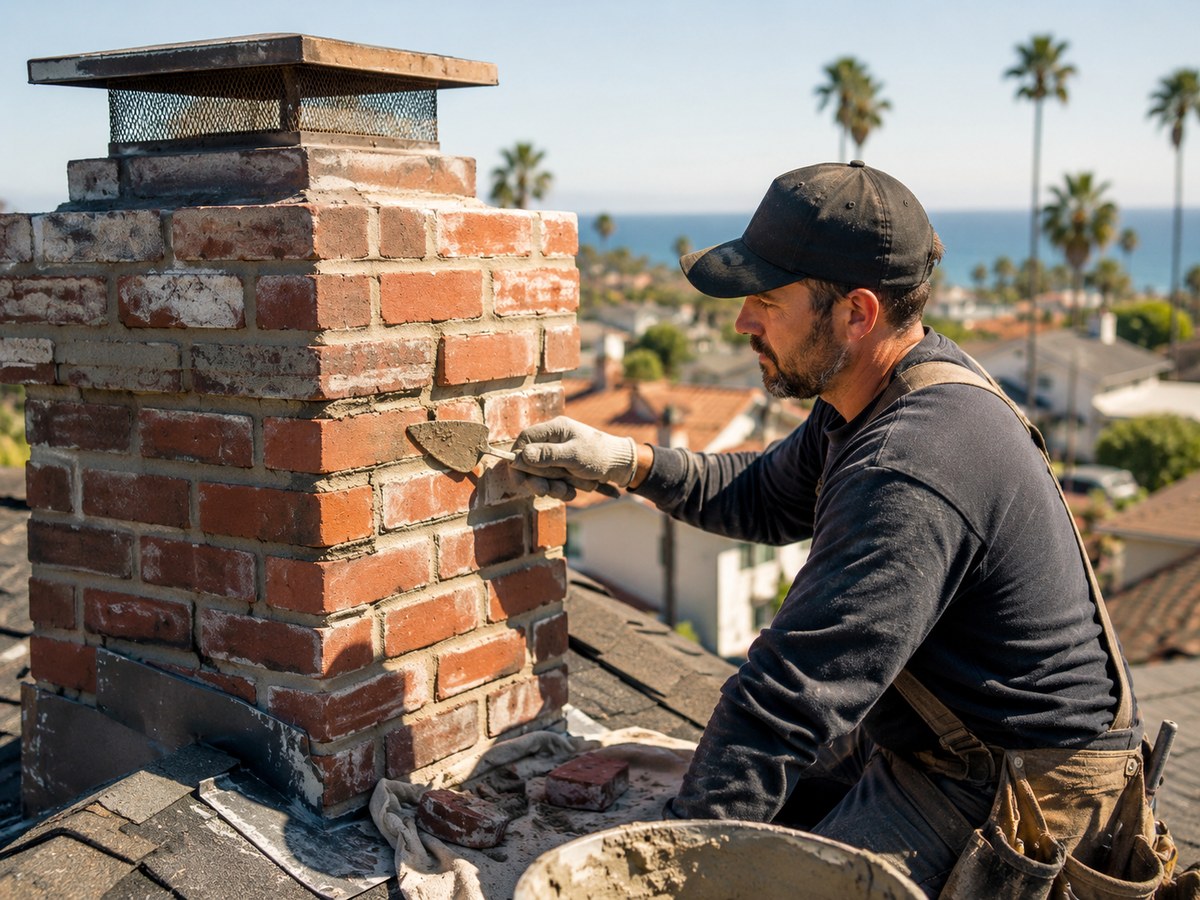
Matching brick and mortar on an older Glendale chimney
The National Park Service's guidance on repointing historic masonry makes the key point: new mortar should match the original and should not be harder than the brick around it. A joint is meant to be the sacrificial part.
Where a Glendale house is from the 1920s or 1930s, replacement brick is sourced by size, color and hardness, sometimes from salvage. A modern extruded brick set into a soft old chimney looks wrong and weathers differently, so a close match is worth the search.
Cutting out, replacing and resetting brick
Individual damaged bricks are cut out with the mortar around them and replaced with matching units set in compatible mortar. Where the back of a spalled brick is sound, it can sometimes be removed and reset with the good face outward.
Loose courses above the roofline, often where the crown has let water in for years, are taken down to sound masonry and relaid. Only the joints around the new work are repointed; a whole-chimney repoint is a separate decision.
Tell us which face of the chimney is damaged, roughly how many bricks, and whether the chimney has been repointed before. Send the details of the issue and request an estimate for the specific work.
Cracks in a Glendale stack that are structural, not cosmetic
A stair-step crack that follows the mortar joints on one face is common and often minor. A horizontal crack that runs through brick and mortar across the full width of the stack, especially near the roofline, is a different matter; it is where chimneys tend to break in strong shaking.
Earthquake Country Alliance notes that inadequately braced chimneys are a common problem. Replacing bricks does not add reinforcement. If a crack runs right through the stack, the question becomes bracing or a rebuild, and the City of Glendale's building staff decide what that work requires.
What drives a masonry estimate on a Glendale chimney
The count of damaged bricks is only the start. These tend to decide the rest:
- 1How hard it is to find a brick that matches in size, color and hardness.
- 2Height above the roof and whether scaffolding is needed on a sloping lot.
- 3Whether the section above the roofline has to be taken down and relaid.
- 4Whether the crown or cap is letting in the water that caused the damage.