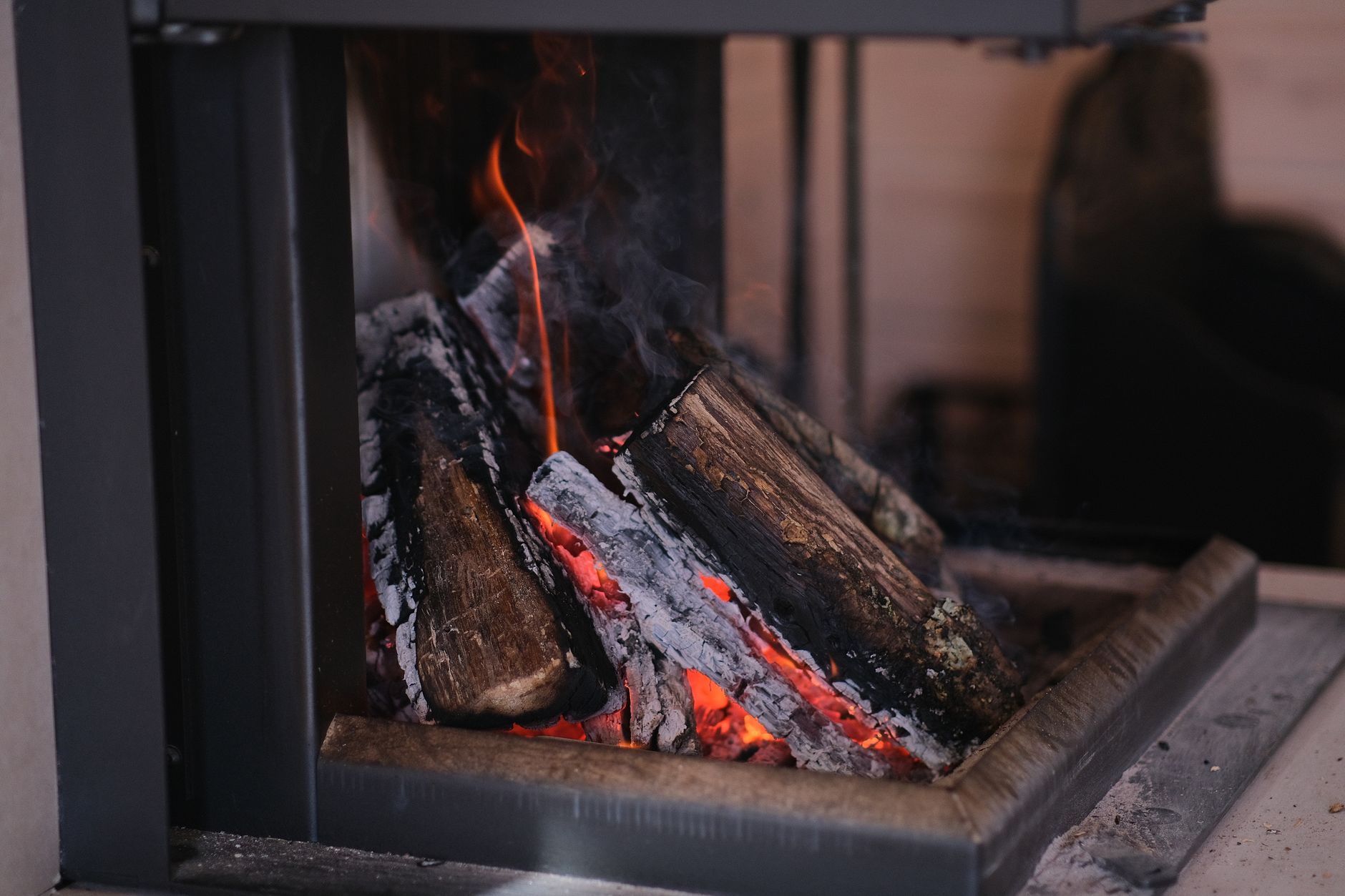
Direct-vent gas fireplaces and gusts at the outside wall
A direct-vent fireplace takes in combustion air and releases exhaust through a sealed pipe, usually ending at a termination on an exterior wall or the roof. Where that termination faces an exposed slope, strong gusts can disturb the burner flame and the pilot. A unit that shuts down only in windy weather points there first.
Manufacturers publish approved termination caps and, for some models, high-wind kits. A generic shield is not a substitute. Clearances matter as well: a shrub grown up against the termination, or a new fence beside it, can change how it behaves.
If the pilot also goes out on still days, the cause is more likely a worn thermocouple or thermopile, a dirty pilot assembly or a valve fault.
Doors, blowers and glass must belong to the listing
Factory-built fireplaces are tested to UL 127 as complete assemblies, and CRC R1004.1 requires them to be installed according to that listing. Doors and blowers that were not tested with the unit can overheat the firebox or block the air paths that keep its outer casing cool.
That is why a prefab repair usually begins at the data plate. The manufacturer's approved parts list decides whether a replacement door can go in, and which one.
The glass in a sealed gas unit is typically ceramic, built for direct flame heat, and it is not interchangeable with the tempered glass in an ordinary fireplace door. Swapping one for the other is a safety fault, not a style choice.
Tell us whether the fireplace burns wood or gas, where its vent comes out, and whether the data plate is readable. A short description, and a photo if you can take one safely, is a good start to an estimate request.
Vented gas logs and a damper that has to stay open
Vented gas logs in a wood-burning fireplace send their exhaust up the chimney, so the damper has to stay open while they run, and the log set's instructions typically call for a clamp or stop to hold it there. A damper closed out of habit, or a clamp that has gone missing, can push combustion gases into the room.
On a factory-built unit, the log set must also be one the fireplace maker approves, and the gas line enters through the knockout provided in the casing rather than a hole cut wherever was convenient.
Carbon monoxide alarms outside each sleeping area and on every level are the backstop. If one sounds, get everyone out and call 911.
Wood or gas: what SCAQMD Rule 445 means for a repair
South Coast AQMD Rule 445 bars permanently installed wood-burning devices in new development, meaning construction that began on or after March 9, 2009. Where a Calabasas house falls in that category, its fireplace should be gas, and no repair turns it into a wood-burner.
For older houses, the rule matters most at replacement. Any permanently installed wood-burning or gas device sold or installed must be one of the types it names: an EPA-certified wood heater, a pellet heater, a masonry heater or a dedicated gas fireplace. Repairing an existing fireplace is a different thing from replacing it, and the rule's wording is worth reading before a replacement is chosen.
What changes the cost of a fireplace repair here
Parts availability tends to outweigh everything else on a prefab unit.
- 1Whether the model is identified and its listed parts are still made.
- 2Gas or wood, and whether the fault is in the valve, pilot, controls or vent.
- 3Access to a wall or roof termination on a sloping site.
- 4Whether doors or glass are a stock part or a special order.
- 5Whether the repair uncovers a firebox or casing problem.