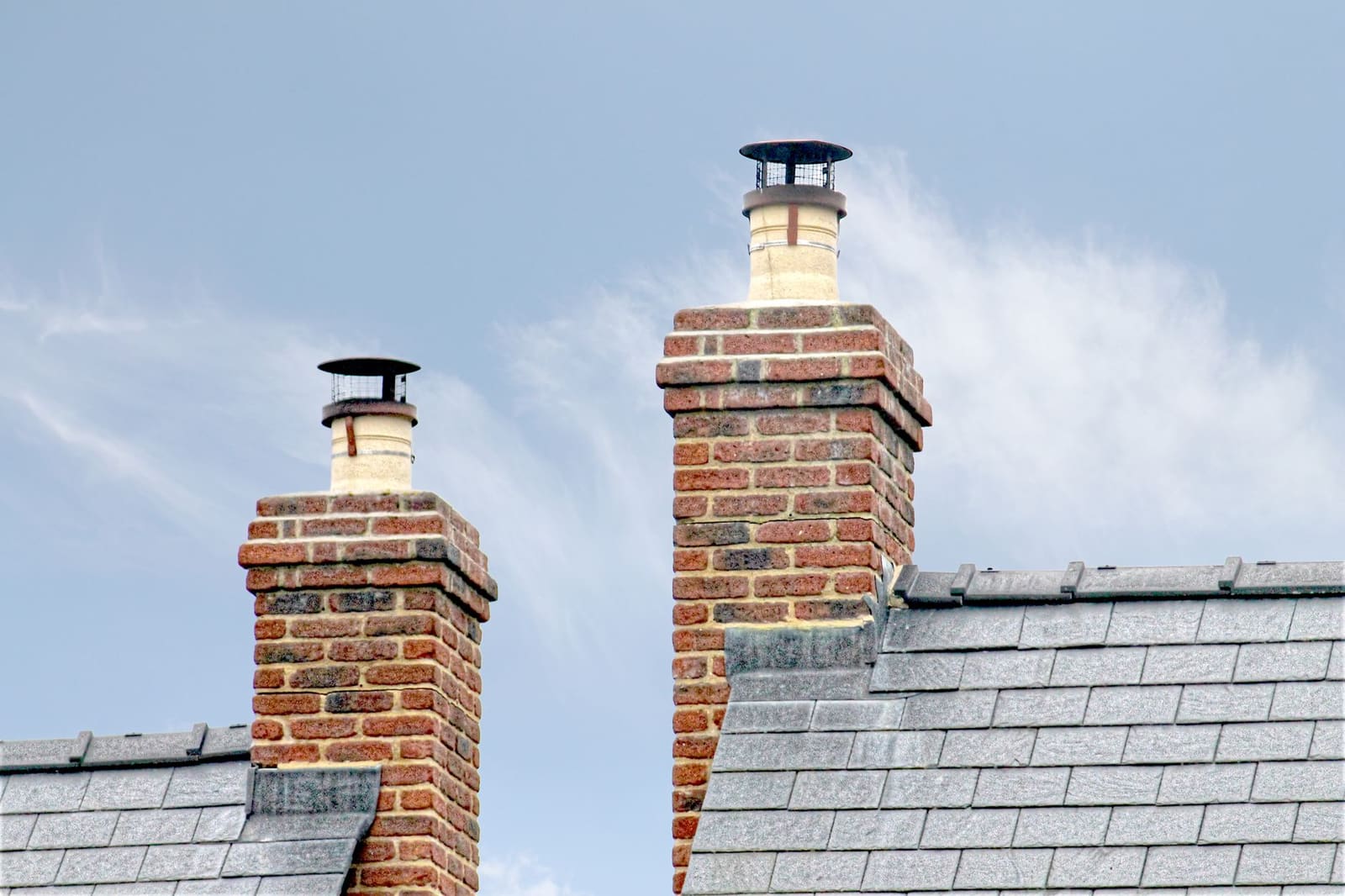
Why a factory-built chimney cannot take just any cap
Where the chimney is a metal flue inside a framed chase, the cap belongs to a listed system. CRC R1005.1 requires factory-built chimneys to be installed and terminated according to the manufacturer's instructions, which in practice means the termination cap, and any spark screen on it, should be the one that manufacturer specifies for that flue.
A universal masonry cap clamped onto a metal flue may fit and still be wrong. It can change how the flue vents and cools, and it sits outside the listing. On an older unit, finding the correct cap starts with the data plate on the fireplace, often behind the lower grille or just inside the opening.
The chase cover, the metal sheet the flue passes through, is a separate part. A new cap sitting on a rusted chase cover solves half the problem.
Mesh material, heat and the acids in wood smoke
The code sets a minimum durability for masonry chimney screens: equivalent to 12 gage wire, 19-gage galvanized steel or 24-gage stainless steel. Galvanized mesh meets that on paper, but the acidic deposits wood smoke leaves behind strip its zinc coating, and once the coating goes the steel rusts through.
Stainless costs more at the outset and generally holds up longer on a flue that sees regular fires. On a chimney lit a few times a winter the gap narrows. What matters is that the mesh is still whole years later, because a hole in it cannot be seen from the driveway.
Tell us whether the chimney is brick or a framed chase, how many flues come out of it, and whether a cap is there now. Call or send the details, and ask for an estimate for the work.
Single-flue, multi-flue and full-width caps
Masonry chimneys take one of two cap shapes. A single-flue cap clamps to the flue tile projecting above the crown. A full-width, or outside-mount, cap sits over the whole crown and covers every flue at once, which suits a chimney where the tile is flush or a second flue serves a furnace or water heater.
A full-width cap also shelters the crown from rain, which helps a crown in fair condition. It does nothing for one that is already cracked, and fitting it over a failing crown hides the damage from whoever looks next.
Where a gas appliance vents through one of the flues, the termination on that flue has to suit the appliance. That is a separate question from ember protection.
What moves the price of a cap in Calabasas
The part is rarely the largest variable. On a hillside lot, the approach to the roof and where a ladder can safely stand often count for more.
- 1Chimney type: a listed factory-built termination or a masonry cap.
- 2How many flues there are, their sizes, and whether the tile stands proud enough to clamp to.
- 3Stainless or galvanized mesh.
- 4Roof covering and pitch; clay and concrete tile need careful footing and some pieces break under weight.
- 5Whether the old cap has corroded in place and has to be cut off.
- 6Whether the crown or chase cover underneath needs work first.