Los Angeles County Service Areas · Chimney & fireplace services · Estimate requests online
Fireplace Inspection in Los Angeles
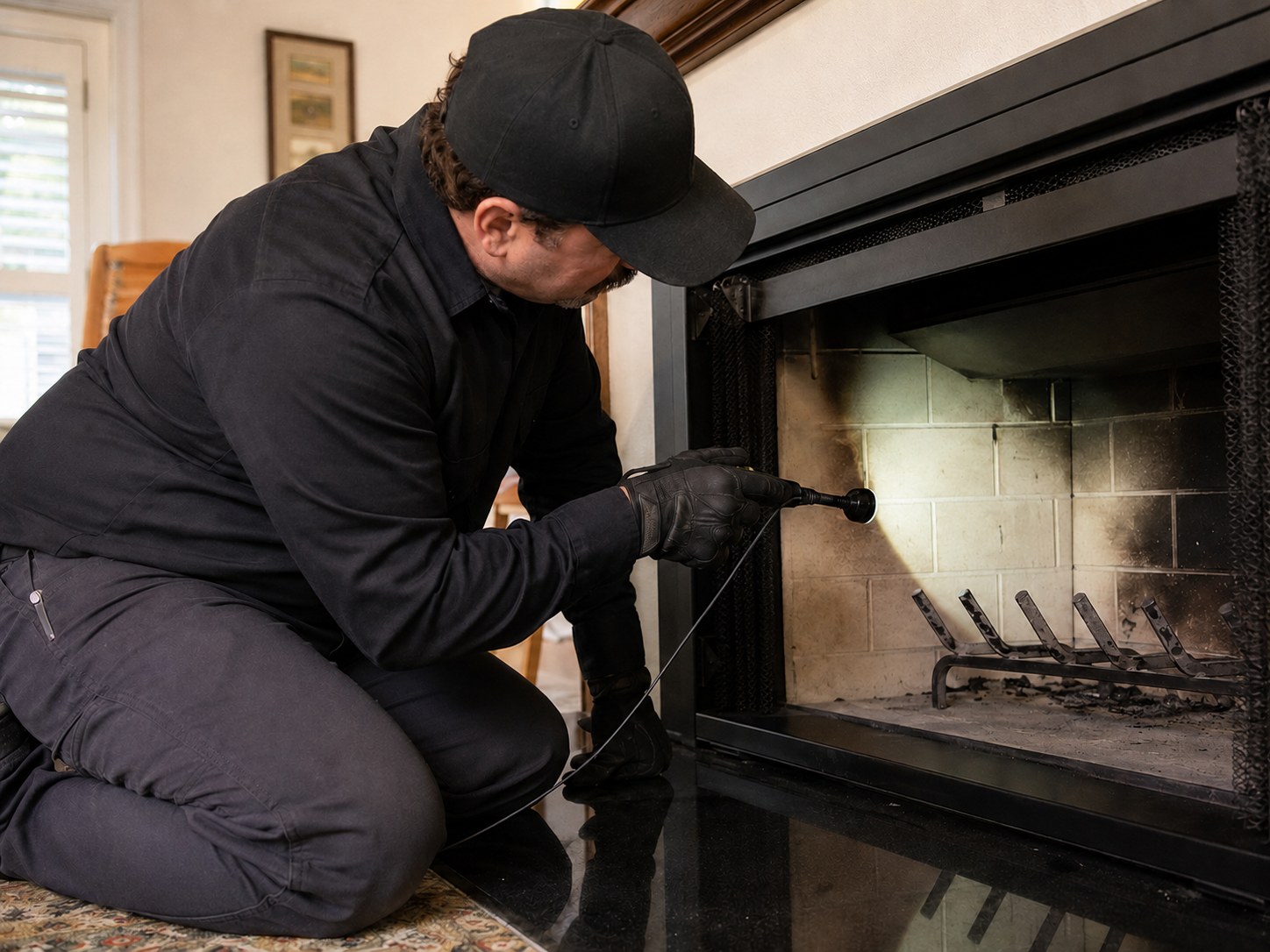
A fireplace inspection looks at the appliance itself — firebox, damper, doors, and on gas units the burner, ignition and vent connection. The chimney above it is a separate inspection.
- Chimney & Fireplace ServiceCleaning, inspection & repair
- Los Angeles Service AreasCities & LA neighborhoods
- Free Estimates AvailableEstimates at no charge
- Easy to ReachCall or request online
A Fireplace Inspection Covers the Appliance, Not the Stack
A fireplace inspection is about the part of the system you can stand in front of: the firebox, the damper, the doors and glass, and on a gas unit the burner, ignition and the connection to its vent. It also looks at what surrounds the fireplace — mantel and trim clearances, heat marks, and whether a carbon monoxide alarm is nearby.
The flue and the masonry above the roof are a chimney inspection, and that page explains the three NFPA 211 inspection levels. The two are often combined, and a problem at the fireplace — smoke spilling, a smell, soot on the glass — can turn out to start in the chimney.
What a Fireplace Safety Inspection Looks At
Which of these apply depends on the fireplace. Scope varies, so ask what is included before booking.
The firebox
- Firebrick and mortar joints — cracks, gaps, loose or missing brick
- Refractory panels in factory-built fireplaces — cracks deep enough to expose metal
- The hearth floor and the lintel above the opening
The damper and throat
- Whether the damper opens fully and closes
- Rust, warping, a broken handle or cable
- What can be seen of the smoke chamber above it
Doors, glass and screens
- Cracked or clouded glass and worn door gaskets
- Hinges, latches and the frame fit
- Screens that close and cover the opening
Gas components you can see
- Burner, logs or media, and their placement
- Pilot and ignition behavior and flame appearance
- Visible gas connection and the location of the shutoff valve
Venting and connection
- How the fireplace connects to the chimney or vent pipe
- Damper clamp on gas logs, where the log set calls for one
- Visible vent termination on direct-vent units
Surroundings and alarms
- Mantel, trim and hearth extension against clearance requirements
- Scorching or heat marks on nearby walls and ceiling
- Whether a carbon monoxide alarm is present nearby
Clearances — the required distance between the fireplace opening and combustible trim or a mantel — are set by the building code and, for factory-built units, by the installation manual. A mantel added during a remodel is a common place for them to go wrong.
Gas and Wood Fireplaces Fail in Different Ways
Wood fireplace inspection
Heat is the main enemy. Firebrick cracks, mortar joints open, and the damper warps or rusts. Creosote in the throat and smoke chamber is fuel for a chimney fire. Cracks in the firebox matter because they let heat reach whatever sits behind it — see firebox repair and damper repair.
Gas fireplace inspection
Combustion is the main concern. Logs out of place, a dirty burner or a blocked air supply produce soot and carbon monoxide. Ignition faults, cracked glass, worn gaskets on sealed units, and a damper closed on a log set that needs it open all come up. Faults found here lead to gas fireplace repair or glass replacement.
An Annual Fireplace Inspection, Plus a Few Other Moments
Once a year. NFPA 211 recommends annual inspection of chimneys, fireplaces and vents, with cleaning as the condition requires.
Before first use in a house that is new to you, or in a fireplace that has sat unused for years. Nobody may know when it was last looked at.
When something changes: soot on the glass, a new smell, smoke in the room, a pilot that will not stay lit, or anything after a chimney fire.
Before work that covers or changes the fireplace — refacing, new glass doors, an insert, or a gas conversion. Finishing over a cracked firebox hides the problem rather than solving it.
Fireplace Inspection Before Buying a Home
A general home inspection usually records what the fireplace looks like from the room. If the listing makes a feature of the fireplace, or the house has more than one, a separate look at the fireplace and chimney is worth building into the contingency period.
Before you book anything, ask what the inspection will cover and what documentation you will receive, since that is what you will be negotiating with. Why a Level 2 chimney inspection matters when buying a home explains the chimney side of that decision. What a particular sale requires is a question for your agent or lender.
When an Inspection Is the Wrong Call
If you smell gas, this is not an inspection booking. Leave the house and call your gas utility's emergency number from outside. If the carbon monoxide alarm sounds, get everyone out and call 911. If you hear a roaring from the chimney during a fire, that can be a chimney fire in progress: get out and call 911.
When not to call us: if your gas fireplace was inspected last season, nothing about it has changed, and it lights, burns with a steady flame and leaves the glass clean, another inspection this month is not buying you much. Wait for the annual one. If a wood fireplace is dirty but otherwise fine, fireplace cleaning may be all it needs.
What Drives the Cost of a Fireplace Inspection
No price is published here. The variables below are why one fireplace takes much longer to look at than another.
Gas, wood, or both
A gas unit has burner, ignition and venting to look at; a wood fireplace has firebox and damper condition. A converted fireplace has both.
How many fireplaces
Two or three fireplaces in one house are separate appliances, each with its own connection.
Masonry or factory-built
A factory-built unit is checked against its own installation manual, which means identifying the model first.
Whether the chimney is included
The flue and the stack are a chimney inspection. Combining the two is common, but it is a wider scope.
Access
Glass doors that have to come off, an insert in the opening, or a fireplace boxed in by built-in cabinetry all affect how much can be seen.
How dirty the firebox is
Heavy soot and ash hide cracks. If surfaces cannot be seen, cleaning may have to come first.
Call or send the details, and ask for an estimate for the work. If the inspection turns something up, the next step is usually on the fireplace repair page.
Fireplace Inspection in Los Angeles
Gas and wood fireplaces are treated differently under South Coast AQMD wood-burning restrictions, and the details are on the chimney cleaning page. For a household deciding whether to keep burning wood or convert, an inspection of the existing fireplace is a sensible first step, because a gas log set or insert still depends on the firebox and damper it sits in.
General homeowner guidance on fireplace safety is collected at CSIA homeowner resources.
Want the fireplace looked at before you use it or buy the house?
Tell us whether it burns gas or wood, whether it is masonry or a factory-built unit, and what prompted the question. If you are in escrow, say when the contingency period ends.
Related chimney & fireplace services
Part of Inspection & Diagnosis — Establishing what condition a chimney or fireplace is actually in, before deciding what it needs. Inspection is how a repair gets scoped.
- having the chimney looked at properlyChimney Inspection — Masonry, crown, cap, flashing, firebox and flue condition, and what it means.
- having the fireplace itself cleanedFireplace Cleaning — The firebox, grate, damper area and glass on gas and wood fireplaces.
- fireplace repairFireplace Repair — The hub page: firebox, refractory, damper, draft and appliance faults.
- a gas fireplace that will not lightGas Fireplace Repair — Pilot, thermocouple, valve, ignition, burner and gas-log problems.
Further reading: Chimney Inspection Cost in Los Angeles: What Drives the Price · Prefab vs Masonry Fireplace: How to Tell Which One You Have
Request an Estimate
Tell us the fuel type and what prompted the question.
Fireplace or chimney?
- Firebox, damper, glass, burner: this page.
- Flue, crown, cap, masonry outside: chimney inspection.
- Buying a house: usually both.
Fireplace Inspection Questions
Not the question you had? The full FAQ covers more ground.
Tell us what your chimney is doing
Call, or send a short description and request an estimate. Estimates cost nothing.