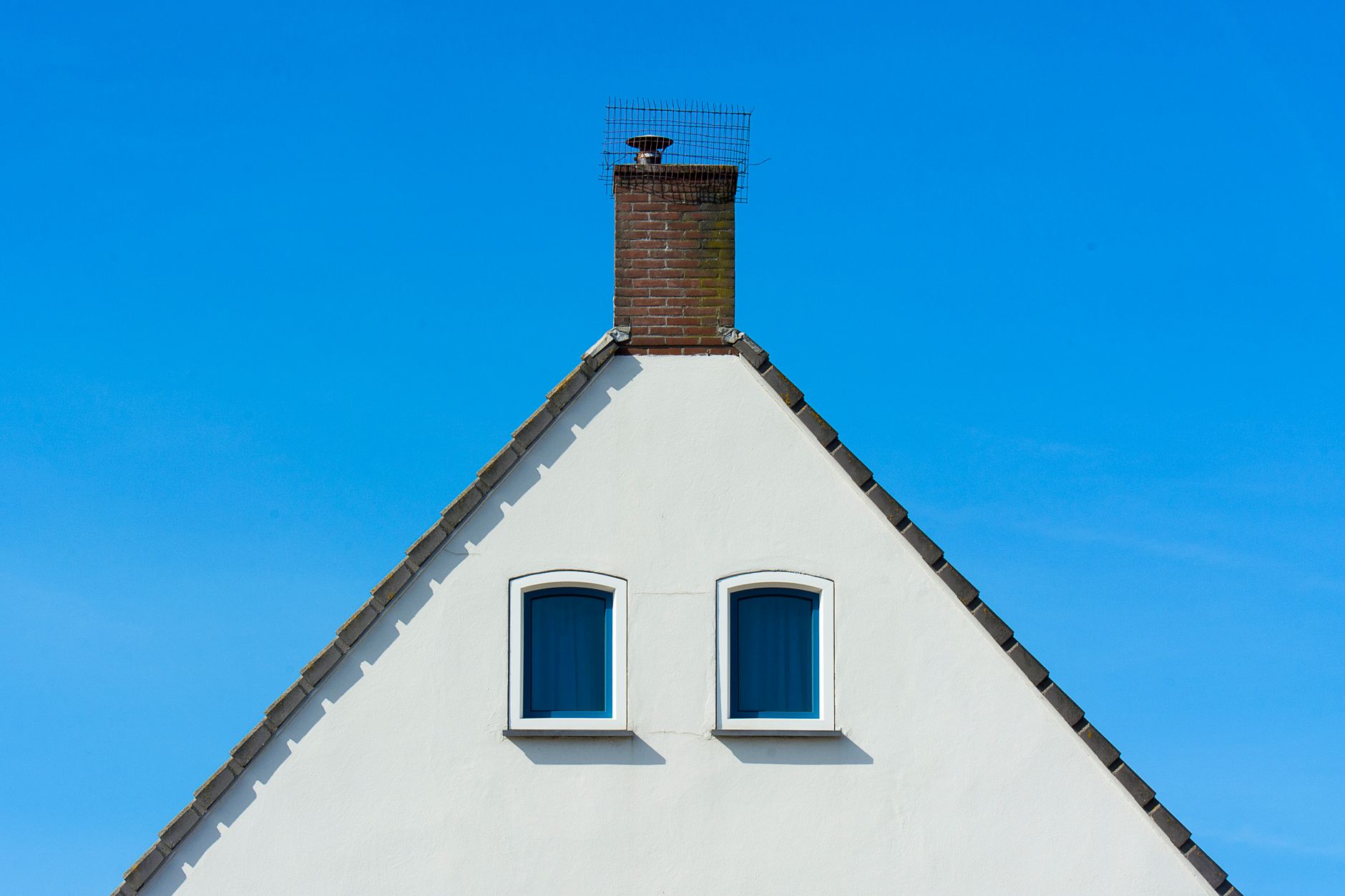
Why the screen at the top is part of the sweep
A spark arrestor is a mesh enclosure at the top of the flue, usually built into the cap. Its job is to stop burning embers leaving the chimney. Soot and creosote collect on that mesh as well as on the flue walls, and a screen that has closed up behaves like a partly shut damper: smoke has nowhere to go but back down.
The screen also fails in the other direction. Mesh corrodes and tears, and a gap that lets a bird in also lets an ember out. From the ground neither problem is easy to see, which is why the top of the chimney is checked on a sweep rather than assumed.
The California Residential Code requires an approved spark arrester on any chimney serving a solid-fuel fireplace, whatever the hazard map says. Local fire rules can add to that, and hazard zone status is looked up on the state map address by address, so confirming what applies to your property with the Los Angeles County Fire Department or the City of Calabasas is worth doing before the cap is changed.
What a sweep involves on factory-built and masonry flues
Where the fireplace dates from the 1970s or later, it is often a factory-built unit with a metal flue inside a framed chase. Those flues are cleaned with brushes suited to the metal, following the manufacturer's instructions, and the refractory panels in the firebox are looked at for cracks at the same time. A cracked panel is replaced, not patched.
On an older masonry chimney the flue is usually clay tile, and the sweep works through the smoke chamber and damper area as well as the straight run of flue. Either way, the loose deposits come down and are contained at the firebox, and the damper is checked for a full open and close.
Glazed, tar-like creosote does not brush off. If it turns up, that is a separate job, covered on the creosote removal page, and it is worth knowing before anything is quoted.
Say whether the fireplace is factory-built or masonry, and roughly how steep the roof is. Tell us what you are seeing and ask for an estimate.
When to book it in Calabasas
Late summer and early autumn is the sensible window: after the flue has sat unused through the warm months, and before both the burning season and the Santa Ana wind events that tend to arrive in autumn. A chimney swept and screened before the first cold night is one less thing to think about when the red flag warnings start.
NFPA 211 recommends an annual inspection of any chimney in use, with cleaning as its condition requires. A fireplace lit a handful of times a year may not need sweeping every year; one used through most of the winter usually will.
On a mandatory no-burn day declared by the South Coast AQMD, wood-burning devices must not be used at all. That rule does not depend on how recently the chimney was swept.
What drives the cost of a sweep here
The price depends on the chimney rather than on the city. The factors that move it are consistent: how steep and how high the roof is, whether the flue is metal or tile, how much deposit there is, whether the spark arrestor comes off easily or has to be cut free, and whether the visit turns up something that needs a repair rather than a clean.
Where a Calabasas house sits on a slope with a long approach and a steep pitch, it takes more setting up than a single-storey house on a flat street, and access can then be the biggest variable.