Los Angeles County Service Areas · Chimney & fireplace services · Estimate requests online
Chimney Spark Arrestor Installation in Los Angeles
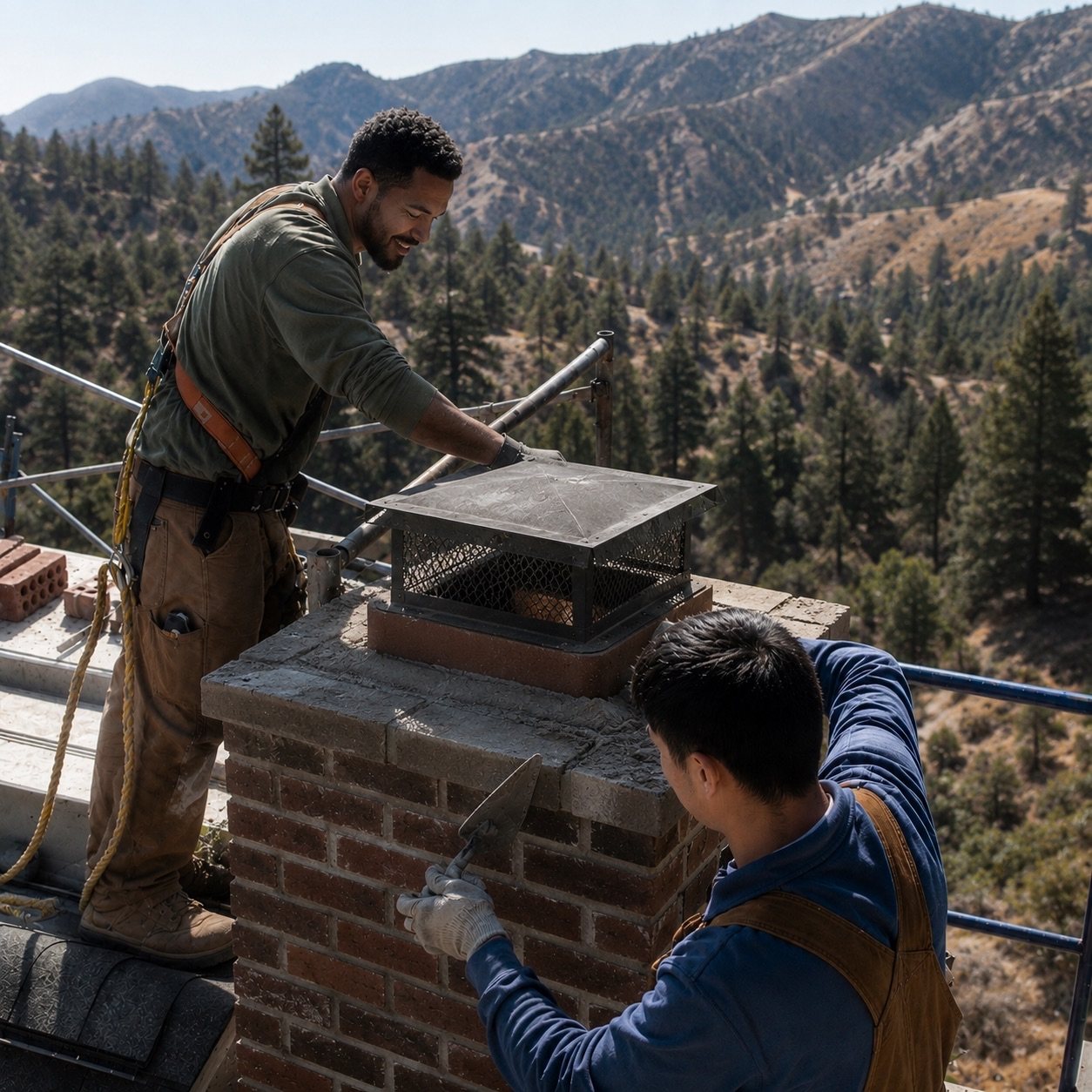
Spark arrestor installation puts a metal mesh over the top of the flue so embers stay in the chimney instead of landing on the roof or in dry brush. The mesh only works if it is intact and clear, which is what most of this page is about.
- Chimney & Fireplace ServiceCleaning, inspection & repair
- Los Angeles Service AreasCities & LA neighborhoods
- Free Estimates AvailableEstimates at no charge
- Easy to ReachCall or request online
If you can see sparks or flames coming out of the chimney, or hear a loud roaring from the flue, treat it as a chimney fire: get everyone out and call 911. That is not a spark arrestor question.
A Spark Arrestor Holds Embers in the Flue
A wood fire lifts burning fragments up the flue on the draft. Most burn out on the way; some are still glowing when they reach the top. A chimney spark arrestor is a metal mesh, sometimes called an ember screen, sized so that fragments large enough to start a fire are held back while smoke and gases pass through. Held against the mesh, an ember keeps burning until it is too small to matter.
It is a reduction, not a seal. Mesh fine enough to stop every particle would choke the draft, so the opening size is a compromise between ember control and airflow. Where a specification applies, it comes from the local fire authority, which is the right place to check rather than a product label.
It also does nothing for a fire that is burning inside the flue. Creosote that ignites is dealt with by cleaning the chimney before it builds up, not by the screen at the top.
Arrestor, Cap or Both?
On most chimneys the spark arrestor is the mesh sides of the cap. The hood keeps rain out; the mesh keeps embers in and, if it is sturdy and well fastened, keeps animals out as well. One part does all three jobs, so most people buy one thing.
Which cap to choose, and in which material, is covered on chimney cap installation. This page covers the mesh itself: whether it is doing the ember job, whether it is intact, and whether it is clear. If you are mainly worried about birds and squirrels, the fastening matters more than the mesh size; see chimney animal screens.
Factory-built chimneys are a separate case. Their termination cap is part of the manufacturer's listed system, and a replacement or spark arrestor for one should be a component the chimney manufacturer specifies, not a generic part.
Checking the Spark Arrestor Screen You Already Have
Binoculars from the ground show most of this. Close-up checks belong to whoever is on the roof for other work.
Holes or broken wires
A single rusted-out patch is an opening an ember can pass through. Mesh fails at the corners and where it is bent around the frame first.
Mesh pulled away from the frame
Wind, branches and animals push mesh out of its seat. A gap along one edge defeats the screen even if the rest of it looks perfect.
Black, shiny or furred-over mesh
Soot and creosote building up on the wires. A partly blocked screen slows the draft, and on a wood-burning flue the deposit on it is combustible.
Rust flaking off the wires
Mesh wire is thin, so it loses strength quickly once it starts to rust. If the wires crumble when touched, the screen is past repair.
Smoke spilling into the room
When a fire that used to draw well starts to smoke, a plugged screen is one of several possible causes. It is the one people least often think to check.
No mesh at all
Some caps are solid-sided hoods with no screen. They keep rain out and do nothing about embers.
A Clogged Spark Arrestor Restricts the Draft
The mesh is the coolest, narrowest point the smoke passes through, so it is where deposits collect first. On a wood-burning flue, creosote, the tarry residue of incomplete combustion, can coat the wires until the open area is a fraction of what it was. The fire then draws poorly, burns cooler, and produces more creosote, which is a loop that ends with smoke in the room.
A clogged screen is rarely the only deposit. If the mesh is plugged, the flue below it usually needs attention too, and chimney cleaning covers that. Where the deposit has turned hard and glossy, glazed creosote removal is a different job. NFPA 211 calls for annual inspection, with cleaning as condition requires, and the screen is part of what gets looked at.
Burning dry, seasoned wood reduces how fast the screen plugs. The EPA Burn Wise program has practical guidance on that. If smoke is already coming into the house, this explanation of indoor smoke walks through the other causes.
Spark Arrestor Repair, Replacement or Installation
| Situation | What usually follows |
|---|---|
| Mesh intact but coated in soot or creosote | Clean the screen and the flue |
| Mesh torn or rusted, cap frame sound | Spark arrestor repair: new mesh in the existing frame, where the frame allows |
| Frame rusting through, hood bent, or cap loose | Replace the cap; see cap replacement |
| Solid-sided cap with no mesh | Spark arrestor installation: a mesh-sided cap or add-on screen |
| No cap at all | Cap installation with mesh sides |
When not to call us: a gas-only appliance that vents through its manufacturer's termination cap does not need an aftermarket spark arrestor fitted to it. Gas does not throw embers, and adding mesh to a listed vent cap can interfere with how the appliance vents. If that is your setup, leave the cap as the manufacturer supplied it. Likewise, a sound screen with a light dusting of soot does not need replacing.
Fire Hazard Severity Zones and Chimney Requirements
California maps wildfire hazard by address. The Office of the State Fire Marshal publishes the Fire Hazard Severity Zone maps, and you can look up which zone your property falls in. Neighbors on the same street can sit in different zones.
What a zone means for your chimney is set locally. Local fire authorities may require a spark arrestor on a wood-burning chimney, may specify the mesh, and may check it during a defensible-space or property inspection. Because those rules differ between jurisdictions and change over time, this page does not quote a dimension. Ask your local fire department or building department what applies at your address, and tell whoever fits the screen what they said.
If you have been told your chimney needs a compliant screen after an inspection, keep a copy of whatever the inspector gave you. It is the specification the new screen has to meet.
What Drives the Cost
Re-screening one cap and fitting new mesh-sided caps to a three-flue chimney are not comparable, so no single figure is given here.
Whether the cap stays
Re-screening a sound cap frame is a smaller job than replacing the whole cap with a mesh-sided one.
Flue size, shape and number
Standard clay flues take stock parts. Oval flues, unusual sizes and chimneys with several flues often need custom or multi-flue covers.
Material
Stainless mesh outlasts galvanized, particularly near the coast. The cap installation page covers material choice.
How much deposit is on the screen
Glazed creosote on the mesh usually means there is creosote in the flue too, and the flue needs cleaning before the screen question is settled.
Condition of the flue tile or crown
The screen or cap has to fix to something sound. A cracked flue tile or broken crown turns this into masonry work first.
Roof access
Steep hillside roofs and tall chimneys take more setup.
Send the details of the issue and request an estimate for the specific work.
Embers and the Wildland Edge in Los Angeles
Parts of Los Angeles County put houses right up against brush: canyon roads, hillside streets, foothill neighborhoods where the back fence is chaparral. Where a chimney sits close to dry vegetation, a wood-shake roof, or a yard full of leaf litter, an ember leaving the flue has somewhere to land.
Wind makes it worse. Dry offshore winds carry embers further and dry out everything they might land on, which is why the mesh at the top of the chimney matters more on a hillside than it does on a flat street far from open land. On those days, whether to light a fire at all is a question for your local fire authority's guidance, not the screen.
Salt air corrodes mesh on coastal houses too, and corroded mesh fails as an ember screen before it fails as anything else. The coastal corrosion side is covered on chimney cap replacement.
Not sure your chimney has a working ember screen?
Send a photograph of the chimney top and tell us whether you burn wood or gas. If your fire authority has asked for a specific screen, include what they said.
Related chimney & fireplace services
Part of Caps, Screens & Chimney Top — Everything fitted to the top of the stack: rain caps, spark arrestors and animal screens. The cheapest place to stop the most expensive problems.
- chimney cap installationChimney Cap Installation — Fitting a cap where there is none, and choosing a material that lasts in LA.
- screening the flue against birds and wildlifeChimney Animal Screen — Mesh screening that stops birds and wildlife getting into an open flue.
- what an annual chimney cleaning coversChimney Cleaning — Creosote, soot and debris removed from the flue, smoke shelf and firebox.
- chimney inspectionChimney Inspection — Masonry, crown, cap, flashing, firebox and flue condition, and what it means.
Further reading: Chimney Spark Arrestors and Wildfire Risk in Los Angeles
Request an Estimate
Tell us what is on top of the flue and what you burn.
Quick check
Look at the cap with binoculars. Mesh sides you can see sky through: you have a screen. Solid sides, holes in the mesh, or mesh that looks black and solid: it is not doing the ember job.
Chimney Spark Arrestor Questions
More chimney and fireplace questions are answered on the main FAQ page.
Tell us what your chimney is doing
Call, or send a short description and request an estimate. Estimates cost nothing.