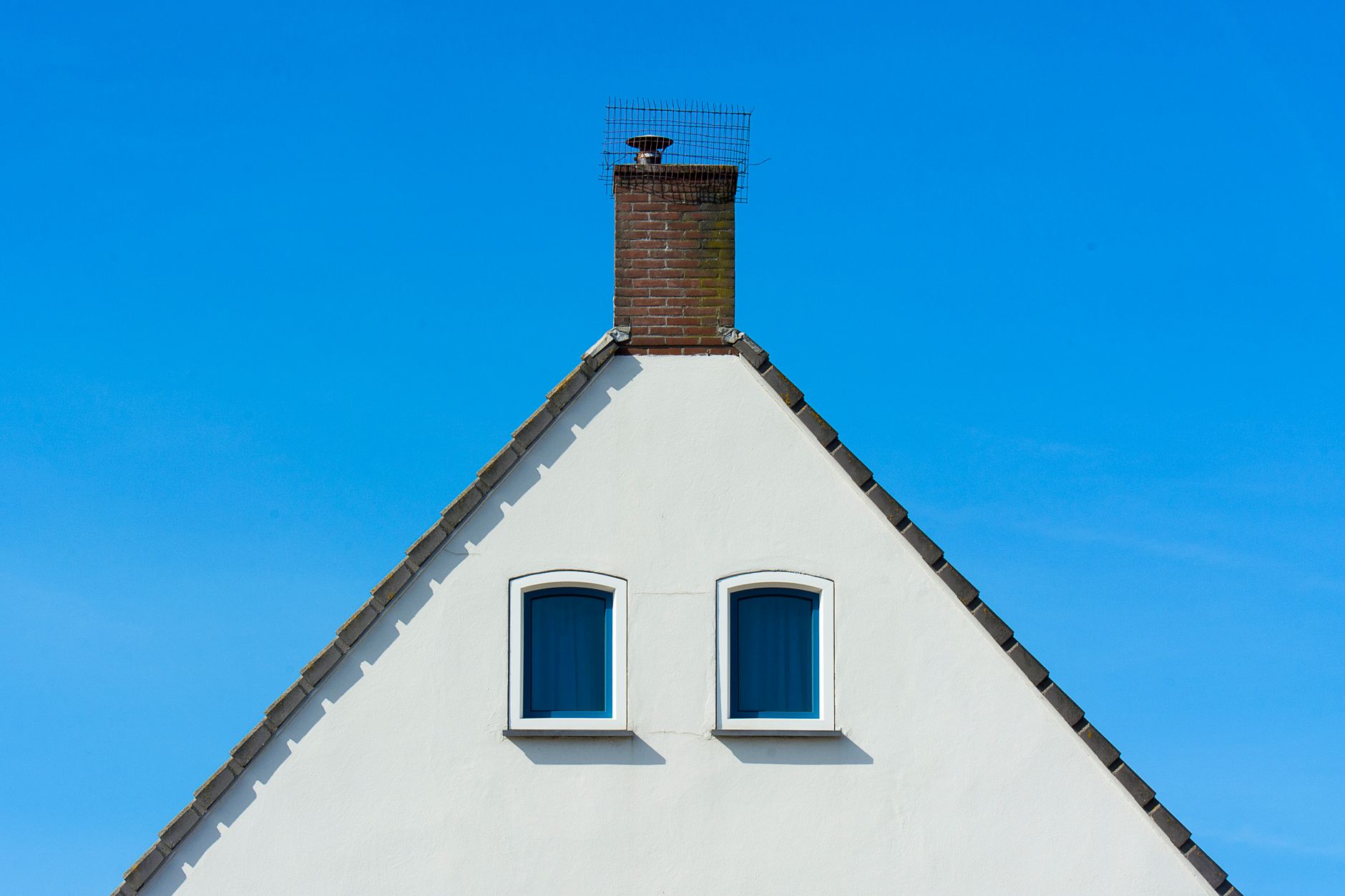
If your chimney serves a wood-burning fireplace or stove, California's residential code requires it to have an approved spark arrester. The requirement sits in the building code, so it is not limited to fire zones. In the areas mapped as Very High Fire Hazard Severity Zones, the City of Los Angeles adds a second requirement that has nothing to do with the screen itself: trees trimmed so their foliage stays at least 10 feet from the chimney outlet.
A note on spelling. The code writes arrester; the trade, including the rest of this site, mostly writes arrestor. They are the same part: a mesh screen over the top of the flue that stops burning embers from leaving the chimney.
What California Residential Code R1003.9.2 requires
The California text of section R1003.9.2 reads: 'All chimneys attached to any appliance or fireplace that burns solid fuel shall be equipped with an approved spark arrester.' That sentence is in the 2025 California Residential Code, which UpCodes lists as effective from January 1, 2026.
For a spark arrester on a masonry chimney, the section goes further. The net free area of the arrester, meaning the open area air can actually pass through, must be at least four times the net free area of the flue outlet. The screen material has to meet the heat and corrosion resistance the code specifies for wire and for galvanized or stainless steel. And the arrester has to be located so it can be reached for cleaning.
'Approved' is a code word. It refers to what the local building official accepts, which is why questions about a particular product, or about how the section applies to an existing house, go to the building department rather than to a sales page.
Factory-built chimneys are handled differently. The code requires them to be listed, labeled, and installed and terminated according to the manufacturer's instructions, so the termination cap on a prefab chimney is generally the manufacturer's part rather than a generic screen.
The 10-foot tree clearance in LA's highest fire zones
LAFD's brush clearance requirements apply to property in the Very High Fire Hazard Severity Zone, under section 57.4906.5.2 of the Los Angeles Municipal Code. Among them: 'Trees shall be trimmed up so the foliage is no closer than 10 feet from the outlet of a chimney.'
The same page asks owners to keep 5 feet of vertical clearance between roof surfaces and overhanging trees, and to keep roofs free of substantial accumulations of leaves, needles, twigs and other combustible matter. A spark screen reduces what comes out of the flue. The clearance rules deal with what is waiting for it on the other side.
There is also a state rule. California Public Resources Code section 4291 requires removing the part of a tree that extends within 10 feet of the outlet of a chimney or stovepipe, for buildings in the state responsibility area. That is largely wildland rather than city-served urban land. The current text of 4291 does not contain a chimney spark-screen requirement; for that, the building code is the source.
Finding out which zone your address is in
Fire hazard severity zones are assigned by address, using maps maintained by the Office of the State Fire Marshal within CAL FIRE. LAFD directs City of Los Angeles owners to the State of California Fire Hazard Severity Zone map to check their property. A street name or neighborhood is not enough to go on; two houses on the same hillside can come back differently.
The zone matters beyond chimneys. Since January 1, 2021, AB38 has required specific disclosures to buyers of residential property in the Very High Fire Hazard Severity Zone, which is one reason the question comes up during sales.
Who enforces clearance depends on where the house is. Inside the City of Los Angeles it is LAFD. In unincorporated county areas and the cities that contract with it, the Los Angeles County Fire Department is the agency to ask.
Tell us what you have noticed and request an estimate. Estimates are free.
Clogging: how a spark screen chokes a flue
Every wood fire sends soot and creosote up the flue, and some of it condenses on the first cool surface it meets. On a capped chimney, that surface is the mesh. Over a season the openings narrow, and a screen that started with plenty of open area ends up passing a fraction of it.
That is why the code sets the net free area of a masonry-chimney arrester at four times the flue outlet, and why it requires access for cleaning. A partly blocked screen slows the gases leaving the chimney, and the fire starts to spill smoke into the room, often a while after lighting rather than immediately. Burning wet wood or keeping fires smoldering makes the build-up faster.
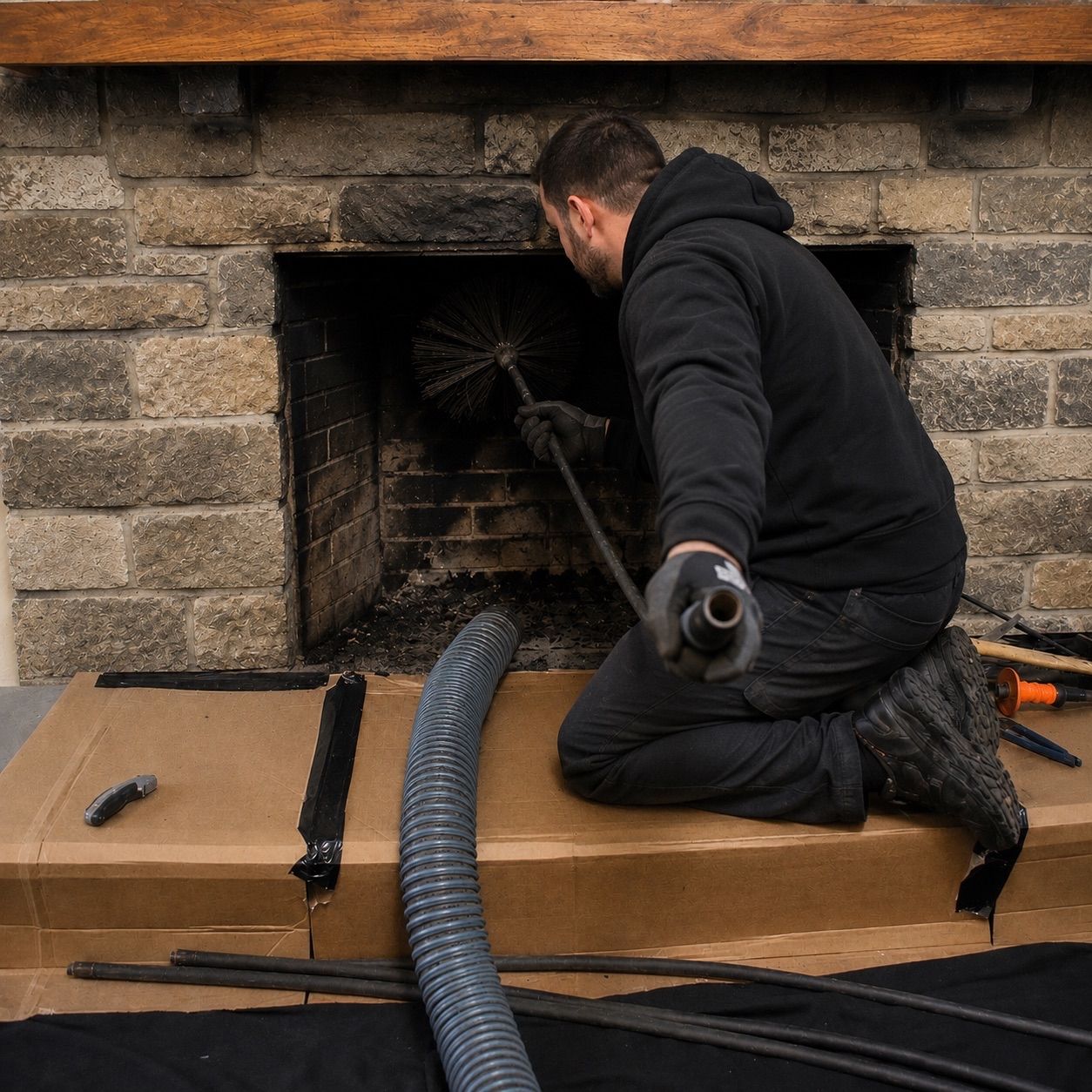
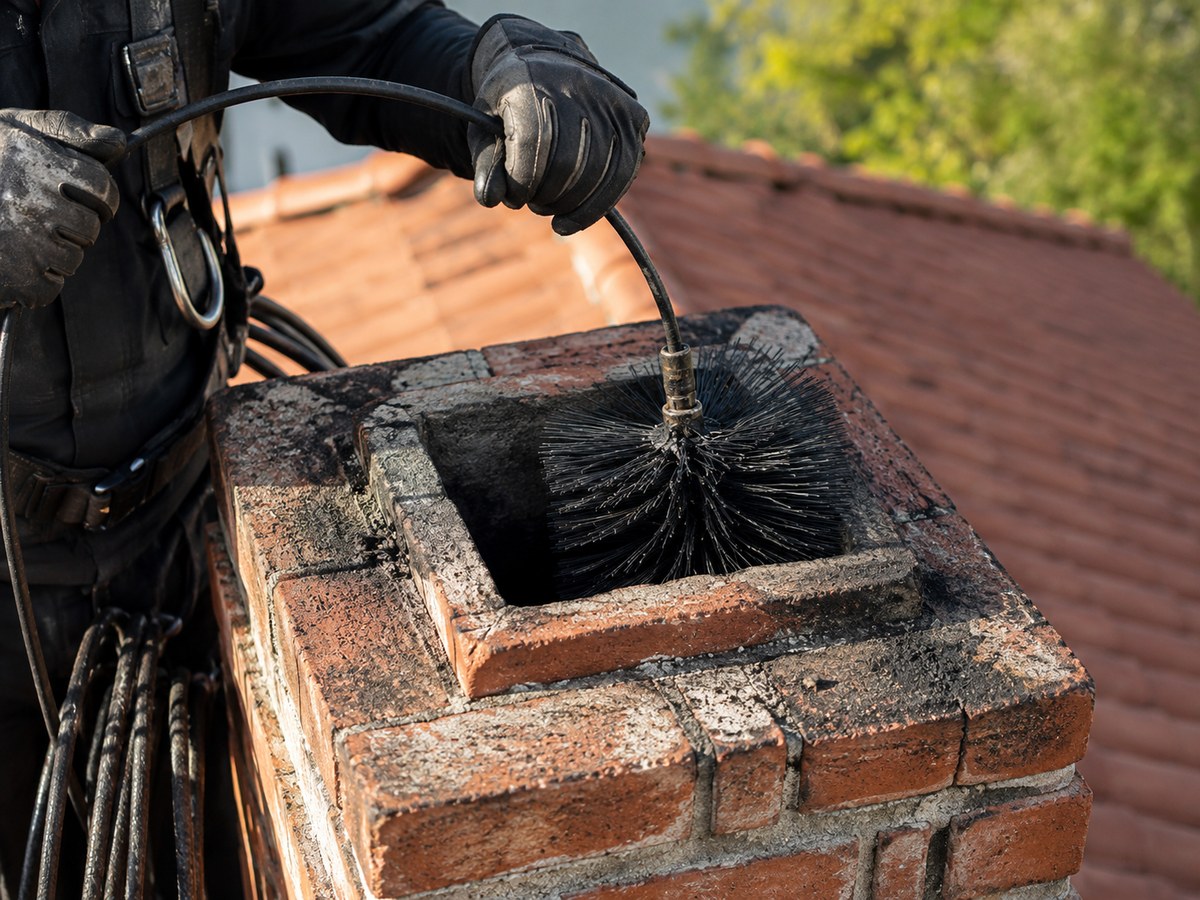
From the ground, a clogging screen can look darker and fuzzier than it did. From inside, the signs are smoke at the fireplace opening on a fire that used to draw well, and a smell of soot in the room. Cleaning the mesh is part of a normal sweep on a capped chimney, and it is worth asking for if it is not mentioned.
Corrosion: the slower way screens fail
Mesh sits in heat, moisture and acidic flue deposits, and that combination eats metal. Galvanized coatings wear through first, then the wire thins, and eventually strands break and leave holes. The code's requirement for heat and corrosion resistance exists because a screen with holes in it is no longer an arrester.
Near the coast, marine air and salt add to the load. Inland, the risk is more about heat cycling and the deposits themselves. Stainless steel is usually chosen for its corrosion resistance, and both galvanized and stainless steel appear in the code's list of screen materials.
Fastenings rust too. A cap held on by corroded screws can shift in strong wind, and Santa Ana wind events in autumn and winter are exactly when a loose cap is most likely to move and most unwelcome if it does. A screen that has lifted or twisted can leave a gap at the base big enough for embers to pass.
What a spark screen does not do
A screen reduces the embers leaving your chimney. It does not keep wind-blown embers from a wildfire off your roof, and it does not replace clearing vegetation and debris. The LAFD requirements treat the roof, the trees and the chimney outlet as separate items for that reason.
It also does not prevent a chimney fire. Chimney fires start from creosote inside the flue, and a screen sits above that. Keeping the flue swept is what deals with creosote. If you hear a loud roaring from the chimney or see flames or heavy sparks at the top, get everyone out and call 911.
When a new arrester is the wrong purchase
If your existing cap has intact mesh that is simply dirty, it needs cleaning, not replacing. That is a sweep, and the screen should be part of it.
If your fireplace burns only gas, the solid-fuel requirement discussed here is not the reason to buy anything. A cap may still be worthwhile for rain and animals, but check what the fireplace's listing allows on the vent first.
If the problem is a tree growing over the chimney, a chimney visit will not fix it. That is trimming work, and in the Very High Fire Hazard Severity Zone it is the owner's responsibility under LAFD's requirements.
If you no longer use the fireplace at all, the question is how to close the chimney, not how to screen it.
The options for a chimney you have stopped using are compared in sealing a chimney you don't use.
Fitting, replacing or cleaning the screen
For a wood-burning chimney the order is simple: make sure the screen is there, make sure it is intact and fastened, and keep it clean enough to draw. Tell us which of those you are unsure about and we'll come back to you.
If there is no screen, or the one there has holes, see spark arrestor installation. Where the flue needs a lid against rain as well, it is usually done as a chimney cap with mesh sides. A screen that is intact but clogged with soot is part of a chimney sweep.
Sources & Further Reading
Service areas
Los Angeles and cities across the county, with the local conditions that affect chimneys there.
View all service areas →