After an earthquake, treat a masonry chimney as unsafe until someone has looked at it. Keep people clear of it, outside and at the hearth, and do not light a fire. The Earthquake Country Alliance puts it plainly: don't use a fireplace with a damaged chimney.
The checks below can be done from the ground and from inside the house. None of them involves climbing onto a roof after a shake, and none of them replaces a look inside the flue.
Why the chimney is the part to worry about
The section above the roof is the least supported part of a masonry chimney. It is a tall, heavy column of brick and mortar with nothing beside it, and shaking works directly on the mortar joints holding it together. The Earthquake Country Alliance says all masonry should be reinforced, notes that inadequately braced chimneys are a common problem, and advises consulting a professional about whether yours is safe.
Los Angeles homeowners have a reference point for this. USGS records the Northridge earthquake of January 17, 1994 as magnitude 6.7, striking at 4:30 a.m. local time, killing 33 people, injuring more than 7,000 and leaving 20,000 residents homeless.
The first hour: people before property
Deal with the hazards before the inspection:
- Keep everyone away from the base of the chimney outside, including the path, the driveway and any spot a falling brick could reach
- Keep people away from the hearth inside; a stack that fails can come through the roof or the firebox
- If you smell gas, leave the house and call the gas utility from outside
- If a carbon monoxide alarm sounds, get everyone out and call 911
- Do not light the fireplace, wood or gas, until the chimney has been checked
What to look for from the ground
Stand well back, across the street if needed, and use binoculars or a phone camera zoomed in. You are looking for change, so compare against older photos of the house if you have them.
- Cracks running through bricks, or a horizontal crack along a mortar line near the roofline
- A stack that leans, twists or no longer lines up with the wall below it
- A gap opening between the chimney and the side of the house
- Bricks, pieces of crown or mortar on the roof, in the gutter or on the ground
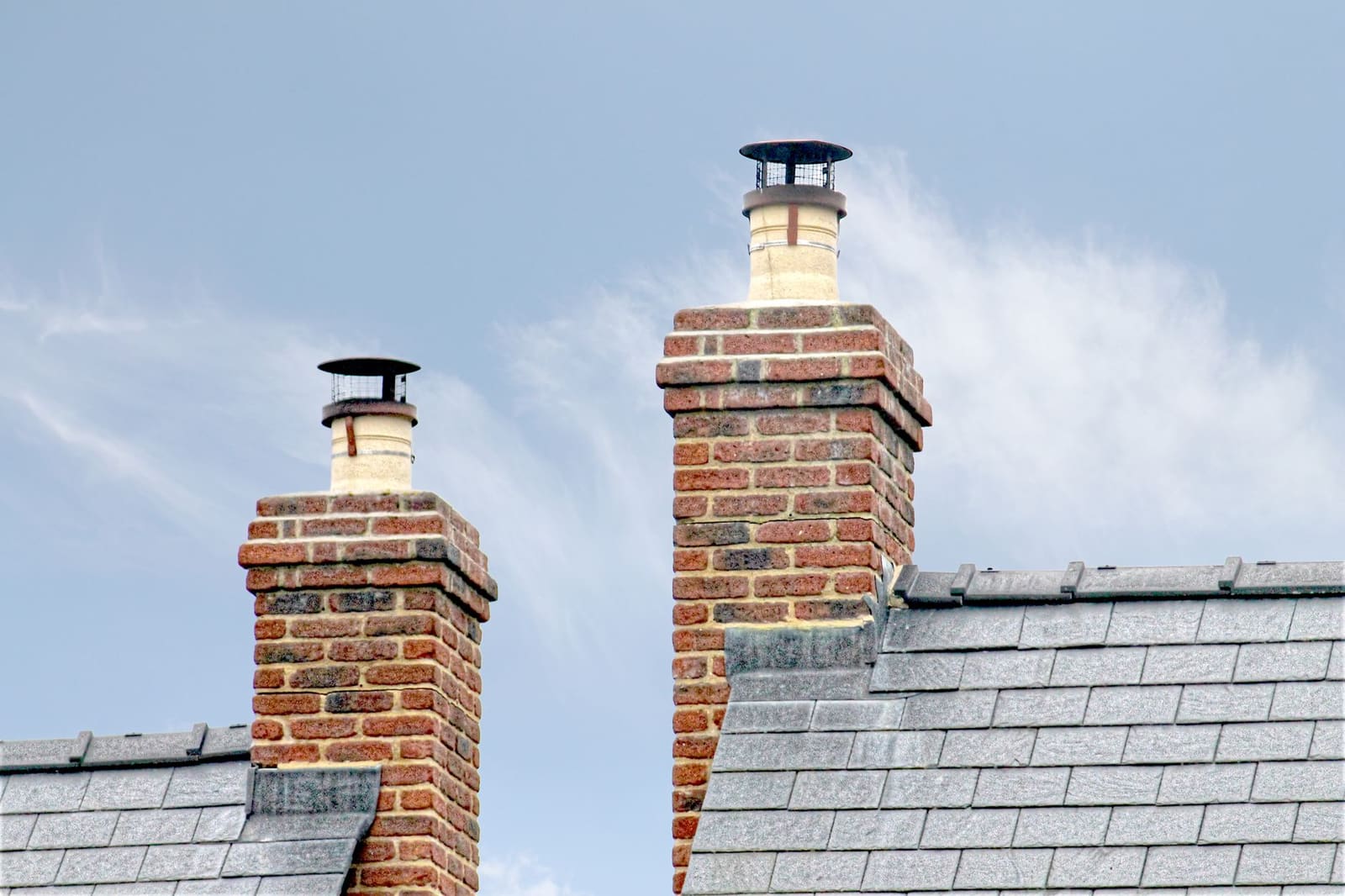
- A cap or spark arrestor that has shifted, tilted or fallen off
- Flashing, the metal seal where the chimney meets the roof, pulled away from the masonry
What to look for at the hearth
With a flashlight, and without reaching up into the flue, check the firebox and the room around it.
Fresh brick fragments, mortar grit or pieces of clay tile in the firebox or on the smoke shelf (the ledge just behind and above the damper) mean something above has broken. New cracks in the firebox walls or hearth, a gap between the hearth and the floor, or a surround pulling away from the wall all show the fireplace has moved relative to the house. A damper that opens or closes differently than it did is worth noting too.
Tell us what you have noticed and request an estimate. Estimates are free.
Factory-built chimneys and gas vents
Metal chimneys on factory-built fireplaces fail differently. Sections can separate at their joints, supports can shift, and the framed chase around them can crack at the roof. The checks are the ones in the manufacturer's installation instructions, and the system should not be used until they have been done.
Gas fireplaces and inserts vent through pipe or a liner that can pull apart at a connection. The appliance may still light, which is exactly why it should not be relit until the vent has been checked.
Repair options when the damage is above the roof
The usual choices are to take the damaged section down and rebuild it, to rebuild with reinforcement, or to replace the upper section with a lighter system. Which one fits depends on how far the damage runs, the condition of the masonry below the roofline and what the local building department will approve: LADBS in the City of Los Angeles, LA County Public Works in unincorporated areas, or the incorporated city's own department. A rebuilt chimney still has to meet the termination height rules, which the 3-2-10 rule article explains.
One purchase to avoid: repointing a chimney that has moved. New mortar in a stack that is out of plumb does not bring it back. And if the only thing you can find is a fine crack you are not sure is new, that still warrants a look before the next fire, but it is not a reason to agree to a rebuild on the spot.
What a standard policy says about earthquakes
The California Department of Insurance says homeowners, renters and condominium policies do not cover earthquake damage, and that the California Earthquake Authority provides most earthquake insurance in the state. California law does require those policies to cover fire caused by or following an earthquake. The homeowners insurance article covers where chimney damage sits against those rules.
Before the next earthquake
The Earthquake Country Alliance places retrofitting older buildings on the building's owner, and CDI lists bracing the chimney among retrofit measures. The time to decide whether a chimney should be reinforced, braced or taken down is before it is tested, not after.
If the fireplace is never used, the chimney still stands above the roof and still carries the same risk. Whether to keep, brace or remove it is a decision to make with the chimney's condition known and the building department's requirements in hand.
Getting a damaged chimney assessed
Tell us what you found from the ground and at the hearth, and the pages below cover the work that usually follows.
Start with a chimney inspection after the earthquake before anyone quotes a repair. Loose brick and open joints below the roofline are masonry repair. Cracked or shifted flue tiles are covered under chimney liner repair. A leaning or partly fallen stack points to rebuilding the chimney.
Sources & Further Reading
Service areas
Los Angeles and cities across the county, with the local conditions that affect chimneys there.
View all service areas →