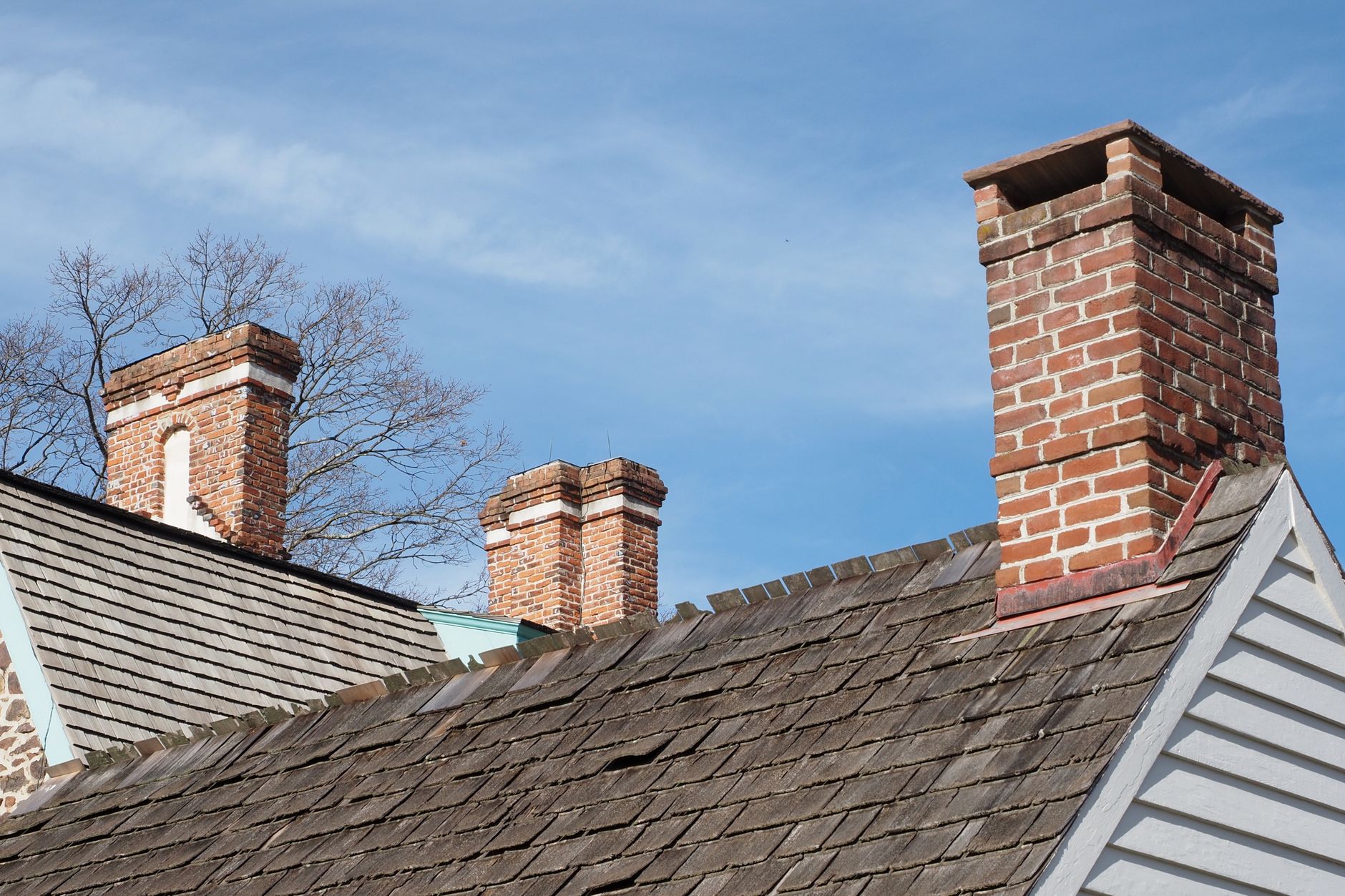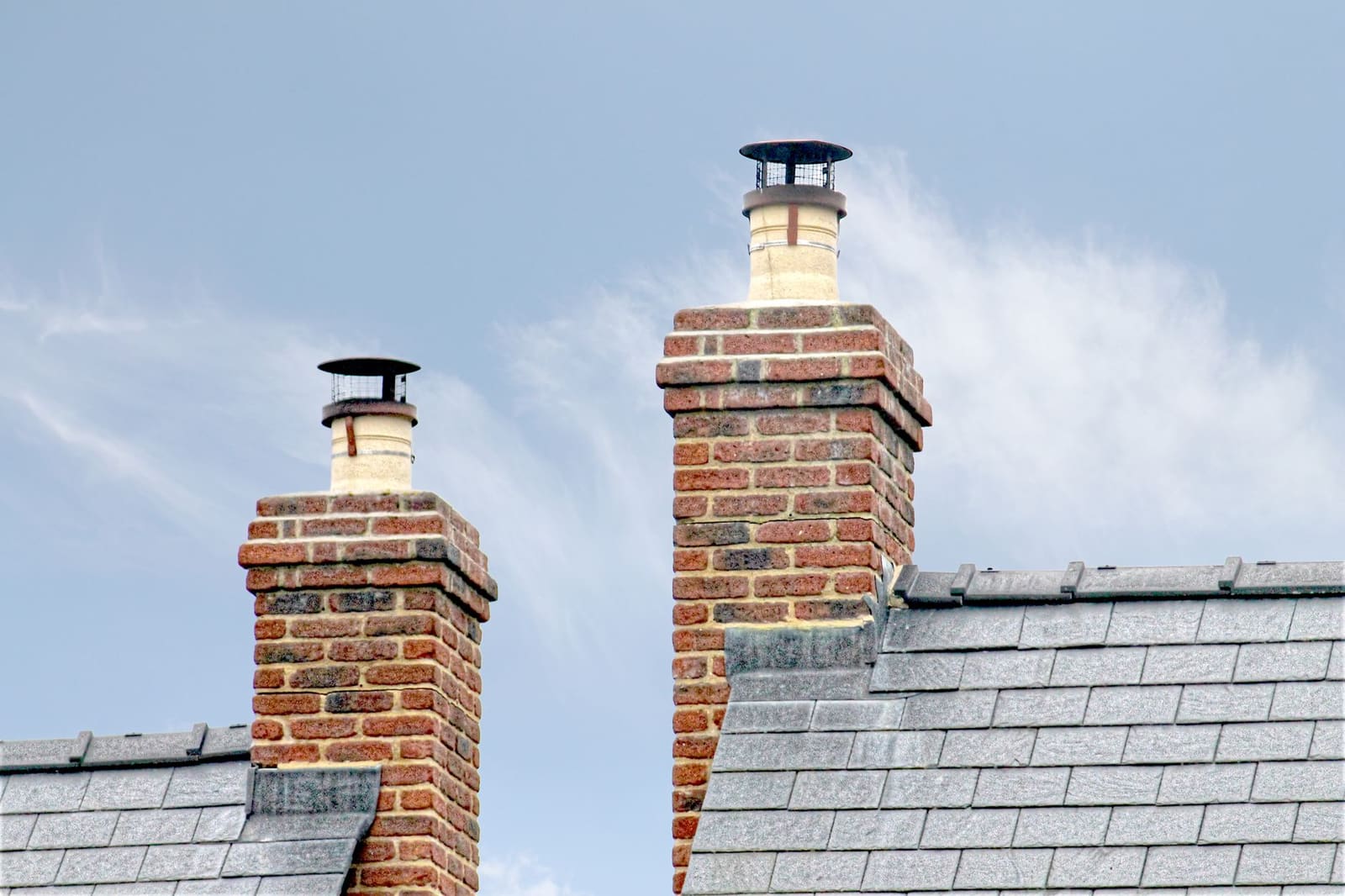
A typical masonry chimney has a cap, a spark arrestor, a crown, flashing, a flue with its liner, a smoke chamber, a damper and a firebox. A factory-built chimney swaps the crown for a metal chase cover. Each part fails in its own recognizable way, and the failure usually shows up somewhere other than where it started, which is why knowing the parts by name saves money.
This page runs from the roof down to the hearth. Each section says what the part is for, how it goes wrong, and which page covers putting it right.
The cap: a lid over the flue opening
The cap is the metal hood fixed over the flue tile where it exits the chimney. It keeps rain from falling straight down the flue, and it keeps birds, squirrels and leaves out of it.
Caps fail in three ordinary ways. Galvanized steel rusts through, which near the coast can happen well before the rest of the chimney shows its age. The fixing screws loosen until the cap rocks or lifts off in wind. Or the mesh bends and clogs with soot and debris, which throttles the draft.
From inside, a failed or missing cap looks like water in the firebox after rain, twigs or nesting material on the smoke shelf, or a rusty trickle on the firebox back wall.
An open flue with nothing over it is covered on fitting a cap to the chimney.
The spark arrestor: the mesh that keeps embers in
A spark arrestor is a metal screen at the flue outlet that holds back burning fragments while letting smoke through. The 2025 California Residential Code (R1003.9.2) requires one on every chimney attached to an appliance or fireplace that burns solid fuel. On a masonry chimney, the screen openings must not let through a sphere larger than 1/2 inch, and must not block one smaller than 3/8 inch.
Both limits exist for a reason. Too coarse and embers escape onto the roof and into dry vegetation. Too fine and the mesh clogs with creosote and soot, the draft drops, and smoke starts coming back into the room. An arrestor that has been blocked solid is its own hazard.
The usual failures are a clogged screen, a screen that has rusted open, and a homemade screen of the wrong mesh.
Mesh sizing and fitting are covered on spark arrestor installation.
The crown: the slab that sheds water off the brickwork
The crown is the cement or concrete slab covering the upper end of a masonry chimney, around the flue tile. The code (R1003.9.1) calls for a concrete, metal or stone cap with a drip edge, and a caulked bond break around any flue liners. In the trade that slab is the crown, and it is a different thing from the metal cap described above.
A well-built crown slopes away from the flue, overhangs the brick, and has a drip groove so water falls clear of the chimney face. Many older chimneys instead have a flat mortar wash laid flush with the brick. That wash cracks early, and once it cracks, every rain runs into the masonry.
Crown failure shows up as spalling bricks just below the roof end, efflorescence (the white powdery deposit left when water moves through masonry and dries at the surface), and damp in the chimney breast indoors.
Sealing, resurfacing and rebuilding options are set out on the chimney crown repair page.
The chase cover: the metal lid on a framed chimney
A factory-built fireplace usually runs its metal flue pipe up through a wood-framed box called a chase, clad in stucco or siding to look like a chimney. The chase has no crown. Its upper end is closed by a sheet-metal chase cover, with a collar where the flue pipe passes through.
Thin galvanized covers rust, and many are flat, so water pools and finds the rust spots. The water then runs down inside the framing rather than down a brick face, so the first sign is often a stain on the ceiling or wall beside the fireplace, or rot at the base of the chase, well after the damage started.
Replacing a rusted or flat cover with a sloped one is covered on chase cover repair.
Flashing: the seal where the chimney meets the roof
Flashing is the sheet metal that bridges the gap between the chimney and the roof covering. On a brick chimney it normally comes in two layers: step flashing woven into the roofing, and counter-flashing let into the mortar joints and lapped over it. The joint between them moves as the house and chimney shift at different rates.
Flashing fails when the sealant dries out, when counter-flashing was surface-caulked instead of set into the joint, or when a reroof left the old metal in place and buried it. The symptom is a stain on the ceiling or upper wall beside the chimney, often only in wind-driven rain.
How the two layers are reworked is on chimney flashing repair.
Tell us what you have noticed and request an estimate. Estimates are free.
The flue and its liner: the passage the smoke uses
The flue is the vertical passage inside the chimney. The liner is its inner surface: clay tile sections in most older masonry chimneys, stainless steel in many relined ones, and a listed metal pipe in a factory-built system. The liner keeps heat and combustion gases away from the brick and the house framing around it.
Clay tiles crack from heat, from a chimney fire, and from ground movement. Joints between tiles open up. Creosote builds on the walls of any wood-burning flue, and the CSIA's Level 1 guidance says to sweep, or recommend sweeping, any chimney with 1/8 inch or more of buildup. A cracked liner is invisible from the hearth, which is why it is so often found only on a camera inspection.
If you hear a roaring sound from the chimney during a fire, or see flames or dense sparks from the flue outlet, get everyone out of the house and call 911.
Cracked tiles, open joints and relining decisions are on chimney liner repair.
The smoke chamber: the funnel above the damper
The smoke chamber is the tapered space between the damper and the base of the flue. It gathers smoke from the wide firebox and funnels it into the narrow flue. At its base sits the smoke shelf, a ledge that turns back cold downdrafts.
In many older fireplaces the chamber walls are stepped brick, not smooth. Those steps create turbulence and catch creosote, and the mortar in the joints erodes. Repair usually means parging, a smooth refractory coating over the walls. A chamber in poor condition tends to show up as a fireplace that smokes at the start of a fire, or as a Level 2 inspection finding on a house that looked fine from the hearth.
Parging and rebuilding the chamber are covered on smoke chamber repair.
The damper: the plate that closes the flue
The damper is a cast-iron or steel plate at the throat of the fireplace, just above the firebox, that opens for a fire and closes when the fireplace is idle. Some houses have a second damper at the flue outlet, closed by a cable that runs down to the firebox.
Throat dampers rust, warp from heat, and seize. A damper stuck shut makes a fire unusable. One stuck open lets warm air out and cold air, rain and smells in. A warped plate that no longer seats is the in-between case, and it is common.
If the fireplace has a gas log set, follow the appliance instructions on damper position. If you smell gas at any point, leave the house and call the gas utility from outside.
Stuck, warped and missing dampers are covered on chimney damper repair.
The firebox: the part that takes the heat directly
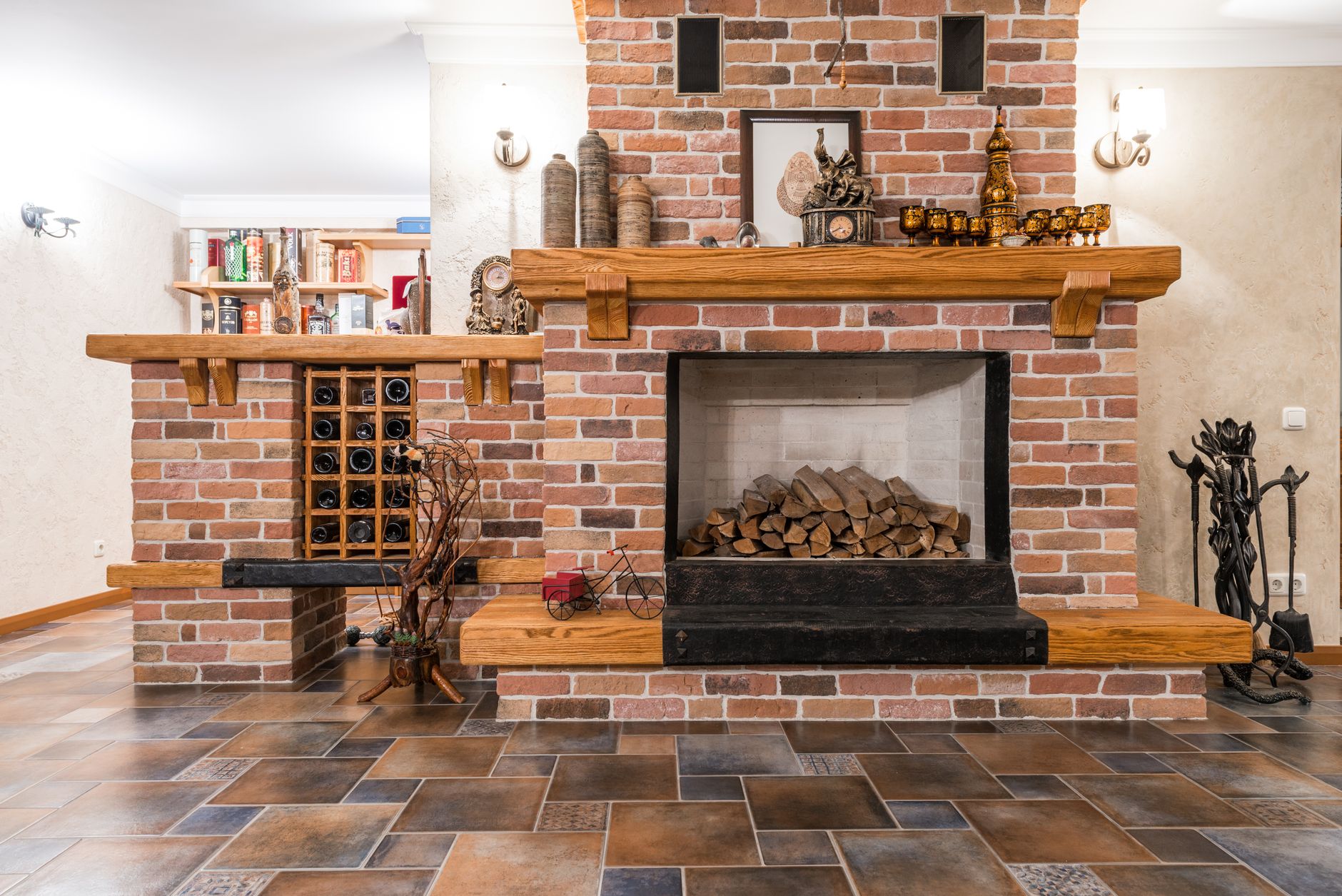
The firebox is the chamber where the fire burns. In a masonry fireplace it is lined with firebrick laid in refractory mortar, both made to tolerate heat that ordinary brick and mortar do not. In a factory-built fireplace the lining is a set of molded refractory panels, often printed with a brick pattern.
Firebrick joints open up after years of heating and cooling, and gaps let heat reach the masonry and anything combustible behind it. Refractory panels craze, crack and eventually break through. Fine surface crazing on a panel is normal wear; a crack you can fit a card into, or a panel with pieces missing, is not.
Repointing firebrick and replacing listed panels are covered on firebox repair.
Which symptom points to which part
Most people meet their chimney through a symptom, not a component. The list below is where each common symptom usually leads. It narrows the search; it does not replace looking.
- Water in the firebox after rain: cap, crown, or a cracked flue tile
- Stain on the ceiling or wall beside the chimney: flashing, or on a framed chimney the chase cover
- White deposit or flaking brick on the outside face: crown or mortar joints letting water into the masonry
- Smoke rolling into the room: damper not fully open, clogged arrestor mesh, or a smoke chamber problem
- Draft or cold air with the fireplace idle: damper not seating
- Nesting material or debris on the hearth: missing or damaged cap
- Flakes of tile or mortar in the firebox: liner or firebox joints
When a worn part does not need replacing yet
Not every flaw is a repair. A hairline crack in one sheltered mortar joint on a chimney you still use is something to watch. Surface crazing on a refractory panel that has not changed since last year is normal. A cap with some surface rust but solid metal and tight fixings has years left in it.
The part worth acting on promptly is whichever one lets water or heat get where it should not. NFPA 211 recommends inspecting chimneys, fireplaces and vents once a year, with cleaning as condition requires. That annual look is what tells you whether a worn part is still just worn.
Where to start
If you are not sure which part is involved, finding out comes before choosing a repair.
An annual look at every part on this page is what a chimney inspection is for. If you already know something has failed, the chimney repair overview explains how the options fit together.
Sources & Further Reading
Service areas
Los Angeles and cities across the county, with the local conditions that affect chimneys there.
View all service areas →