Los Angeles County Service Areas · Chimney & fireplace services · Estimate requests online
Smoke Chamber Repair in Los Angeles
The smoke chamber is the tapered space between the damper and the flue. When it is built of stepped brick, cracked, or losing mortar, it traps creosote and lets heat through — and parging is the usual repair.
- Chimney & Fireplace ServiceCleaning, inspection & repair
- Los Angeles Service AreasCities & LA neighborhoods
- Free Estimates AvailableEstimates at no charge
- Easy to ReachCall or request online
The Smoke Chamber Funnels a Wide Fire Into a Narrow Flue
A fireplace opening is wide; the flue above it is narrow. The smoke chamber is the part of the fireplace that joins the two — a space that starts just above the damper and slopes inward to the bottom of the flue. Smoke chamber repair is about keeping that space smooth and sealed.
At its base, behind the damper, is the smoke shelf — a ledge that catches debris falling down the chimney and helps turn back cold air before it reaches the room. Above that, the walls should rise in an even slope so smoke speeds up as the space narrows and enters the flue without tumbling.
Corbelled Smoke Chambers Trap Creosote and Leak Heat
Some masonry fireplaces build the slope by corbelling — setting each course of brick a little further in than the one below, so the walls climb in steps rather than a smooth plane. From below it looks like an upside-down staircase.
Each step is a ledge. Smoke hitting the ledges swirls and slows, and slow, cooling smoke deposits creosote — the tar-like residue described in the stages of creosote. The ledges hold it, a brush struggles to reach into the corners, and the deposit becomes fuel sitting right above the fire.
The joints between the steps are the other problem. Where mortar has cracked or fallen out, heat and combustion gases can pass into the masonry behind, and where wood framing sits close to the outside of the chimney, that is heat reaching wood that was never meant to see it. A rough chamber is not automatically dangerous, but an open one should not be left that way.
Signs the Smoke Chamber Needs Attention
Several of these have other causes too. They are reasons to look, not a diagnosis.
Smoke curling out at the top of the opening
With the damper fully open and a normal fire, smoke that rolls out under the lintel suggests the gas is not being funneled cleanly into the flue. A rough or badly shaped chamber is one of several possible causes.
Heavy black build-up above the damper
Shine a light up through the open damper. Thick, crusty or shiny deposits on the chamber walls mean creosote is collecting there faster than in the flue.
Mortar or brick pieces on the smoke shelf
Grit, mortar crumbs or bits of brick landing on the damper or the ledge behind it have come off the chamber walls.
Visible gaps or cracks in the walls
Open joints between the stepped courses, or cracks running through the brick, are gaps that heat and gases can pass through.
A smell that lingers after the fire is out
Creosote packed into crevices keeps releasing odor long after the fire. A cold-fireplace smell is also covered on the odor page.
Anything after a chimney fire
A chimney fire can start in or pass through the smoke chamber, where deposits often collect first. Its condition is worth establishing before the next fire.
If smoke is getting into the room, why smoke comes into the house walks through the other causes. For a lingering smell, see chimney odor removal.
Smoke Chamber Parging Smooths and Seals the Walls
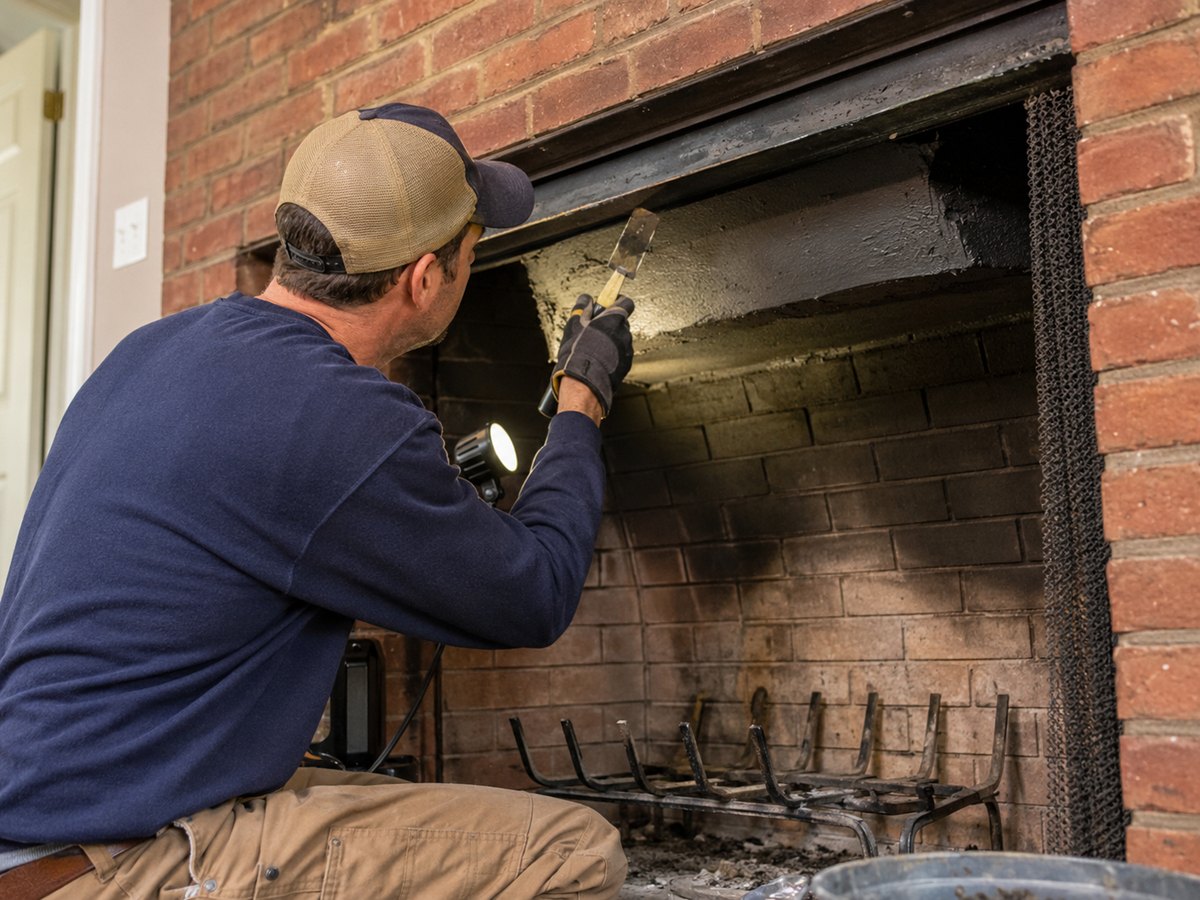
Parging is a coat of heat-resistant mortar troweled or sprayed over the inside of the chamber. Built up over the steps, it turns a staircase into a slope, closes the joints, and leaves a surface that sheds deposits and sweeps clean.
The chamber is cleaned first. Mortar will not bond to soot, and it certainly will not bond to glazed creosote, which may need creosote removal before anything else happens. Loose material comes out next. Crumbling mortar is raked away, and brick that has come loose is reset or rebuilt, because a smooth coat over a failing wall only hides it.
Then the parging goes on, usually in more than one coat where the steps are deep, using a material made for fireplace heat rather than an ordinary mortar mix. The damper frame and the smoke shelf are part of the same job, since gaps around the frame are a common leak point.
Smoke Chamber Inspection: Seeing What Is Up There
The lower part of the chamber can be seen with a flashlight through an open throat damper. The upper walls, the joints between steps and the connection to the flue are harder, and that is where problems tend to hide.
NFPA 211 recommends annual inspection of chimneys and fireplaces and describes three inspection levels as industry terminology. What each level covers, and when a more thorough look is usually called for, is explained on the chimney inspection page. If you are buying a house, ask what the inspection you are paying for actually reaches.
Parge, Rebuild, or Just Clean
Parging is the right answer when the chamber is corbelled or rough and the brick behind it is sound, or when joints have opened but nothing has come loose.
Rebuilding part of the chamber is needed when brick is loose or missing. That is masonry work first and parging second. If the firebox below is also failing, firebox repair is often scoped alongside it.
Neither when the problem is higher up. A cracked flue tile is a liner question, and a smooth chamber will not fix it.
When not to call us about repair: a light layer of soot on a smoke chamber that is already smooth, with tight joints and nothing falling onto the shelf, is normal. That is a chimney cleaning matter, not a repair, and parging a sound chamber adds nothing.
What Drives the Cost of Smoke Chamber Repair
No price is published here. Sealing a few open joints and parging a deeply stepped chamber from bare brick are very different jobs.
How the chamber was built
A deeply stepped, corbelled chamber takes far more material to smooth than one that was roughly sloped to begin with.
How much creosote has to come off first
Parging does not bond to deposits. Loose soot sweeps away; glazed creosote takes more work before any mortar goes on.
Whether brick has to be rebuilt
Parging seals and smooths sound masonry. Loose or missing brick in the chamber walls has to be rebuilt before it is parged.
Size and height of the chamber
A tall chamber over a wide fireplace opening has more surface to cover and is harder to reach.
Access through the firebox
The work is done from below. A small opening, glass doors that have to come off, or an insert in the way all affect the setup.
The damper
A throat damper sits between the firebox and the chamber. Whether it can be worked around, or has to come out for access, changes the job.
Call or send the details, and ask for an estimate for the work. Smoke chamber work is one part of the wider chimney repair picture.
Smoke Chambers in Los Angeles
Where a masonry fireplace dates from before smooth chambers became standard practice, the chamber may still be the original corbelled brick, never parged. That is worth knowing before a house changes hands or a gas log set or insert goes in.
Burning dry, seasoned wood keeps deposits down in any chamber, rough or smooth; EPA Burn Wise covers wood-burning practice in detail.
Seeing crumbling mortar or heavy build-up above the damper?
Tell us what you can see with a flashlight through the open damper, whether anything is landing on the shelf, and whether the fireplace burns wood or gas. If someone has already described the chamber to you, pass that on too.
Related chimney & fireplace services
Part of Chimney Repair & Masonry — Structural work on the chimney itself — brick, mortar joints, the smoke chamber, and the point at which repair becomes rebuild.
- chimney repairChimney Repair — The hub page: brick, mortar, crown, flashing, liner and how scope is set.
- cracked firebrick and refractory panelsFirebox Repair — Firebrick, mortar joints and refractory panels inside the fireplace opening.
- what a liner does and when it failsChimney Liner Repair — Clay tile and metal liners — cracks, gaps, deterioration and relining.
- wood fireplace repairWood Fireplace Repair — Firebox brick, refractory panels, grates and draft problems on wood fireplaces.
- having the chimney looked at properlyChimney Inspection — Masonry, crown, cap, flashing, firebox and flue condition, and what it means.
Request an Estimate
Describe what you can see above the damper.
Quick check
Fireplace cold, damper open, flashlight pointed up. Smooth, even walls with a thin coat of soot are fine. Stair-stepped brick, open joints, or grit on the shelf are worth having looked at.
Smoke Chamber Questions
Other things homeowners ask are covered on the FAQ page.
Tell us what your chimney is doing
Call, or send a short description and request an estimate. Estimates cost nothing.