Close the top of the flue, not just the bottom. For most unused chimneys that means either a mesh cap or a top-sealing damper, both of which keep rain and animals out while leaving the fireplace usable later. Capping the flue off completely is the option for a chimney that will not be used again, and it comes with a moisture trade-off worth understanding first.
There is no published decommissioning standard this page can point you to, so what follows is a set of options and what each one gives up. Anything that touches code or permits is a question for your local building department.
What an open, unused flue lets into the house
The two main risks are water and animals, and a chimney you never light is more exposed to both than one you use.
Water comes straight down an uncapped flue every time it rains. It lands on the smoke shelf and the damper, where it rusts the damper plate and hinge, and it soaks into masonry that never gets dried out by a fire. The result often shows up as a damp or musty smell from the fireplace long before anyone sees a stain.
Animals find an unused flue quiet and sheltered. The Chimney Safety Institute of America specifically warns that animals may build nests in a flue even when the chimney is rarely used. A nest in a chimney nobody lights can sit there unnoticed for a long time, which is fine right up until someone decides to use the fireplace again.
There is also air. An open flue is a tall hole connected to the living room, and a damper that does not seal lets conditioned air leave through it all year.
Why the damper alone does not seal a chimney
A traditional throat damper sits just above the firebox, below the smoke shelf. Shutting it closes the flue from the room's side, but everything above it is still open to the weather. Rain collects on the damper plate, and birds or rodents can come down as far as the shelf.
Many older throat dampers are cast metal plates seating against a metal frame. They were designed to control draft during a fire, not to be airtight, and after years of rust or warping many do not close fully. If the damper is stuck, rusted through or will not seat, that is worth fixing whichever sealing option you pick.
Inflatable or foam chimney plugs fit into the throat and stop drafts well. They do nothing about the top of the chimney, and they are combustible, so they must be removed before any fire. A plug is a draft stopper, not a way of decommissioning a flue.
Option one: a mesh cap that keeps the chimney usable
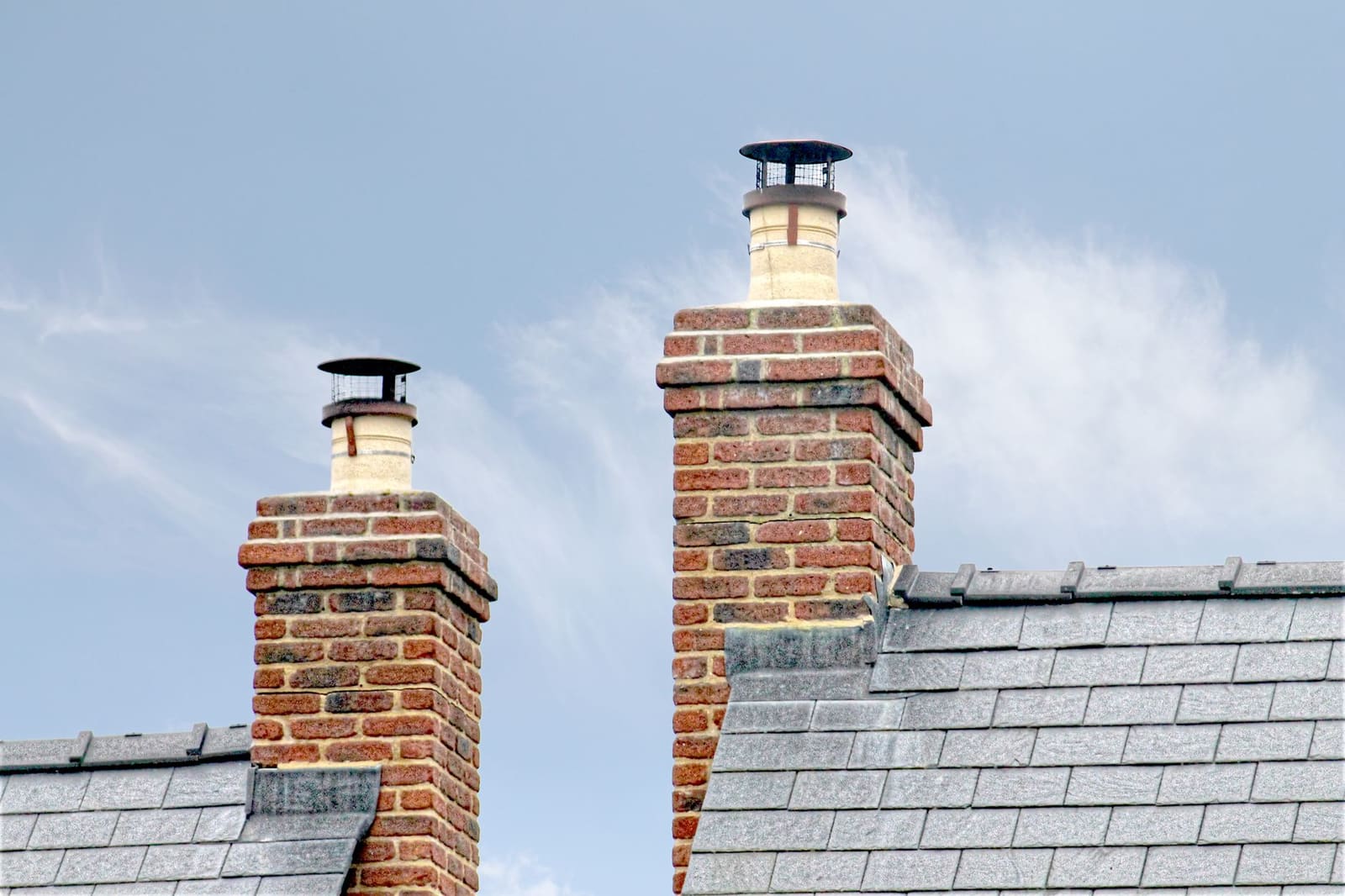
A cap with a solid lid and mesh sides is the least committal option. The lid keeps most rain out of the flue, the mesh keeps birds and animals out, and air still moves through, so the flue can dry. Nothing changes about how the fireplace works if you decide to use it next winter.
The limits are that a cap does not stop the draft into the room and does not keep out every drop of wind-driven rain. The mesh also needs to stay intact. It corrodes, gets bent, and can work loose from its fastenings, and a gap in the mesh is an open door.
For a chimney you might use again, this is usually the right starting point, paired with a damper that actually closes.
Option two: a top-sealing damper
A top-sealing damper is a hinged lid mounted at the top of the flue, held shut against a gasket and opened by a cable that runs down to a handle in the firebox. Closed, it shuts the flue at the point where rain and animals get in, and it also cuts most of the draft into the room.
The fireplace stays fully usable: open the lid, light the fire, close it once the fire is out and the flue has cooled. It needs a sound flue top to seat on, so a cracked or broken flue tile at the top has to be dealt with first. Because the lid closes the flue tightly, it also reduces airflow through the chimney while it is shut, which leads straight to the moisture question below.
The cable and handle in the firebox are also a reminder to anyone who uses the fireplace later that the lid exists, which a hidden plug is not.
Tell us what you have noticed and request an estimate. Estimates are free.
Option three: capping the flue off for good
If the fireplace will not be used again, the flue can be closed at the top with a solid cover, and the firebox can be closed off at the bottom. This is the most complete way of taking a chimney out of service. It also makes the chimney unusable without undoing the work, which is the point.
The trade-off is moisture. Masonry takes on water through the crown and the brick face whatever is on top of the flue, and a flue that is sealed at both ends has no airflow to dry it out. For that reason it is commonly advised to leave some ventilation, for example a vented cover at the top or a small vent at the bottom, so the flue can breathe. That is common practice rather than a code requirement this page can cite.
Whichever way it is done, mark it. A sealed firebox with no note on it is an invitation for a future owner to light a fire under a capped flue.
Checks to make before anything is sealed
First, find out what the flue still does. Many chimneys have more than one flue, and one of them may vent a gas water heater or furnace. Capping a flue that carries appliance exhaust sends that exhaust back into the house. If there is any doubt about which flue serves what, it has to be traced before work starts.
Second, make sure nothing is living in it. Sealing a flue with a nest or an animal inside creates a smell problem if nothing worse, and if the birds are nesting, the timing may not be yours to choose.
Third, know the condition of the liner if there is any chance the chimney will be used again. A cracked liner does not matter much in a sealed flue, and matters a great deal the day someone reopens it. It is easier to know now than to discover later.
As a general safeguard, the U.S. Fire Administration advises carbon monoxide alarms in a central location outside each sleeping area and on every level of the home. If one sounds, get everyone out and call 911. If you smell gas, leave the house and call the gas utility from outside.
If a nest is already up there, read what the law means for nesting birds in a chimney before sealing anything.
Permits and who decides
This page does not say whether sealing or capping a chimney needs a permit, because that is decided locally. In the City of Los Angeles the authority is the Los Angeles Department of Building and Safety. In unincorporated parts of the county it is LA County Public Works Building and Safety. In an incorporated city such as Pasadena or Glendale it is that city's building department.
The question matters more if anything above the roofline is being removed or rebuilt, since that is structural work rather than fitting a cover. If the house is in one of the City of Los Angeles' Historic Preservation Overlay Zones, exterior changes can be subject to additional review, and City Planning is the place to ask.
When sealing is not the answer
If you might burn a fire next winter, do not seal the chimney. A mesh cap and a working damper cover the same risks without the undoing.
If water is already coming into the house around the chimney, closing the flue top will not fix it. Leaks through flashing, a cracked crown or porous brick come in from the outside of the chimney, and a cover on the flue does nothing for them.
If the chimney was damaged in an earthquake, sealing it is not the first question. Earthquake Country Alliance advises not using a fireplace with a damaged chimney and staying away from brick chimneys during shaking; a damaged stack needs a structural look before anyone decides how to close it.
If any flue in the stack vents a working appliance, that flue stays open.
Choosing the closure that fits the chimney
For most unused chimneys the sensible order is to check what the flue serves, clear anything in it, then pick the closure that matches how likely you are to use it again. Tell us which of those you are unsure about and we'll come back to you.
To keep weather and animals out while leaving the fireplace usable, see chimney cap installation. A damper that is rusted, stuck or will not seal is covered under chimney damper repair. Old nests and debris in a flue that has sat open are a job for chimney blockage removal. If you want the option of using it again, find out first whether it needs liner repair.
Sources & Further Reading
Service areas
Los Angeles and cities across the county, with the local conditions that affect chimneys there.
View all service areas →