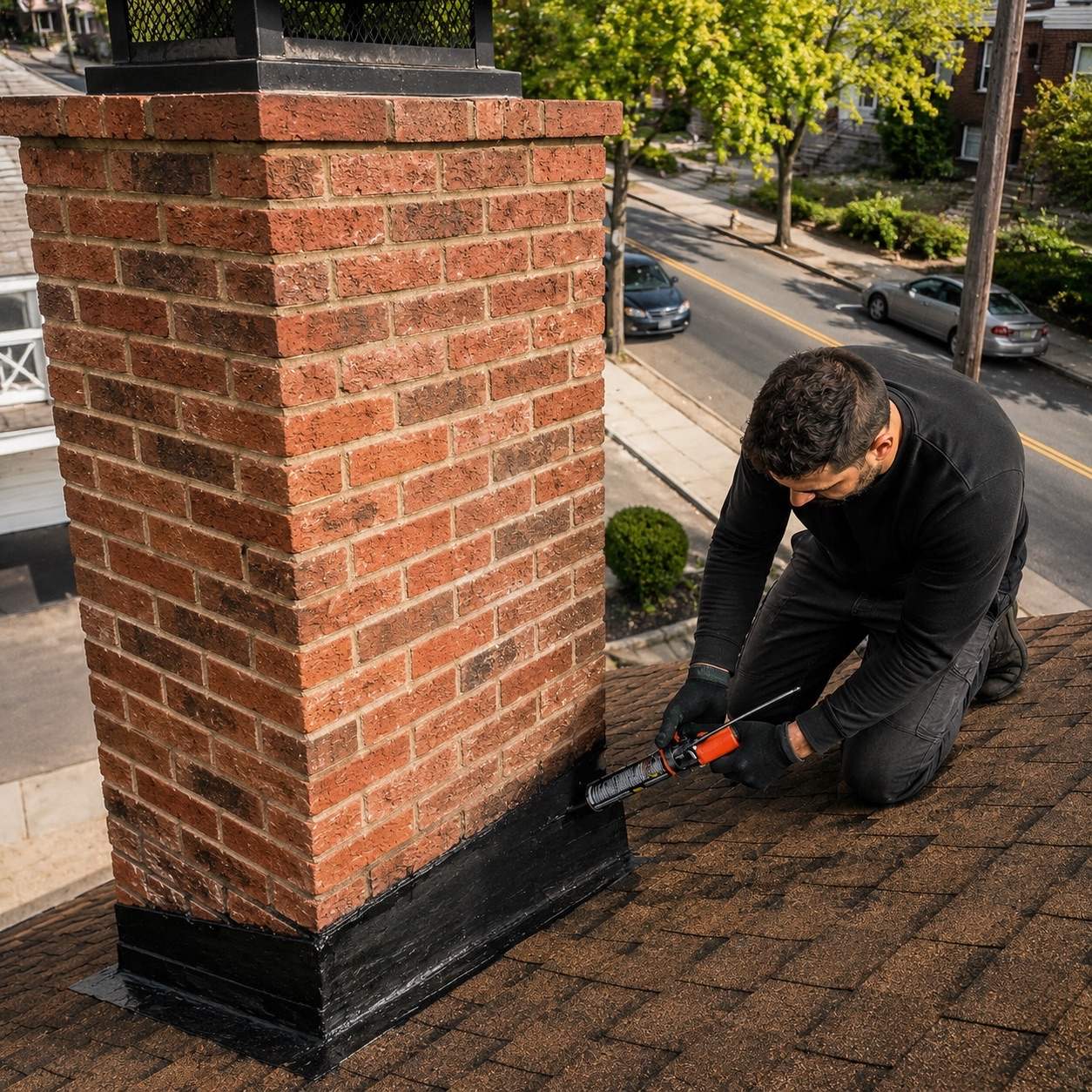
Five places water gets into a coastal chimney
Each entry point leaves a slightly different trail, and more than one can be active at once.
- 1Crown: hairline cracks in the concrete slab over the masonry let water run straight down the outside of the flue liner, often showing as dampness in the firebox.
- 2Chase cover: on a factory-built chimney boxed in wood or stucco, the metal lid rusts through in pinholes, and water drips inside the chase onto the metal flue.
- 3Masonry face: brick and mortar are porous, and wind-driven rain soaks through joints on the exposed side.
- 4Flashing: the metal seal where the chimney meets the roof corrodes or lifts, and the stain shows on the ceiling beside the chimney.
- 5Cap or open flue: rain falls straight down an uncapped or damaged cap and pools on the smoke shelf.
What salt does to the metal parts that keep water out
Salt carried in marine air settles on every metal surface of the chimney and holds moisture there. Galvanized steel loses its coating first at folds, seams and fastener holes, and those are the exact points a chase cover or flashing depends on.
A chase cover can look sound from the street while its centre has rusted into a shallow dish that holds water. Once it holds water, rust through is a matter of time, and the leak inside the chase is invisible until the ceiling marks.
Tell us which storms the stain appears after, where inside the house it shows, and whether the chimney is brick or boxed in siding. Send the details of the issue and request an estimate for the specific work.
How the source is traced before anything is sealed
Tracing starts inside, where the stain is, then moves to the roof. The crown, cap, cover and flashing are examined for cracks, rust and lifted edges, and the masonry is checked for joints that have opened.
Where the source is still unclear, the chimney can be water-tested in sections: one area wetted at a time while someone watches inside. It is slow, but it separates a flashing leak from a crown leak, which look almost identical on a ceiling.
Variables behind a Malibu chimney leak repair estimate
The estimate follows the source, and a leak with two sources is priced as two repairs.
- 1Which component has failed: a crown sealed versus rebuilt, a chase cover replaced, flashing reset or renewed.
- 2The material a replacement needs to survive salt air, which rules out some cheaper metals.
- 3Roof pitch, height and exposure, including how windy the site is on the day.
- 4Whether water has already damaged framing, drywall or insulation inside the chase.
- 5Whether a water-repellent treatment is worth adding to masonry on the exposed side once the leak is fixed.