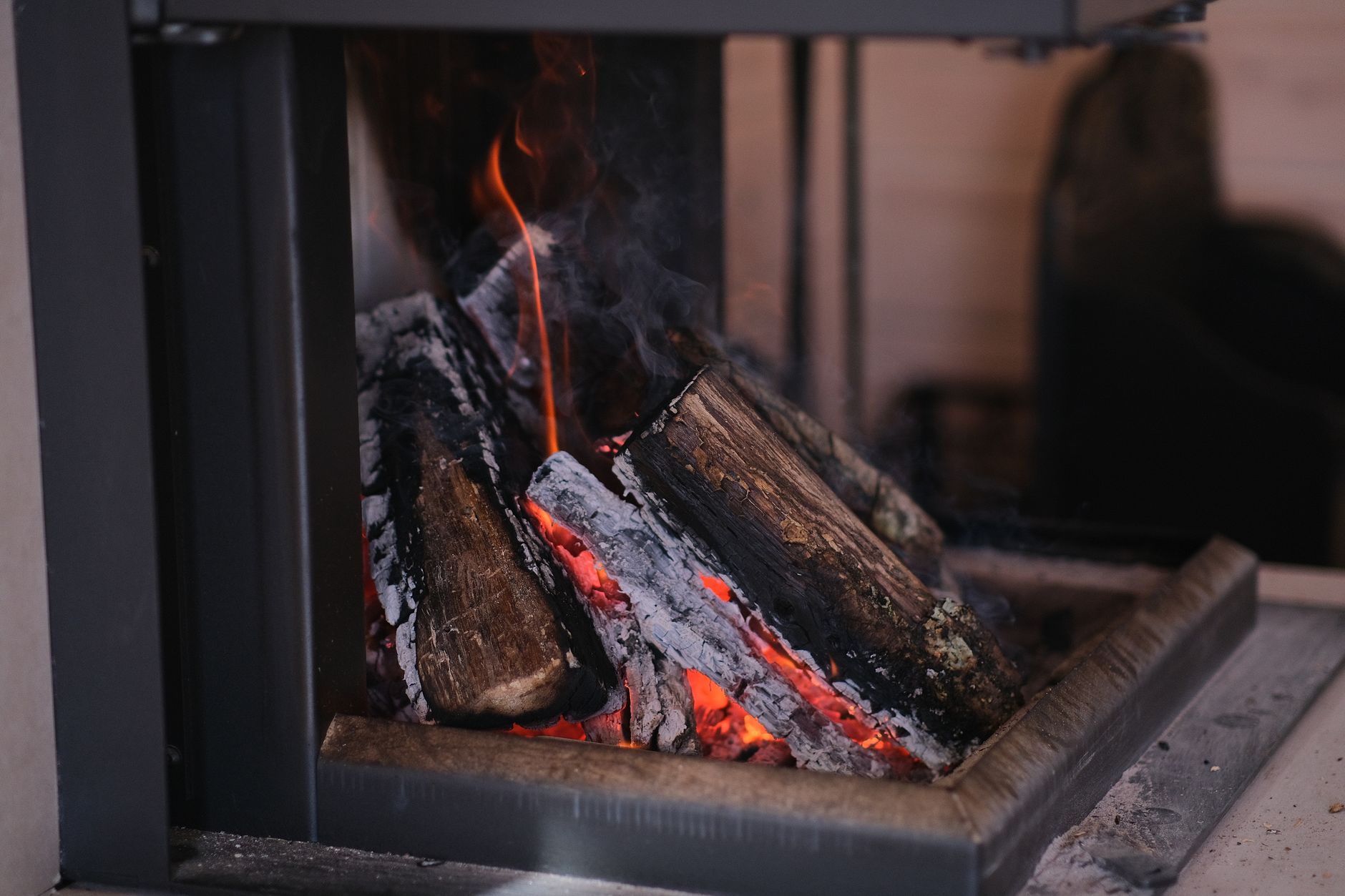
Firebox joints and firebrick in a fireplace used for real heat
At the foot of the San Gabriels, winter nights can be cold enough that a fireplace gets used for heat rather than for effect. Where that is the case, the firebox takes steady punishment. Refractory mortar joints erode first; firebrick then cracks or spalls, meaning its face flakes away. Individual bricks can be cut out and replaced, and joints repointed with refractory mortar.
A back wall that has bulged forward is a different matter. It usually means the firebrick has come away from the masonry behind it, and relining that wall is more reliable than patching it.
The fireplace in the den that nobody lights
Larger houses often have more than one fireplace, and one of them tends to go unused for years. CSIA points out that a chimney used little can still host nesting animals or deteriorate. The typical findings are a damper rusted shut, debris on the smoke shelf, and a musty smell when the weather turns damp.
That leaves a real decision: repair it so it can be used safely, or close it off properly. Leaving it in between, neither usable nor sealed, is the option to avoid.
Tell us how many fireplaces the house has and which one is giving trouble. Call or send the details, and ask for an estimate for the work.
Dampers and smoke chambers just above the opening
A damper plate that has warped or seized either lets smoke into the room or lets heated air out of it all year. Where an old throat damper cannot be freed, a top-sealing damper at the flue outlet is sometimes fitted instead; on a wood-burning chimney it has to work alongside the spark arrester, not replace it.
Above the damper, the smoke chamber funnels smoke into the flue. If its walls are stepped brick rather than smooth, smoke can tumble and roll back. Smoothing them with a parging coat, a layer of heat-resistant mortar, is often the fix for a fireplace that smokes despite a clean flue.
What shapes the estimate for a fireplace repair here
The size of the firebox and how much of it is affected; whether the existing firebrick can be matched in size and colour; whether doors or screens need to be made to measure for an unusually large opening; how easily the damper and smoke chamber can be reached; and whether the chimney above the fireplace also needs work before the fireplace can be used.