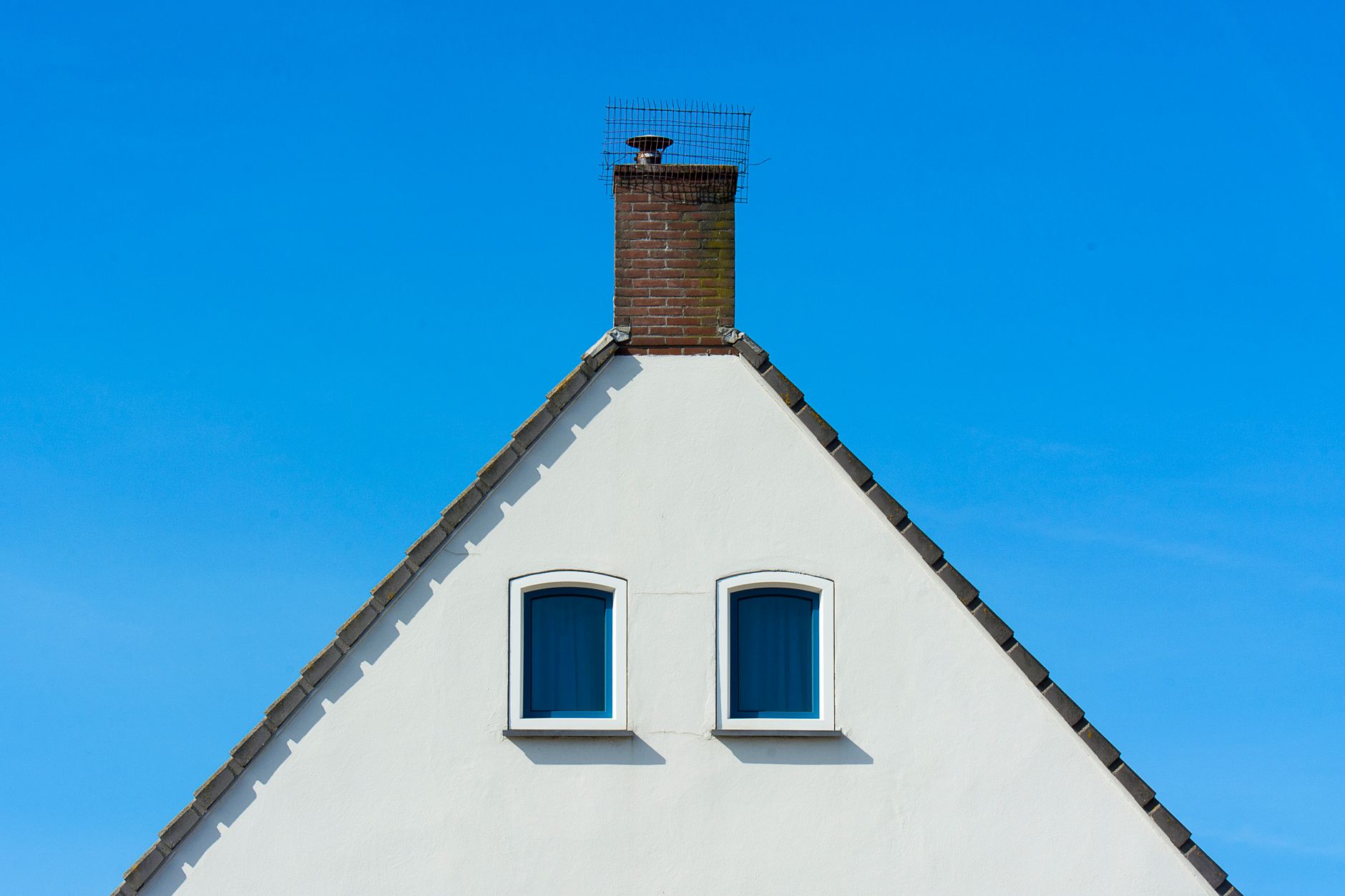
Sweeping from a low roof with neighbors close by
Where a Culver City house is single-story on a modest lot, roof access is usually straightforward, but the stack may be close to the neighbor's wall or windows.
Soot brushed downward stays inside, at the sealed firebox. Soot knocked off the outlet does not, so the cap is lifted off and handled on the roof rather than tapped clean, and loose material on the crown is bagged instead of swept into the next yard.
Narrow side yards also decide where a ladder can stand. A tight side path, a pool or a fence line against the chimney wall is worth mentioning beforehand.
When the house next door has gained a story
A fireplace that drew well for years and now smokes on some days is sometimes reacting to a new building nearby. The California Residential Code requires a chimney to be at least 2 feet higher than any part of a building within 10 feet, as well as 3 feet above the point where it passes through the roof.
That 10-foot reference covers any building, including a neighbor's new second story or ADU that now rises above the old outlet. Wind rolling off the taller roof can push smoke back down the flue.
A sweep cannot fix that. It can confirm the flue is clear, which rules out the simpler cause before anyone talks about extending the chimney.
Tell us whether the fireplace burns wood or gas logs today, and whether anything has been built nearby since it last drew well, and we'll come back to you. Tell us what you are seeing and ask for an estimate.
When to book a sweep in Culver City
Late summer or early fall suits a wood-burning fireplace, ahead of the November to February curtailment season South Coast AQMD runs. On a declared no-burn day, no wood-burning fireplace may be used at all.
A gas-converted fireplace falls outside that curtailment and can be checked at any point in the year. For an uncapped flue, spring, before birds start nesting, is a sensible time to look.
What changes the cost of a sweep visit in Culver City
The fuel and the flue's history matter more than the size of the house.
- 1Whether the flue burns wood or gas, and how much deposit is there.
- 2Roof pitch, and where a ladder can safely stand.
- 3A cap that has rusted in place.
- 4Glazed creosote left from the wood-burning years, which a brush will not remove.
- 5Anything at the outlet that turns the visit into a repair.