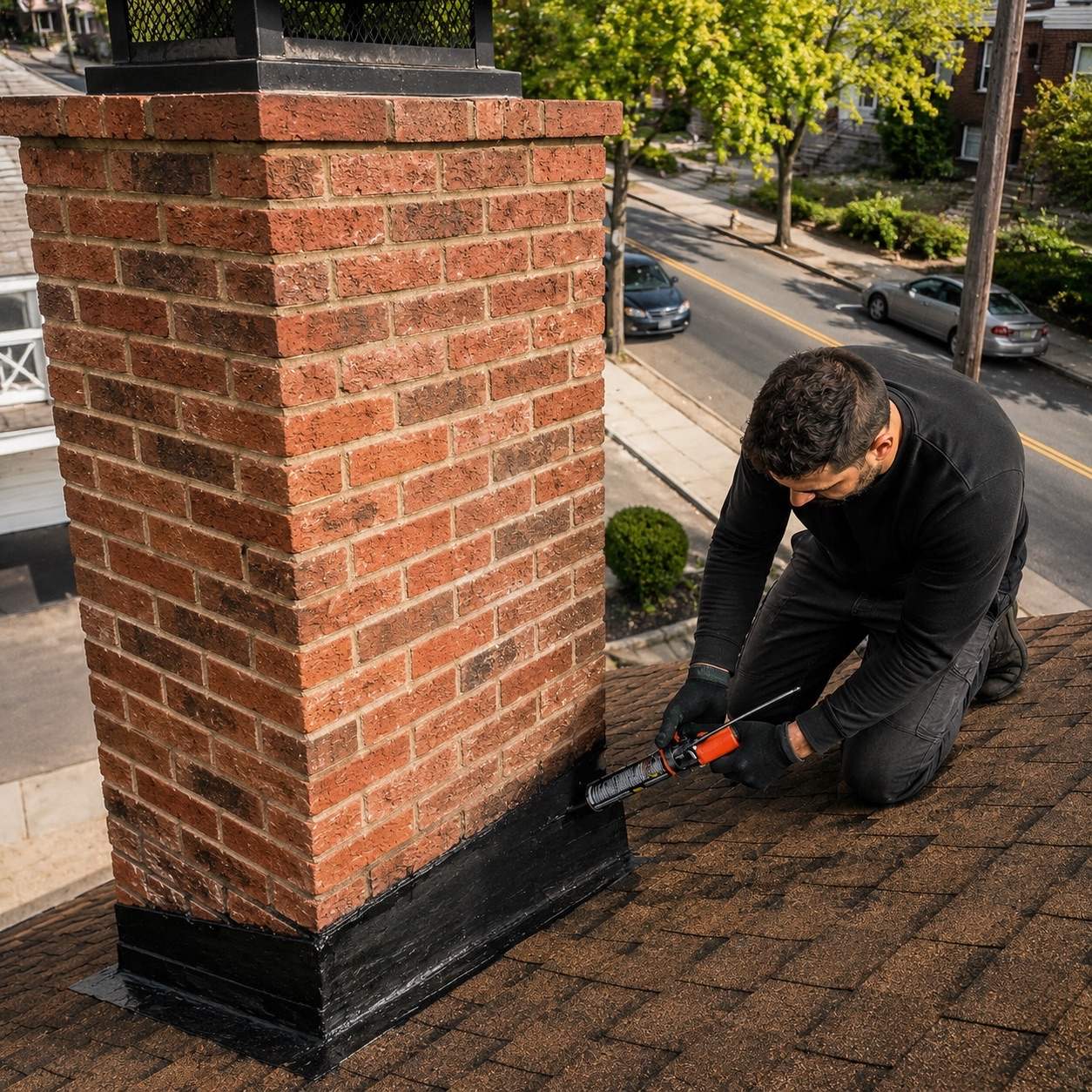
Flashing that was reused at the last re-roof
When a roof is replaced, the chimney flashing is sometimes left in place and the new roofing laid up to it. Old step flashing, bent and reused, does not always seal against new shingles.
The counter-flashing, the piece let into the brick joints that laps over the step flashing, may also have been caulked on rather than cut in. Caulk breaks down with sun and movement.
A leak that began after roof work is worth tracing at the flashing first, and worth raising with the roofer if the work was recent.
Wide chimneys, low slopes and a missing cricket
A chimney that is wide across the uphill side of a roof collects water behind it. A cricket, a small peaked diverter built behind the stack, sends that water around the sides.
On a low-pitched roof, water moves slowly and pools more readily behind a chimney that has no cricket, and leaves and needles build the dam higher.
Adding one is roofing and flashing work together. It is often the real fix for a leak that returns however many times the flashing is resealed. Whether that roof work needs a permit is for the City of Culver City to say.
Tell us where the damp shows, whether the chimney is on an outside wall, and whether the roof was replaced recently, and we'll come back to you. Describe the problem and request an estimate.
How a Culver City chimney leak is traced
Tracing starts with the pattern: where the water shows, when, and after what kind of weather. Then water is run on one part of the chimney at a time, starting low and working up, while someone watches inside.
Starting low matters. Running water over the crown first wets everything below it and hides which part is actually letting water in.
Moisture readings on the wall beside the chimney help confirm the path without opening anything up.
Variables in Culver City chimney leak repair
Which path the water takes decides the scope.
- 1New flashing versus resealing the existing flashing.
- 2Building a cricket where there is none.
- 3Resealing the joint between the chimney and the house wall.
- 4Crown or cap work if the water enters from above.
- 5Drywall and paint repair indoors, which is separate work.