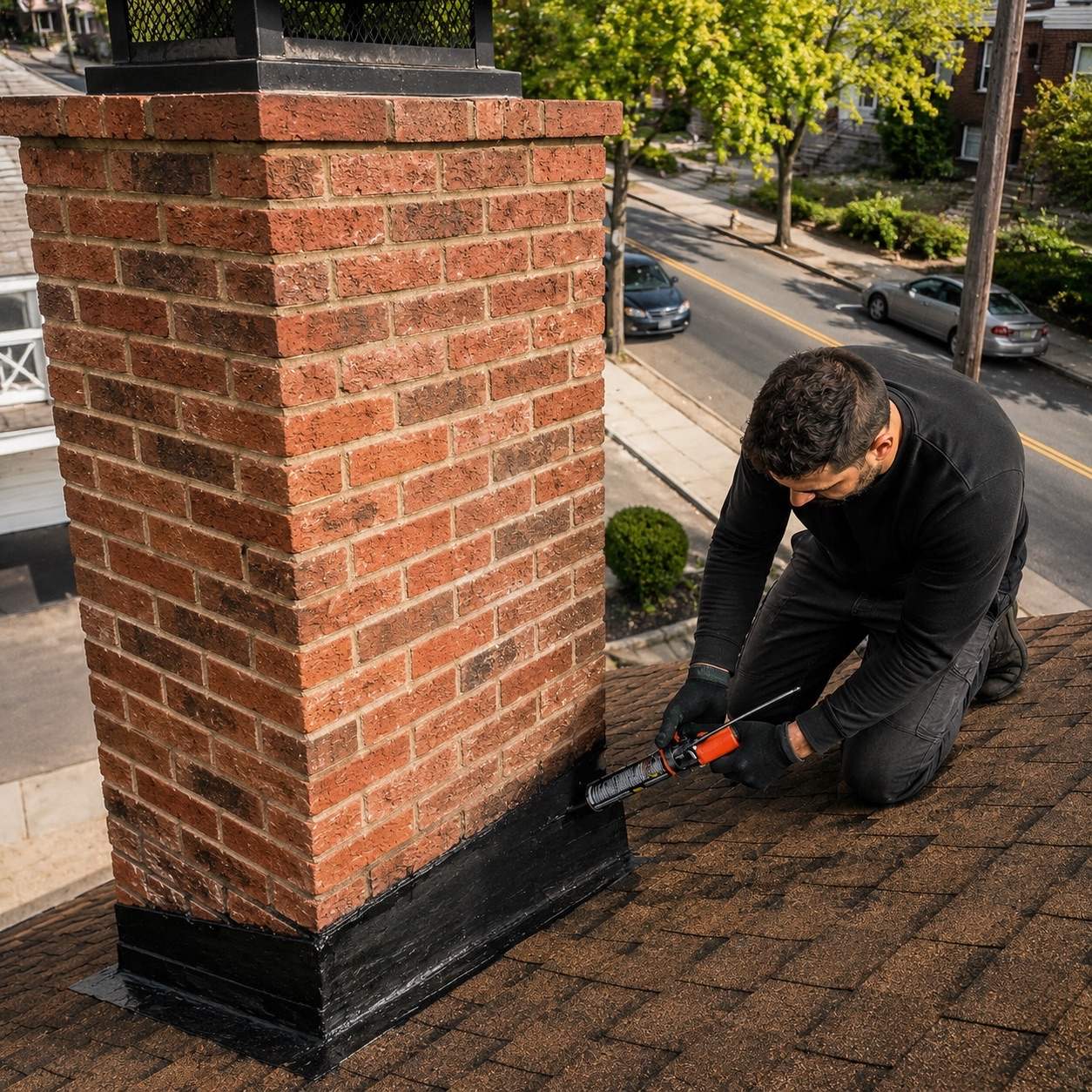
Clay tile roofs and flashing you cannot see
Where a Beverly Hills house has a clay tile roof, the flashing around the chimney sits under the tiles. From the ground, and often from the roof, there is nothing to look at.
Reaching it means lifting tiles, and clay tile cracks when it is walked on or handled carelessly. Replacement tile for an older roof may not match, so finding salvaged or matching tile is part of planning the repair rather than an afterthought.
Flashing on these roofs is sometimes bedded in mortar rather than let into the brick joints. Mortar-set flashing pulls away from the stack as the roof and chimney move at different rates, and that gap is a common way in.
Leaks that only appear in the first storms of the season
After a long dry spell, sealant and mortar shrink and crack, and a leak that was not there in spring shows up with the first heavy rain. That timing makes it easy to misread.
A stain that appears once and never returns may have been a single wind-driven event. One that returns every storm is an open path. Photograph it each time, with the date, because that record is what makes tracing quicker.
Keep the photos for the insurance conversation too. The California Department of Insurance lists water damage from seepage or leaks among the typical homeowners policy exclusions, so a slow chimney leak is often treated differently from sudden damage.
Tell us where the water shows up, whether it follows every storm, and what the roof is covered with, and we'll come back to you. Tell us what you are seeing and ask for an estimate.
Condensation that looks like a chimney leak
Not every damp chimney is taking in rain. Where a fireplace has been converted to gas, or a gas appliance vents into an old masonry flue, the combustion gases carry water vapor that can condense on a cool, oversized flue. The result is damp staining on the chimney breast with no storm involved.
The fix for that sits in the flue, usually a correctly sized liner, not in the flashing. Sealing the outside of the chimney can make it worse by holding the moisture in.
White powder on the brick is efflorescence, the deposit left when water moves through masonry and evaporates at the surface. It proves moisture is there; it does not say where it came from.
Variables in the price of a Beverly Hills leak repair
The more entry points that have to be ruled out, the more the tracing itself costs.
- 1How many possible entry points need testing.
- 2Lifting and resetting tile around the stack, and sourcing tile that matches.
- 3Whether the flashing is let into cut joints or reset as it was.
- 4Crown or cap replacement if the water enters from above.
- 5Interior damage, which is separate work.