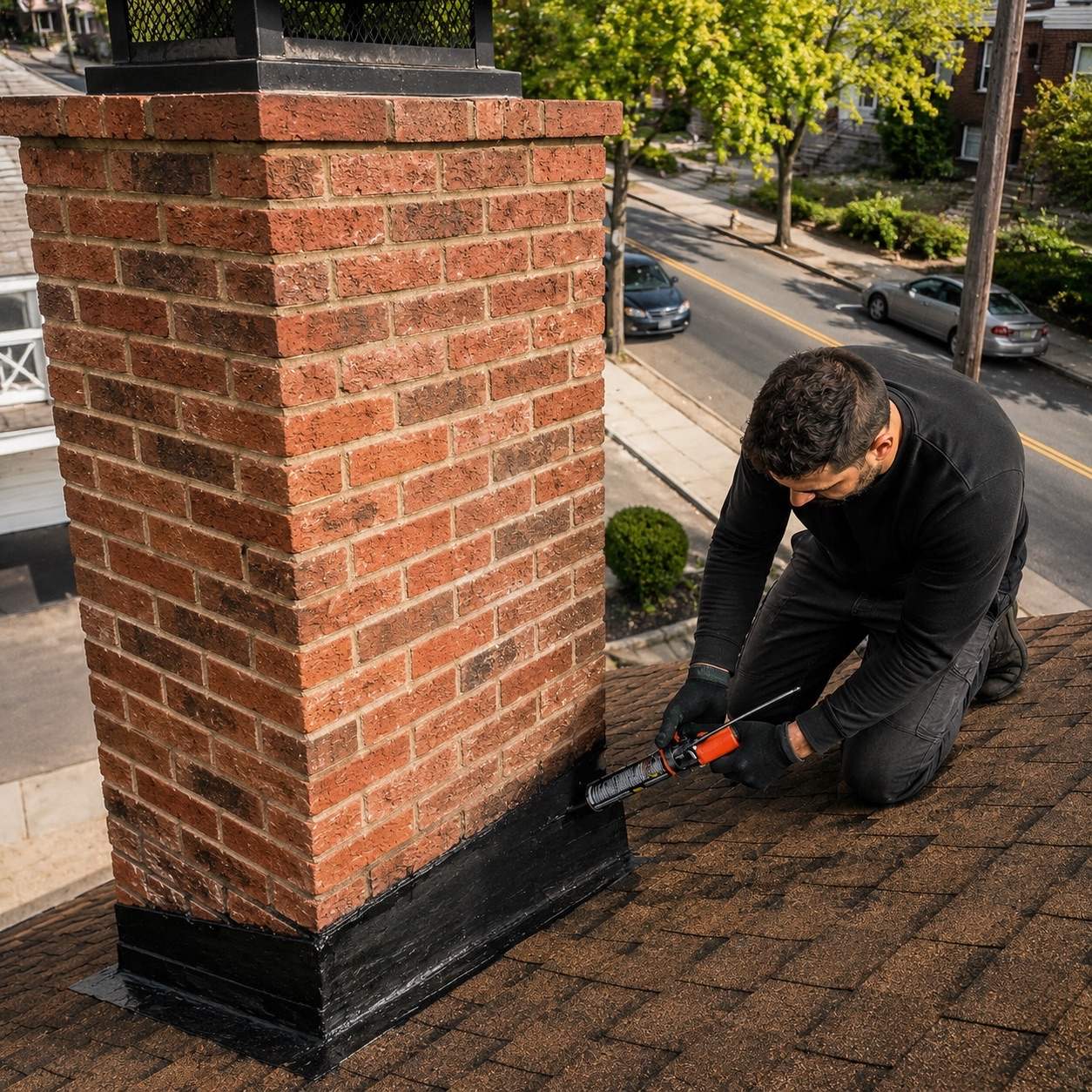
Flashing under clay and concrete tile
Where the roof is tile, the flashing sits beneath a layer of heavy, brittle tiles. Reaching it means lifting and stacking tiles without breaking them, and older tiles can be hard to match if one cracks. The underlayment beneath the tile, not the tile itself, is what keeps the water out, and around a chimney that underlayment is often where the failure is.
A proper repair replaces the underlayment and step flashing around the chimney, installs counter-flashing cut into the mortar, and relays the tiles with pan flashing or a cricket on the uphill side where the chimney is wide.
When the house has moved and the flashing has not
Flashing bridges two things: the roof and the chimney. If the house has shifted relative to the chimney, even slightly, the counter-flashing can pull out of its joint or the step flashing can tear. A leak that appeared together with new cracks in walls or a sticking door is worth reading that way.
Resealing the flashing in that situation only buys time. The movement has to be understood first, and the flashing detail may need to allow for it.
Tell us which way the storm was blowing, where the water appeared, and whether the roof is tile. Describe the problem and request an estimate.
Crowns and caps on an exposed ridge
Wind-driven rain goes straight into an uncapped flue, and the crown takes it on all four sides. A crown with cracks or no drip edge lets water into the top courses, where it works down inside the chimney. The code's masonry cap detail, with a drip edge and a bond break at the flue, is the standard to repair to.
Choose a cap fastened to the crown or flue firmly enough for strong winds; a cap held by a few screws can lift off in a storm and leave the flue open.
What moves chimney leak repair cost in Rancho Palos Verdes
Tile removal and relaying is often the largest single factor. Beyond that, the size of the chimney, whether a cricket is needed, roof pitch and height, and whether the roof deck or framing has rotted around the chimney.
Insurance is worth checking before interior repairs. The California Department of Insurance lists water damage from seepage or leaks among typical exclusions, and says standard policies do not cover landslide or earthquake damage, so a leak linked to ground movement may be treated differently from one caused by a storm.