Open flue tile joints and what a cracked liner means
Clay flue tiles are stacked with mortar joints between them. Water from above and acidic condensation from use erode those joints, and heating and cooling crack the tiles. A liner with gaps lets heat and combustion gases reach the brick and, on some chimneys, the framing beside it.
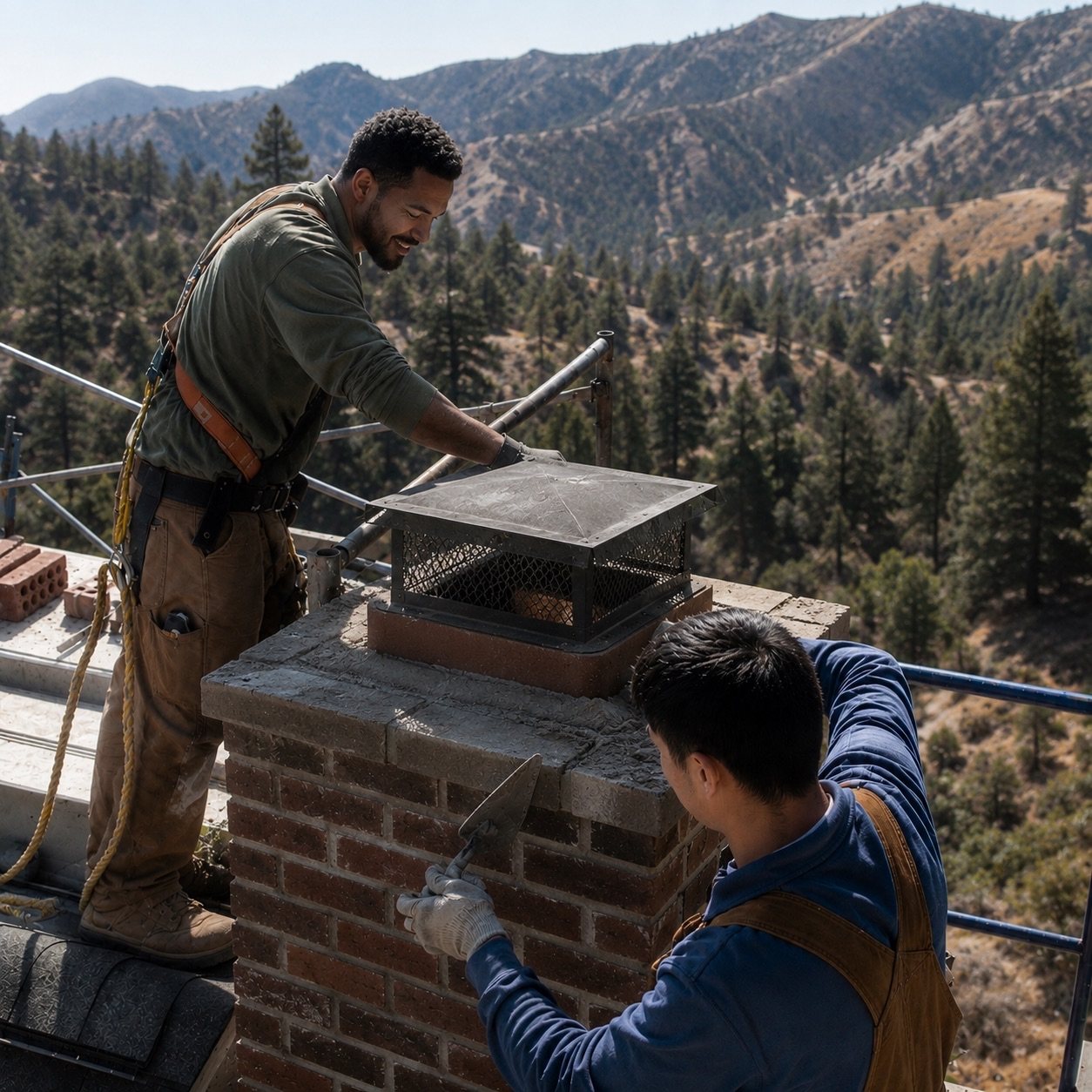
Repair runs from resealing individual joints to relining the flue with a stainless steel or cast-in-place liner. Which one fits depends on how much of the flue is damaged, and that usually takes a camera to see.
When steel inside the brickwork starts to swell
Where a chimney was built with steel reinforcing bars or ties inside the masonry, water that soaks into the brick eventually reaches the steel. Rust takes up more room than the steel it replaces, so it pushes the masonry apart. The result is a crack that follows the line of the steel, often running vertically, sometimes with a rust stain bleeding through.
Repointing does not fix that, because the cause is inside the wall. The masonry around the corroded steel is opened, the steel is treated or replaced, and the section is rebuilt. From the ground it looks like ordinary cracking, which is why it gets misdiagnosed.
Tell us where the cracks are, whether they run up and down or along the mortar lines, and whether the fireplace is still used. Tell us what you are seeing and ask for an estimate.
What moves the cost of a chimney repair in Carson
Chimney repair covers too wide a range for one figure, so the estimate follows the diagnosis. The variables:
- 1Sealing the crown versus replacing it.
- 2How many flue tile joints are damaged, and whether relining is needed.
- 3Whether steel inside the masonry has corroded, which turns a surface repair into a partial rebuild.
- 4How far down the stack the damage runs.
- 5Roof pitch, height and access.