Los Angeles County Service Areas · Chimney & fireplace services · Estimate requests online
Fireplace Restoration in Los Angeles
Fireplace restoration brings an old or unused fireplace back into use and back into good condition. It works in one order: the flue first, the firebox second, and the surround, hearth and mantel last.
- Chimney & Fireplace ServiceCleaning, inspection & repair
- Los Angeles Service AreasCities & LA neighborhoods
- Free Estimates AvailableEstimates at no charge
- Easy to ReachCall or request online
Restoration Is Repair and Finish, in That Order
Fireplace repair fixes a fault. Restoration takes the whole fireplace, including the parts in the room, and brings it back to something you can use and want to look at. On most jobs that means some repair, a thorough clean, and work on the face, hearth and mantel.
The mistake worth avoiding is starting with the part you can see. A new surround on a fireplace whose flue has not been checked is a finish that may have to come off again, and a restored face does nothing for a fireplace that is not safe to light.
The Order of Work: Flue, Firebox, Then Finish
Each step depends on the one before it. Skipping ahead is how finish work ends up being paid for twice.
- 1
The chimney and flue are checked
Nothing else is worth doing until this is known. A cracked liner, a missing cap or a flue full of debris decides whether the fireplace can be used at all, and some of those repairs are made through the firebox opening.
Chimney inspection → - 2
Chimney repairs are made
Liner, crown, cap and masonry above the roof. These come before interior work because some of them are messy, and because a fireplace with a failed flue is a decorative object whatever its face looks like.
Liner repair → - 3
The working parts are repaired
Firebox, damper and smoke chamber. These decide whether the fireplace burns safely and draws properly.
Firebox repair → - 4
The fireplace is cleaned
Years of soot hide cracks, and a clean firebox is also the surface any finish work is measured from.
Fireplace cleaning → - 5
Hearth, surround and mantel
Cosmetic and finish work comes last, so it is not damaged by the work above and does not have to be redone.
Refacing ↓
NFPA 211, the national standard for chimneys and fireplaces, recommends an annual inspection, and a fireplace coming back into use after a long gap is the clearest case for one.
Do Not Light a Fireplace That Has Not Been Used in Years
Not until someone has looked up it. A flue that has stood unused is where birds and animals nest, where leaves and fallen mortar collect, and where nobody has had a reason to notice a cracked tile. The first fire is the worst time to find any of that out.
The usual findings in a long-unused fireplace are a blocked flue, a damper rusted shut, open joints in the firebox, and something living in the chimney. None of them is unusual, and all of them are cheaper to deal with before the surround is redone than after.
If you have just bought the house, the fireplace history is usually unknown. What a Level 2 inspection covers at purchase explains the inspection level used when a property changes hands.
Fireplace Refacing Changes the Face, Not the Fireplace
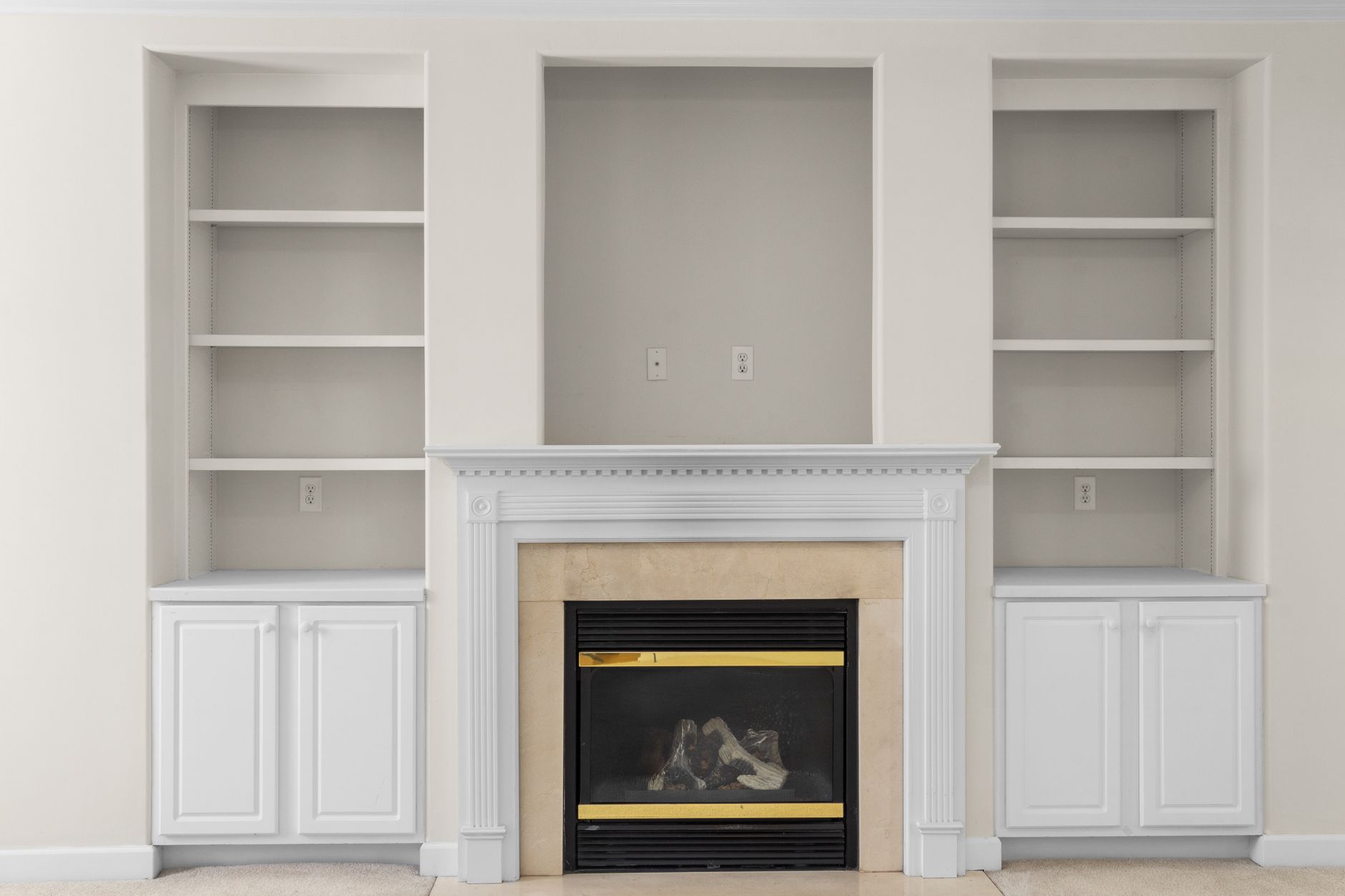
Refacing replaces or covers the material around the opening: new tile, stone or brick veneer, plaster, or paint. It can change the look of a room completely.
What refacing cannot change is how the fireplace works. The firebox, the opening size, the damper and the flue are all behind the face. A fireplace that smoked before refacing will smoke after it.
Material around the opening has to be non-combustible for a set distance, which the building code sets for masonry fireplaces and the manufacturer's installation instructions set for factory-built units. On a factory-built fireplace, the new face also must not cover the air openings or grilles the unit relies on to stay cool. Read the manual before choosing the material.
A failing surround is often a backing problem rather than a tile problem. Tile that sounds hollow when tapped, or grout that has cracked in a line, usually means the substrate behind it has moved or let go.
Mantels and Surrounds: Clearance Comes Before Style
A wooden mantel is a combustible shelf above a fire, so how close it may sit to the opening is not a design choice. For a factory-built unit the listing and its installation manual set the clearance; for a masonry fireplace the building code does, and a deeper mantel generally has to sit higher. Establish the allowance before choosing a mantel, especially a salvaged one with a deep shelf.
Installing a mantel is carpentry: fixing it to the chimney breast, scribing it to an uneven wall, finishing it. That may involve a different trade from the one working on the firebox, and it is worth knowing who is doing which part before the work is scheduled.
Scorching or darkening on the underside of an existing mantel is a warning sign rather than a cosmetic one. It means the mantel is getting hotter than it should, and the fire, the opening or the mantel position needs looking at before the next fire.
Hearths and Period Tile Are Worth Saving Where They Are Sound
The hearth extension, the non-combustible floor in front of the opening, has a job: catching embers and rolling logs. Hearth repair matters when a crack or a lifted tile opens a path to the floor structure underneath. A hairline crack in a sound slab is usually cosmetic.
Original tile is the part of an old fireplace that cannot be bought again. Resetting loose tiles and replacing broken ones with salvaged matches keeps a surround that a full retile would erase. The National Park Service Preservation Briefs are the standard reference for repairing rather than replacing historic material. Where the brick around the fireplace needs repointing, the mortar has to match the original, which chimney tuckpointing covers.
Turning a Decorative Fireplace Into a Working One
Some decorative fireplaces had a working flue that was later sealed; some never had one. The first question is which kind you have, and that is established from the flue, not the face.
Where a working flue is not practical, a gas unit is often the realistic route: a direct-vent appliance can vent through a wall rather than a chimney. Gas fireplace installation covers conversions. What may be installed is also regulated locally, which fireplace installation explains.
When not to call us: if you intend never to light the fireplace, what you want is a cosmetic job, not a restoration. Refacing, paint or a new mantel on a fireplace that will stay cold does not need the firebox work described here, though a look at the chimney is still sensible if it can let water in. The opposite also holds: do not reface a fireplace you plan to burn until its flue has been checked.
What Drives the Cost
Restoration can mean anything from a repaint to a rebuilt firebox behind a new face. These are the variables that decide where a job falls.
What the chimney check finds
A sound flue and a relined one are very different starting points, and the finish budget often depends on which one you have.
Restoring original material or replacing it
Salvaging and resetting period tile is slower than tiling over. Matching a discontinued tile can mean sourcing salvage or having pieces made.
The size and material of the surround
Paint and plaster, tile, stone veneer and full stone cladding sit at very different points on the scale.
Whether other trades are involved
A new mantel is carpentry; a gas line is a plumbing and gas job; new lighting or an outlet in the chimney breast is electrical.
Masonry or factory-built
A factory-built unit limits what can be done to its face, because its listing sets what may sit around and above it.
A short description, and a photo if you can take one safely, is a good start to an estimate request.
Fireplace Restoration in Los Angeles
The local question is what the surround is made of before anyone removes it. Where a house dates from the Arts and Crafts or Spanish Revival periods, the fireplace may be faced in period art tile, some of it made regionally and no longer produced. That tile is not something to reface over without knowing what it is.
If you are not sure whether a surround is original, photograph it before any work starts and ask. Removing period tile is irreversible, and on a house in a historic district it may also be a question for the local preservation office.
Bringing an old fireplace back?
Tell us when it was last used, which fuel you plan to burn, and what you want to change about how it looks. A photograph of the face helps.
Related chimney & fireplace services
Part of Fireplace Repair — The appliance rather than the stack — fireboxes, gas, wood and electric fireplaces, doors, glass and older hearths.
- getting a fireplace working againFireplace Repair — The hub page: firebox, refractory, damper, draft and appliance faults.
- repairing the inside of the fireplaceFirebox Repair — Firebrick, mortar joints and refractory panels inside the fireplace opening.
- chimney masonry repairChimney Masonry Repair — Brick replacement, spalling, cracked faces and structural masonry damage.
- fitting glass doors to a fireboxFireplace Door Installation — Glass doors and screens — fit, seal and the difference they make to draft.
- what a new installation involvesFireplace Installation — New fireplaces and inserts — clearances, venting and what the flue has to do.
- chimney inspectionChimney Inspection — Masonry, crown, cap, flashing, firebox and flue condition, and what it means.
Request an Estimate
Tell us when the fireplace was last used and what you want to change.
Decide this first
Will you light it? If yes, the flue is checked before anything else. If no, the job is cosmetic, and most of the order of work on this page does not apply.
Fireplace Restoration Questions
Have a question this page does not cover? Try the chimney and fireplace FAQ.
Tell us what your chimney is doing
Call, or send a short description and request an estimate. Estimates cost nothing.