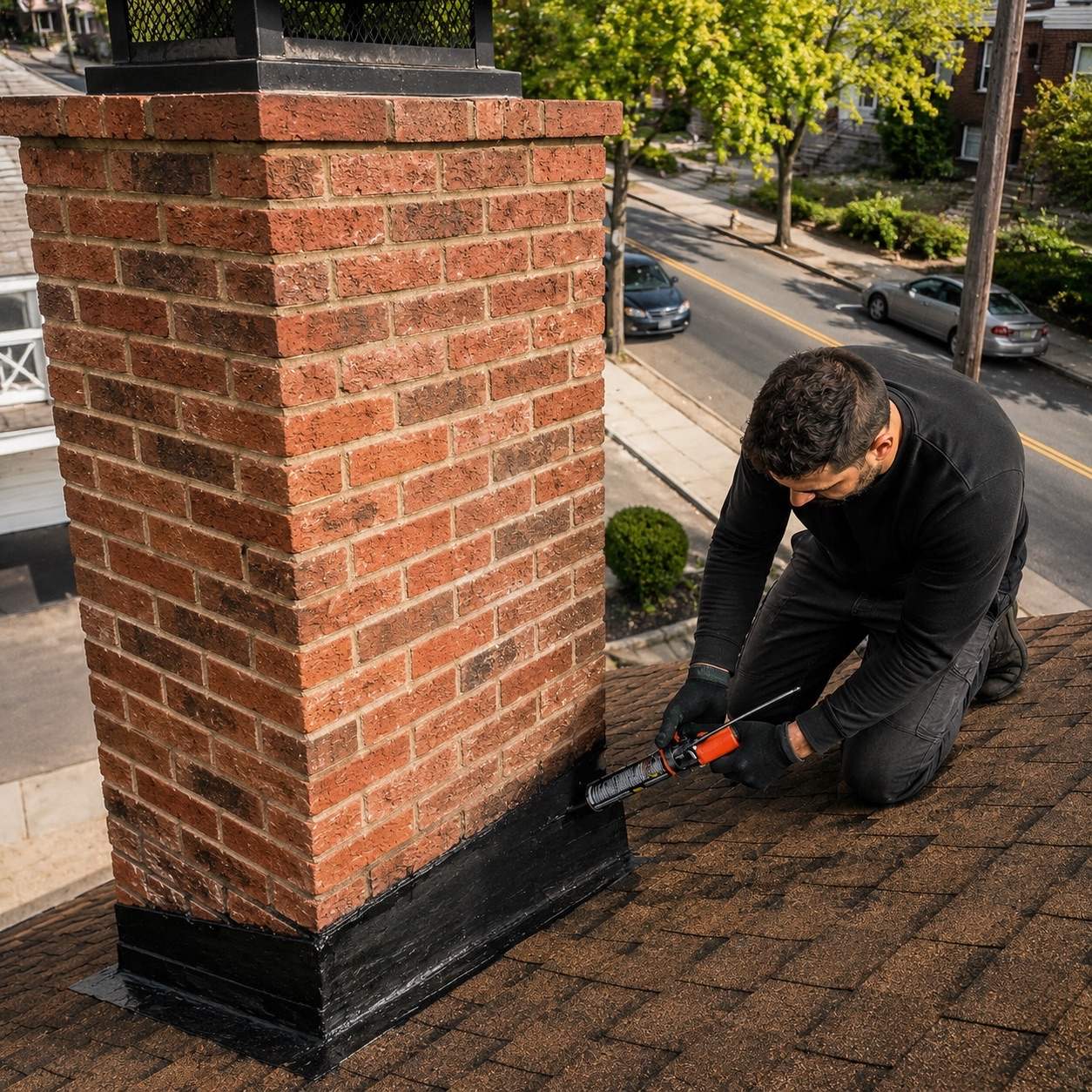
Choosing flashing metal a few blocks from the sand
Galvanized steel is the cheapest flashing and the one that suffers most in marine air; once the zinc coating goes, it rusts from the edges in. Aluminum is sometimes used as well, but it corrodes in contact with fresh mortar, which is a poor match for a detail cut into a mortar joint.
Copper and stainless steel hold up far better near the coast and are the usual choices for a repair meant to last. Mixing metals is its own problem: copper next to galvanized steel or aluminum speeds up corrosion of the other metal, so fasteners and adjoining pieces are matched to the flashing.
Why the caulk bead keeps failing
If the flashing has been caulked more than once, that history is a clue. Each new bead goes over the last, the joint behind it stays wet, and the brick and the roof deck beside the chimney can rot or stain while the outside looks tidy.
The lasting repair removes the old flashing, checks the roof deck and framing beneath for water damage, and installs new step and counter-flashing. On a wide chimney, a small peaked diverter called a cricket on the uphill side keeps water from pooling against the brick.
Tell us what the roof is covered with and whether the flashing has been caulked before. A short description, and a photo if you can take one safely, is a good start to an estimate request.
When the water is not coming through the flashing
Wind off the ocean drives rain sideways into the chimney face, and older brick can soak up enough to wet the inside of the house. Where the flashing and crown test sound and the damp follows rain from one direction, a breathable water repellent on the brick is the right step, applied once the masonry is dry.
On a rebuilt house with a factory-built fireplace, the routes are different: the chase cover, the storm collar where the metal flue passes through it, and the siding joints on the chase. Those are repaired as parts, not as masonry.
Chimney leak repair cost in Redondo Beach depends on these
The flashing metal chosen, the roof type and how many tiles or shingles have to be lifted, the chimney's width and whether it needs a cricket, and any rotted decking found once the old flashing is off. Roof pitch and height set how much access equipment is needed.
Interior repairs to stained plaster or drywall are separate from the chimney work and are usually left until the leak has survived a few storms.