Chimney Sweep in Hancock Park
A chimney sweep in Hancock Park clears soot and creosote from the flue, but on a house inside the Hancock Park HPOZ the more useful part of the visit is what gets noticed on the way up: the mortar joints, the crown, the cap. Exterior changes in a Historic Preservation Overlay Zone go through City Planning's historic district review, so it helps to know exactly what the chimney needs before anyone proposes a new part for it.
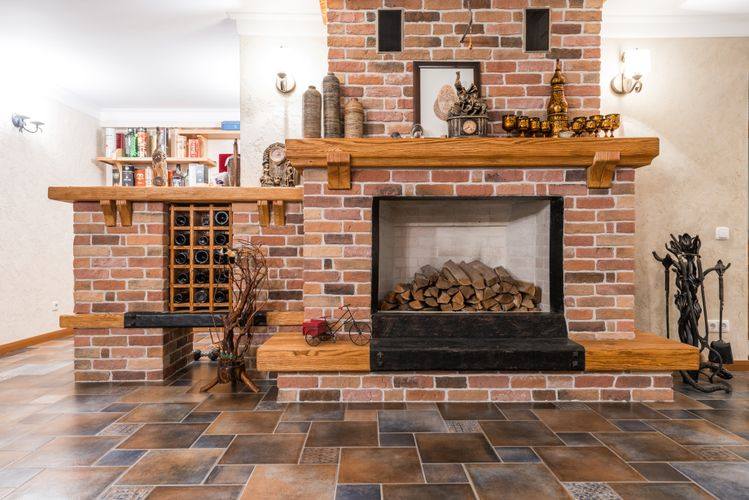
What Hancock Park does to a chimney
Hancock Park has its own Historic Preservation Overlay Zone, and City Planning keeps a page for it. The practical effect on a chimney is that anything visible from the street, such as a replacement cap, a rebuilt crown or a stack taken down and rebuilt, is more than a roofing decision. LADBS handles building permits in the city; the HPOZ review sits alongside that, and it can apply to exterior work that would not otherwise need a permit. None of this touches a routine sweep, which changes nothing anyone can see.
Hancock Park homes and their fireplaces
Where a Hancock Park house dates from the 1920s or 1930s, the chimney is likely to be solid brick, and a flue from that period may be clay tile or may have no liner at all. Mortar of that age is generally softer than modern mixes, which matters when joints are repointed: a hard cement mortar packed against soft old brick makes the brick the part that gives, and spalled brick faces cannot be put back. A large house may also carry two or three flues in a single stack, one for each fireplace, and each one needs looking at on its own.
The work that comes up most in Hancock Park
Ordered by how often local conditions make each one the right question.
- Chimney Tuckpointing
Old joints are the usual weak point on a Hancock Park stack, and the mortar has to be matched to the brick rather than simply made strong.
- Chimney Sweep
A sweep is also the simplest way to get eyes on a flue that may be unlined tile from the house's first decades.
- Chimney Crown Repair
A cracked crown lets water into the top of the stack; repairing it in a like-for-like way usually keeps the work low-profile for historic review.
- Chimney Liner Repair
Where old clay tiles have cracked or shifted, the liner decides whether the fireplace should be lit at all.
- Fireplace Restoration
Original surrounds and hearths in older houses are often worth keeping, and restoration treats them as features rather than parts to swap.
Tell us whether the house is inside the Hancock Park HPOZ and how many fireplaces share the stack. Describe the problem and request an estimate.
Call NowContributing structure or not: why it changes the fireplace question
South Coast AQMD Rule 445 generally limits any permanently installed wood-burning or gas device that is sold or installed to a short list: an EPA-certified wood heater, a pellet heater, a masonry heater or a dedicated gas fireplace. The rule exempts historic sites and contributing structures in an HPOZ from that particular limit.
Two cautions. Not every house inside an HPOZ is a contributing structure, and City Planning is the place to confirm the status of a specific address. And the exemption does not reach no-burn days: when South Coast AQMD declares one, no wood-burning device may be used, historic or not.
Around Hancock Park
Hancock Park is a neighborhood of the City of Los Angeles. The Los Angeles overview covers the city as a whole.
Nearby neighborhoods
Neighboring cities
Background reading
Local references
- LA City Planning — Hancock Park HPOZ
- South Coast AQMD Rule 445 (PDF)
- NPS Preservation Brief 2: Repointing Mortar Joints (PDF)
Requirements and designations change, and they vary by address. These are the authorities to confirm with rather than a statement of what applies to your property.
Hancock Park chimney questions
There are more answers on the Los Angeles homeowner FAQ.
Chimney and fireplace questions in Hancock Park
Call, or send a short description and request an estimate. Estimates cost nothing.