Los Angeles County Service Areas · Chimney & fireplace services · Estimate requests online
Electric Fireplace Repair in Los Angeles
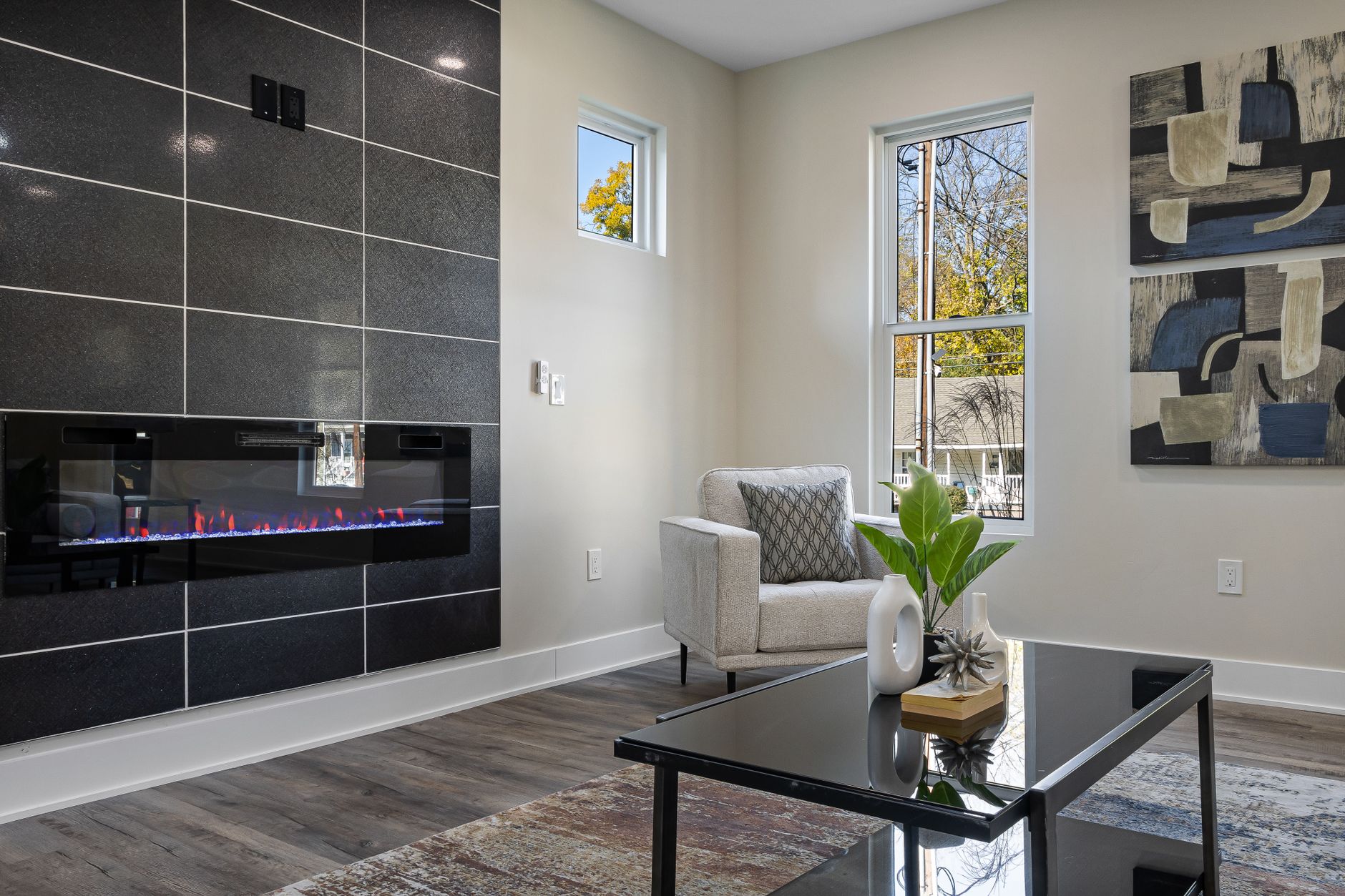
An electric fireplace is an appliance: a heater, a fan, a light and a control board. Electric fireplace repair means finding which of those failed, and deciding whether the fix is a part, an electrician, or a new unit.
- Chimney & Fireplace ServiceCleaning, inspection & repair
- Los Angeles Service AreasCities & LA neighborhoods
- Free Estimates AvailableEstimates at no charge
- Easy to ReachCall or request online
An Electric Fireplace Is Five Parts in a Box
There is no flame, no flue and no combustion, so none of the chimney faults that affect gas and wood fireplaces apply. What fails is one of these, and knowing which one narrows the problem fast.
Heater element
A resistance element, the same principle as a space heater. It is the part that draws the most current.
Blower
A small fan that pushes air across the element and out through the grille. Dust and pet hair collect on it and in front of it.
Flame effect
LED lighting, sometimes with a slowly turning rod or reflector behind a screen to make the light flicker. The flame effect usually runs independently of the heater.
Controls
A control board, a thermostat, a remote receiver and, on newer units, an app or Wi-Fi module.
Overheat cutoff
A safety switch that shuts the heater off if the unit runs too hot. When it trips, the cause is usually blocked airflow rather than a failed part.
Unplug It Before You Look Inside
Switch the unit off, unplug it or turn off its breaker, and let the element cool before removing any panel. A built-in unit that is hard-wired rather than plugged in should be isolated at the breaker panel.
Run it from a wall outlet, never an extension cord or a power strip. The US Fire Administration's appliance and electrical safety guidance is to plug major appliances directly into the wall because an extension cord can overheat, and a heater drawing current for hours is exactly that kind of load.
Stop using it if an outlet or plug is warm to the touch, discolored, or smells of hot plastic. That is an electrical problem, and the next call is to an electrician, not to anyone about the fireplace.
Not Heating, No Flames, Noisy Blower: What Each One Points To
Most electric fireplace problems announce which component is involved. Start with the manual's reset procedure; many units have one, and it clears more faults than people expect.
| What you notice | Likely cause | First step |
|---|---|---|
| Flames show, but no heat | Heater switched off in the settings, thermostat set below room temperature, a tripped overheat cutoff, or a failed element | Check settings, then the unit |
| Heat, but no flame effect | Failed LEDs, a stalled flicker motor, or a loose connection to the light board | Usually a manufacturer part |
| Grinding, rattling or whining from the blower | Dust build-up, a loose fan blade, or worn motor bearings | Clean first, then the unit |
| Remote does nothing; buttons on the unit still work | Remote batteries, a lost pairing, or a failed receiver | Re-pair using the manual |
| Shuts itself off after running for a while | Overheat cutoff tripping because the intake or outlet is blocked or recessed too tightly | Clearances and airflow |
| Breaker trips when the heater comes on | A shared or overloaded circuit, a wiring fault, or a short inside the unit | An electrician first |
| Nothing at all: no lights, no display | No power at the outlet, a tripped breaker or GFCI, or a failed control board | Test the outlet with a lamp |
| Burning smell beyond the first few uses | Dust burning on the element, or a component overheating | Unplug and stop using it |
Three Different Trades Fix Electric Fireplaces
The manufacturer is the source for almost every internal part. Elements, blowers, light boards and control boards are usually specific to one model, so the model number decides whether a repair is possible at all.
An electrician is the right trade for anything on the house side of the plug: a breaker that trips, an outlet that runs warm, a hard-wired unit that has lost power, or a new dedicated circuit.
A fireplace visit makes sense where the electric unit sits in, or replaced, a real fireplace. An electric insert in an old masonry firebox still has a chimney above it, and that chimney can still leak, lose its cap, or pull warm air out of the room through a damper left open. Those are damper, chimney cap and chimney leak questions, and they do not go away because the fire is now electric. The same applies to the surround: cracked tile or a damaged hearth around an insert is restoration work.
If the unit is gas rather than electric, the faults are entirely different; see gas fireplace repair. For the broader picture across fuel types, the fireplace repair overview routes by symptom.
Repair or Replace the Unit?
Repair makes sense on a built-in or insert unit whose parts are still available, where replacing it would mean reworking the wall, the mantel or the surround around it.
Replacement makes sense when the model is discontinued, when the control board has failed on an older unit, or when the unit is a basic plug-in model whose replacement costs less than a visit and a part. If you are replacing it, it is worth deciding first whether electric is still what you want; electric vs gas fireplaces compares heat output, running cost and installation. For a new unit of either kind, see fireplace installation.
When not to call us: if the unit is still inside its manufacturer coverage period, contact the manufacturer first, because third-party work can affect that coverage. And if it is an inexpensive plug-in unit, a repair can easily cost more than a new one. Say so when you get in touch and the conversation will be short.
What Drives the Cost
The part and the access decide most of it. These are the variables.
Whether the manufacturer still supplies the part
Most electric fireplace components are specific to one model. Where the part is no longer made, the repair question usually ends there.
Plug-in unit or built-in insert
A freestanding unit is easy to reach. A unit recessed into a wall or set into an old firebox may need its trim, surround or mounting removed before anything inside can be seen.
Whether the fault is in the unit or the circuit
A breaker that trips may be the wiring, not the fireplace. That is an electrician's diagnosis and a separate cost.
Warranty status
A unit still covered by the manufacturer should go back to the manufacturer, which can change the cost to you entirely.
Airflow and fit
If the unit keeps overheating because it was recessed too tightly, the answer may be changing the opening rather than the unit.
Tell us what you are seeing and ask for an estimate.
Electric Fireplaces in Los Angeles
An electric fireplace burns nothing, so the winter no-burn days that restrict wood fires (covered on chimney cleaning) do not apply to it. That is one reason people put an electric insert into a wood fireplace they no longer want to burn.
The local issue to watch is the circuit. Where a house still has its original wiring, a heater on a circuit shared with other rooms is more likely to trip it, and a breaker that trips repeatedly is a question for an electrician before it is one about the fireplace.
Electric fireplace not working?
Tell us the make and model, whether it is plug-in or built-in, and what it is doing. That is usually enough to say whether a repair is worth pursuing.
Related chimney & fireplace services
Part of Fireplace Repair — The appliance rather than the stack — fireboxes, gas, wood and electric fireplaces, doors, glass and older hearths.
- getting a fireplace working againFireplace Repair — The hub page: firebox, refractory, damper, draft and appliance faults.
- what a new installation involvesFireplace Installation — New fireplaces and inserts — clearances, venting and what the flue has to do.
- fireplace glass replacementFireplace Glass Replacement — Cracked, clouded or broken glass on gas units and fireplace doors.
Request an Estimate
Include the make, model and what the unit is doing.
Quick check
Unplug the unit and plug a lamp into the same outlet. If the lamp does not light, the problem is the outlet or the breaker, not the fireplace.
Electric Fireplace Repair Questions
There are more answers on the Los Angeles homeowner FAQ.
Tell us what your chimney is doing
Call, or send a short description and request an estimate. Estimates cost nothing.