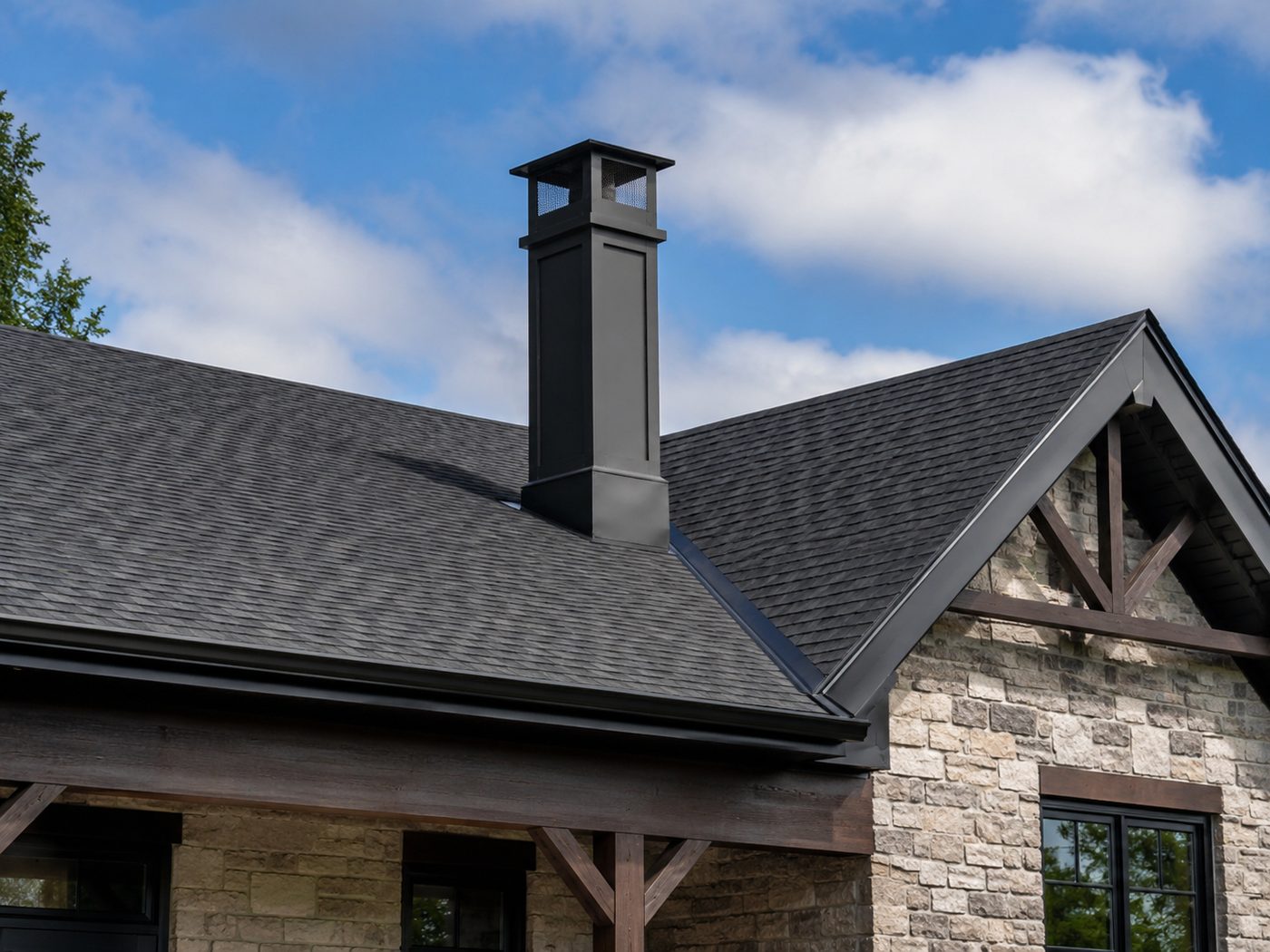
Los Angeles County Service Areas · Chimney & fireplace services · Estimate requests online
Commercial Chimney Services in Los Angeles
Commercial chimney services cover the same flues, fireplaces and dryer vents as a house, in a building where access, tenant notice and the number of units change how the work is planned.
- Chimney & Fireplace ServiceCleaning, inspection & repair
- Los Angeles Service AreasCities & LA neighborhoods
- Free Estimates AvailableEstimates at no charge
- Easy to ReachCall or request online
Commercial Chimney Work Is the Same Work in a Different Building
A flue in an apartment building fails the same way as a flue in a house. What changes is everything around it: who can let you onto the roof, which occupied units have to be entered, how much notice residents need, and who is responsible for which part of the chimney.
That is what this page covers — apartment buildings, condominium associations, mixed-use buildings, and the occasional restaurant with a wood-fired oven. The work itself is described on the residential pages: chimney inspection, chimney cleaning and chimney repair.
Units Built Together Tend to Fail Together
Where a building's fireplaces went in at the same time, from the same manufacturer, under the same roof exposure, they age at roughly the same rate. A failure found in one unit — a rusted chase cover, a firebox panel that has cracked through, a damper that no longer closes — is a reason to look at the others before they report the same thing one by one.
The pattern is clearest with factory-built fireplaces, where the metal top of the chase (see chase cover repair) and the refractory panels inside the firebox (see firebox repair) wear on a similar schedule across every unit. On an older masonry building, a single stack often carries several flues, so work on one flue can mean access to every unit that stack serves.
Access and Tenant Notice Shape the Job
A chimney job in a house needs one person to open the door. In a building it can need roof access through a locked hatch or stairwell, entry to several occupied units in a set order, somewhere to put down equipment that is not a resident's balcony, and a plan for units whose occupants are not home.
California law sets requirements for giving notice before entering an occupied rental unit. Confirm what applies to your building with your own management or legal advisers before dates are fixed, and send notices only once the access plan is settled — rescheduling a building is harder than rescheduling a house.
For property manager fireplace maintenance, the most useful thing to collect before anyone arrives is a simple list: which units have a fireplace, gas or wood, and any tenant complaints about smoke, smells or a fireplace that will not light. Gas appliance faults in individual units are covered on gas fireplace repair.
HOA Chimney Inspection Starts With Who Owns What
Before an HOA chimney inspection is booked, settle responsibility. The stack, the roof penetration and the cap are often common elements; the firebox and the fireplace inside the unit are often the owner's. The CC&Rs say which, and an inspection that ignores the split produces findings nobody is sure they have to act on.
NFPA 211, the standard for chimneys, fireplaces and vents, recommends annual inspection with cleaning as the condition requires. For an association, a building-wide round on a regular cycle is simpler to budget and to explain to owners than responding unit by unit. Where owners want to know what to look for between inspections, the CSIA homeowner resources are a reasonable thing to circulate.
What a Property Manager Should Ask For
Ask what documentation you will receive before booking, not after. These are the questions that make the answer useful for a building.
- What will I receive after the visit, and in what form?
- Are findings recorded unit by unit, so they can go into each unit file?
- Which units, flues or roof areas could not be reached, and why?
- Which findings are urgent, which can be planned, and which are only worth watching?
- Is anything found in one unit likely to be present in the others?
Commercial Dryer Vent Cleaning for Shared Laundry Rooms
A dryer in a shared laundry room runs far more cycles than a household dryer, and its duct loads with lint accordingly. The mechanism and the routine service are on dryer vent cleaning; what changes in a laundry room is the interval, and the number of machines whose ducts may join or run side by side.
In stacked apartments and condos with in-unit laundry, the problem is length instead. A dryer in an interior closet may vent through a long run to the roof or a far wall, and a building full of those runs is a building where slow dryers are a pattern rather than a coincidence. Dryer vent repair and rerouting covers what can be done about a run that is too long.
Managing a building with fireplaces or shared laundry?
Tell us the building type, how many units have a fireplace or dryer vent, and what residents have been reporting. We will tell you what we can cover.
Restaurants and Wood-Fired Oven Flues
A wood-fired oven that vents through its own flue builds up creosote the same way a fireplace does, and more quickly if it burns every day. Where that is the setup, the deposit and how it is dealt with are covered on creosote removal.
Commercial kitchen exhaust — the hood over the cooking line, its grease duct and its rooftop fan — is a different trade with its own standard and its own specialists. If the oven vents into the hood system rather than a separate flue, start with a kitchen exhaust cleaning company, not a chimney service.
A Single-Family Rental Is Not a Commercial Job
When not to call us about this page: if you own or manage one rented house, it is a house. Use the residential pages — inspection for a tenancy changeover, or the page that matches the problem the tenant reported. And if the issue is the hood and grease duct over a commercial cooking line, a kitchen exhaust specialist is the right call.
Tell us what you are seeing and ask for an estimate.
Related chimney & fireplace services
Part of Commercial & Multi-Unit — Chimney and fireplace work on properties that are not a single family home.
- establishing the condition of the flueChimney Inspection — Masonry, crown, cap, flashing, firebox and flue condition, and what it means.
- chimney cleaningChimney Cleaning — Creosote, soot and debris removed from the flue, smoke shelf and firebox.
- what a chimney repair actually involvesChimney Repair — The hub page: brick, mortar, crown, flashing, liner and how scope is set.
- having the dryer run cleaned outDryer Vent Cleaning — The full duct run from the appliance to the exterior vent.
Nearby Service Areas
Request an Estimate
Tell us the building type and how many units have a fireplace or dryer vent.
Before you call
Check the CC&Rs or management agreement for who is responsible for the chimney stack and the dryer ducts in common walls. It decides who books the work and who pays for it.
Commercial and Multi-Unit Chimney Questions
Have a question this page does not cover? Try the chimney and fireplace FAQ.
Tell us what your chimney is doing
Call, or send a short description and request an estimate. Estimates cost nothing.