Los Angeles County Service Areas · Chimney & fireplace services · Estimate requests online
Dryer Vent Blockage Removal in Los Angeles
A clogged dryer vent is a run that has closed up, not just one that needs cleaning. If the dryer smells of burning, stop using it now; if it simply takes two cycles to dry, the vent is the first thing to check.
- Chimney & Fireplace ServiceCleaning, inspection & repair
- Los Angeles Service AreasCities & LA neighborhoods
- Free Estimates AvailableEstimates at no charge
- Easy to ReachCall or request online
Burning Smell or a CO Alarm? Stop Using the Dryer First
A burning smell from the dryer: stop the cycle, switch the dryer off, and do not run it again until the vent has been cleared and the dryer checked. If you see smoke or flames, get everyone out and call 911 from outside.
A gas dryer on a blocked vent: the duct carries combustion gases as well as lint, and a blockage can send carbon monoxide back into the house. If a carbon monoxide alarm sounds, leave the house and call for help from outside. If you smell gas, leave and call your gas utility's emergency number. Neither is a vent-cleaning call.
A Clogged Dryer Vent Is Different From a Dirty One
Every dryer duct collects some lint, and a dirty one slows the dryer down gradually. A clogged dryer vent is the point where the run has closed up completely or nearly so: very little air reaches the outside, and the dryer changes behavior over weeks rather than years.
The difference matters because the fix is different. Gradual buildup is routine dryer vent cleaning. A blockage has to be found before it can be cleared, and pushing a brush hard into a plug you have not located can pack it tighter.
Symptoms of a Clogged Dryer Vent
One of these on its own is worth checking. Two or more together usually means the run is blocked.
The dryer takes two cycles to dry
A normal load comes out damp and has to go round again. With the airflow closed down, the moist air has nowhere to go and the clothes cannot dry however long the heat runs.
The dryer is overheating or hot to the touch
The top or sides of the cabinet are hotter than you can comfortably keep a hand on, or clothes come out unusually hot. The heat is not being carried away down the duct.
A burning smell from the dryer
Lint near the heat source is scorching. Treat this as a reason to stop, not a reason to book — see the safety steps above.
The laundry room is humid
Condensation on the window, a damp feel to the closet, or a musty smell. Moist exhaust is leaking out around a blockage or a failed connection instead of leaving the house.
The exterior flap does not open
With the dryer running on heat, the flap on the outside hood barely lifts or stays shut. Either the run is blocked or the flap is jammed with lint.
Twigs, grass or chirping at the hood
A bird nest in the dryer vent. Nesting material at the opening, a flap propped open, or sound from inside the duct in spring are the usual signs.
What Blocks a Dryer Vent
A lint plug. Lint builds up at a bend or a low point until it closes the duct. Once the airflow drops, lint settles even faster, so the last stage of a blockage happens quickly. Where and why the lint collects in the first place is covered on dryer vent lint removal.
A crushed duct. A transition hose flattened behind the dryer, or a flexible duct squashed in a wall or attic, narrows the run to a slot and lint gathers behind it. Clearing the lint without fixing the crush only buys time, and dryer vent repair covers replacing the damaged section.
A bird nest in the dryer vent. A hood whose flap is broken or propped open by lint is an easy nesting site, and nest material blocks the duct from the outside end. Nesting migratory birds are protected under the federal Migratory Bird Treaty Act, so an active nest with eggs or young should not be pulled out without checking first. Rodents use the same openings. Animals in the chimney rather than the dryer duct are a separate problem, covered on chimney animal removal.
A jammed flap or a screened hood. A flap painted shut or matted with lint stops the run at the very last inch. A hood with a mesh screen over the opening catches lint until it closes over.
Is It the Vent or the Dryer?
On an electric dryer there is a quick way to tell. Pull the dryer out, take the duct off the outlet, and run a small load on heat for a few minutes with a window open. If strong warm air comes out of the outlet and the load starts drying normally, the restriction is in the duct.
Do not do this with a gas dryer. Running a gas dryer disconnected puts its combustion gases straight into the room. On a gas dryer, check the transition hose for a crush and the outside flap for movement, and leave the rest to the person clearing the run.
How a Dryer Vent Blockage Is Cleared
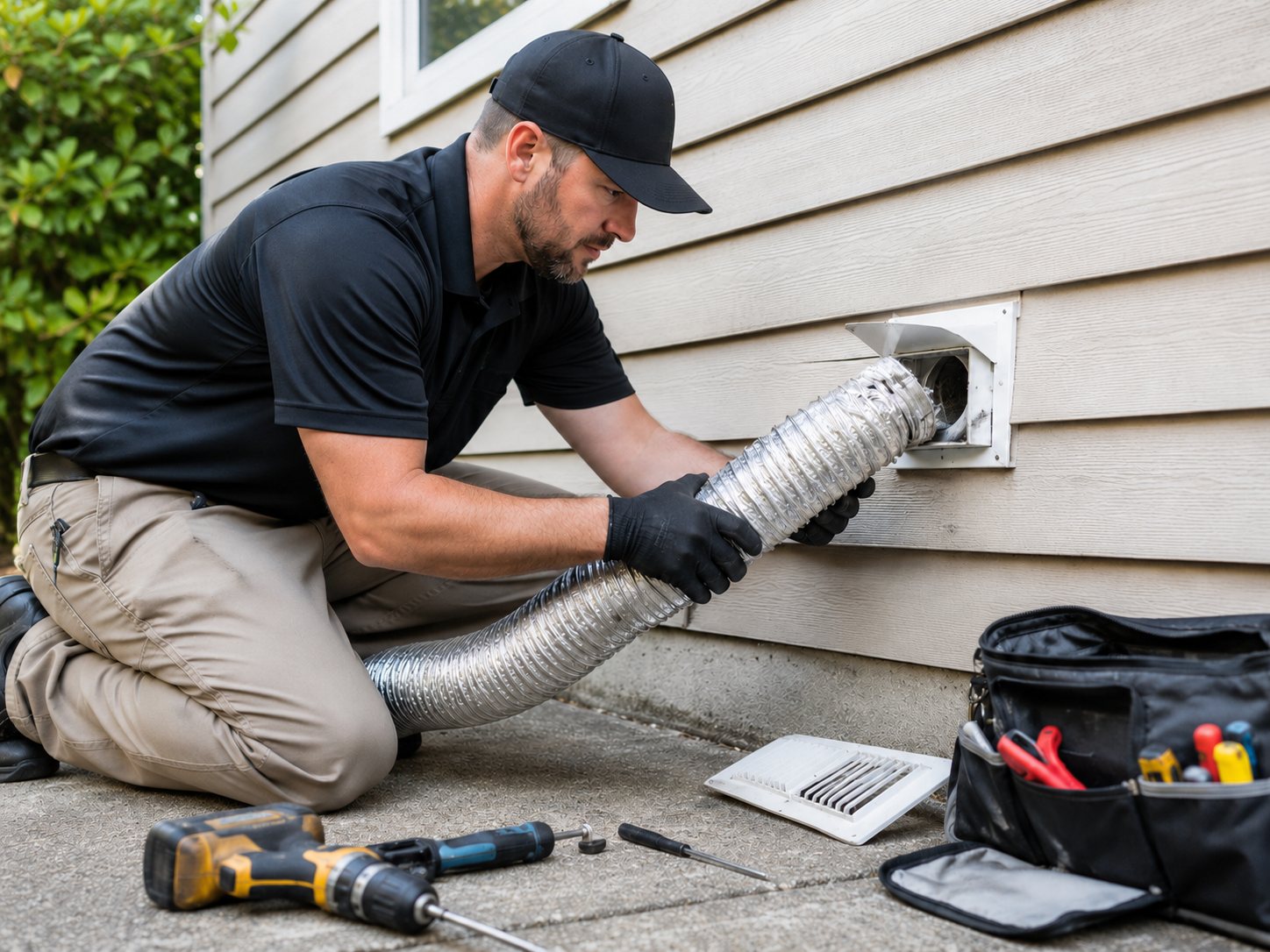
The blockage is located first. Rods are fed in from the dryer end and from the outside hood, and the point where each one stops shows roughly where the plug sits and whether there is one plug or two.
The plug is then broken up with a rotary brush and drawn out rather than forced further along. Nest material is taken out from the hood side. With the run open, the duct is checked for the crush or separation that caused the plug, because a blockage often forms just behind one.
Finally the dryer is reconnected and run on heat while the flap is watched. If the hood itself is broken or screened, a replacement hood with a working damper is part of the fix — covered with duct replacement on the dryer vent repair page. A short description, and a photo if you can take one safely, is a good start to an estimate request.
Dryer taking two cycles, or a flap that will not open?
Tell us what the dryer is doing, whether it is gas or electric, and where the vent comes out. If you smell burning, switch it off before you call.
When the Dryer Is the Problem, Not the Vent
When not to call us: if the dryer still will not heat with the duct disconnected, the fault is inside the dryer — a heating element, a thermal fuse, a thermostat, or on a gas model the igniter or gas valve. That is an appliance repair. Clearing the vent will not bring the heat back.
It is still worth having the vent looked at afterwards. A thermal fuse usually blows because the dryer overheated, and a restricted vent is one of the most common reasons it did. The drum not turning, a squeal or a thump are mechanical faults in the dryer and have nothing to do with the vent at all.
The same logic applies to a chimney that is not drawing: the flue can be blocked for similar reasons, and chimney blockage removal covers that side.
Related chimney & fireplace services
Part of Dryer Vent Services — The other duct in the house that fills with something flammable. Same access equipment, same failure mode, very different appliance.
- dryer vent cleaningDryer Vent Cleaning — The full duct run from the appliance to the exterior vent.
- lint built up inside the ductDryer Vent Lint Removal — Where lint collects, why it collects there, and what it does to airflow.
- rerouting a dryer vent that runs too longDryer Vent Repair — Crushed, disconnected or badly routed duct, and failed exterior hoods — repair and replacement.
- clearing a blocked chimneyChimney Blockage Removal — Nesting material, fallen masonry, debris and obstructions cleared from the flue.
Nearby Service Areas
Request an Estimate
Tell us what the dryer is doing and whether it is gas or electric.
Quick check
Run the dryer on heat and look at the outside hood. A flap that stays shut or barely flickers, together with a load that needs two cycles, points to a blocked run rather than a tired dryer.
Clogged Dryer Vent Questions
There are more answers on the Los Angeles homeowner FAQ.
Tell us what your chimney is doing
Call, or send a short description and request an estimate. Estimates cost nothing.